In 2026, the gap between a marketing idea and a live production campaign has shrunk from weeks to minutes. We have officially moved past the era of "Chat AI" and entered the age of agentic marketing. While 2025 was about asking AI to write a blog post, 2026 is about using tools like Claude Code to build the entire system that distributes, optimizes, and tracks that content. For growth marketers and non-technical founders, the ability to operate a Command Line Interface (CLI) is no longer a niche developer skill—it is a foundational requirement for staying competitive.
The Rise of the Marketer-Developer in 2026
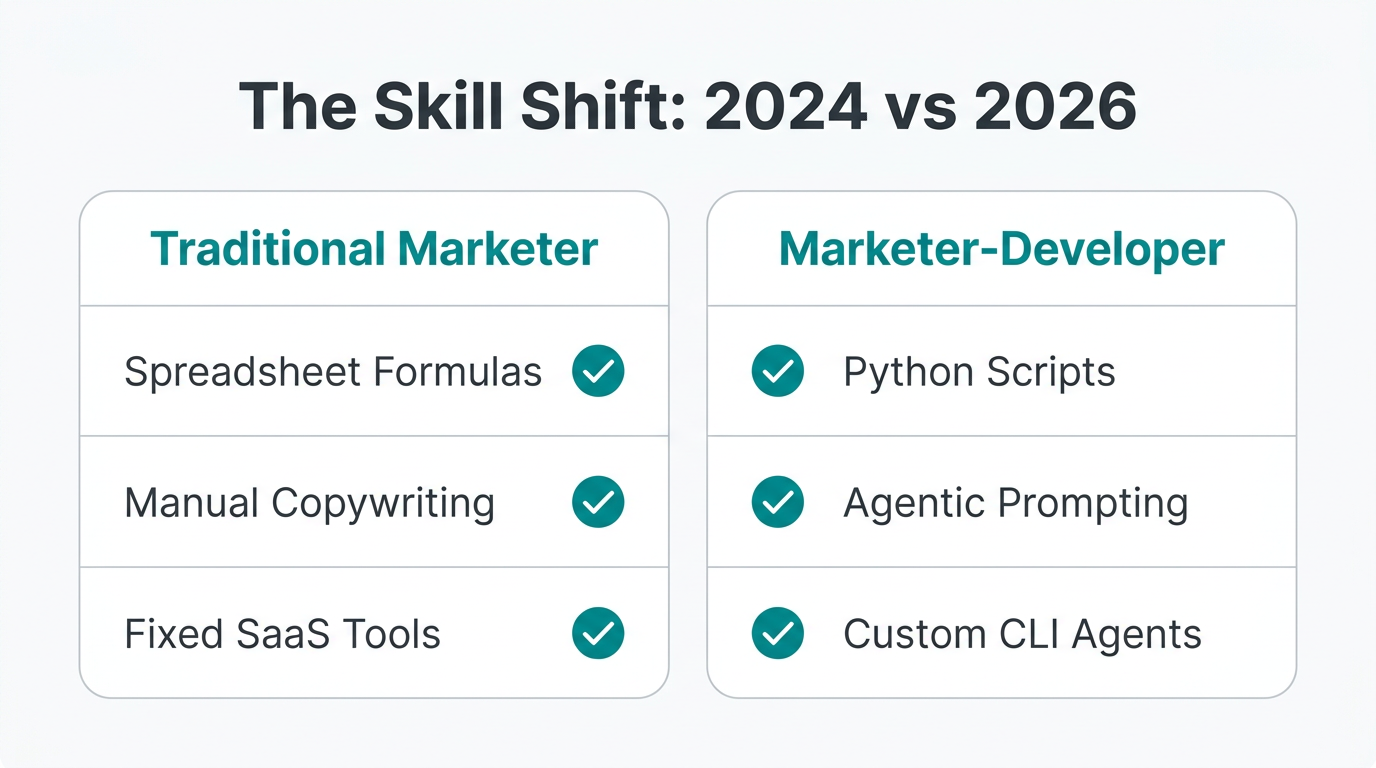
The role of the marketer is being fundamentally redefined. According to the Salesforce State of Marketing 10th Ed., as of early 2026, 64% of high-growth marketing teams now utilize CLI-based agents to manage technical SEO, automated landing page deployment, and API integrations. We are seeing the emergence of the "Marketer-Developer"—a professional who uses creative strategy to prompt agentic tools that execute the technical heavy lifting.
"The 'Big Ops' era is here. Marketers aren't just using tools; they are using agents like Claude Code to build their own bespoke marketing stacks on the fly." — Scott Brinker, Chiefmartec
The financial stakes are high. The global AI in marketing market is projected to hit $45.8 billion this year, according to MarketsandMarkets. Companies that haven't transitioned to agentic workflows are finding themselves spending $4.00 for every $1.00 their automated competitors spend on technical execution. By implementing agentic tools, brands are seeing a 35% reduction in technical debt, as noted by Gartner, allowing teams to pivot campaigns in real-time without waiting on a developer ticket.
Step-by-Step Setup: Bringing Claude Code to Your Marketing Stack
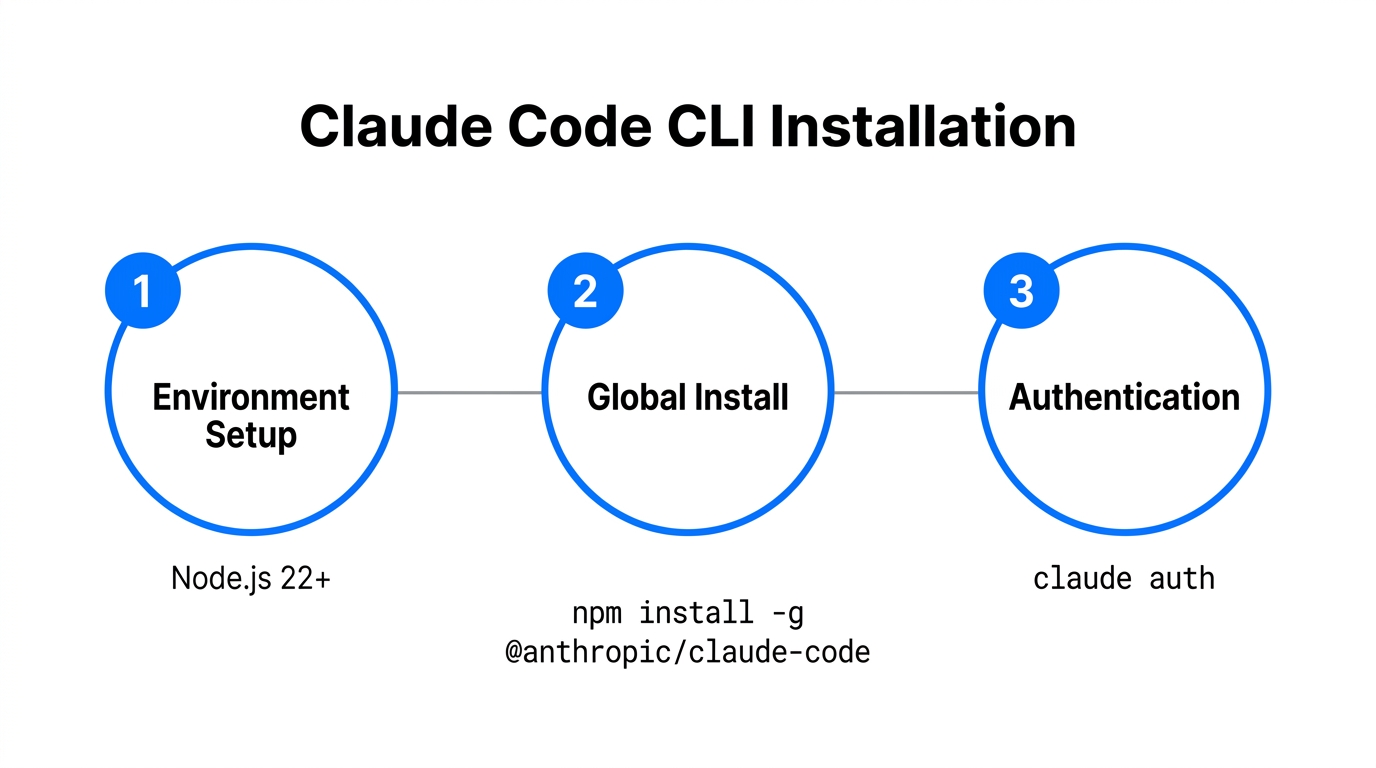
Many marketers feel a sense of "terminal anxiety" when they see a command-line interface. However, in 2026, tools like Warp Terminal have made the CLI visual and accessible. Setting up Claude Code is the first step toward technical marketing automation.
Step 1: Install Node.js
Claude Code runs on Node.js. If you don't have it, download the latest stable version. Open your terminal and run the command: npm install -g @anthropic-ai/claude-code. This installs the agent globally on your machine, giving it the ability to interact with your local files.
Step 2: Authenticate with Anthropic
Once installed, you need to link the CLI to your account. Run anthropic auth login. This will open a browser window for you to sign in. In 2026, Anthropic's API revenue from non-developer roles has surged by 410%, largely because this authentication process has become so seamless for marketing teams using platforms like Anthropic Console.
Step 3: Initialize Your Marketing Project
Navigate to your marketing folder (e.g., your website's local directory or a folder of creative assets) and type claude. The agent is now live and can "see" every file in that directory. It can read your CSVs, analyze your CSS, and even refactor your HTML based on brand guidelines found in your local PDFs or hosted on Notion.
High-Impact Marketing Workflows for Claude Code
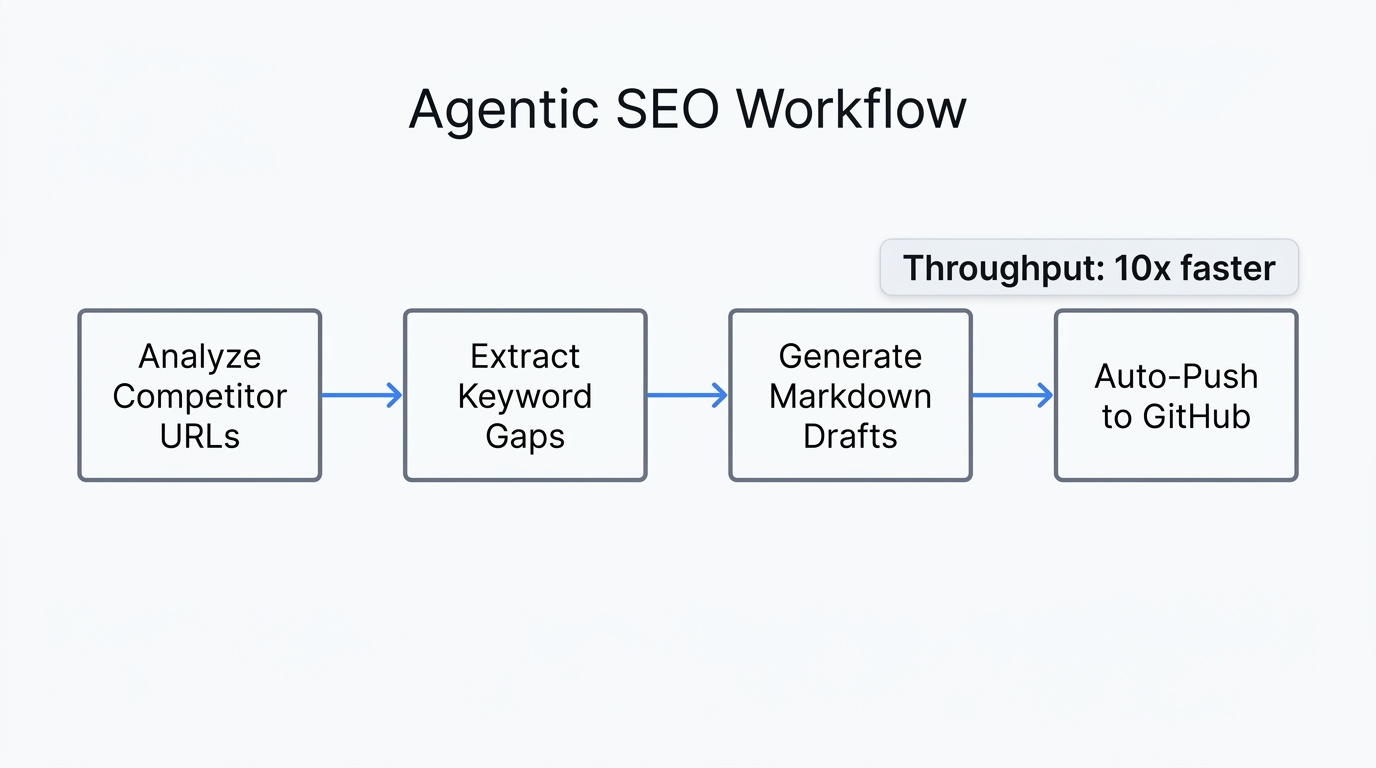
Claude Code differs from the standard Claude.ai web interface because it can execute actions on your computer. While the web interface is better for ideation and creative writing, the CLI is built for agentic marketing 2026—tasks that require file manipulation and system-wide logic.
| Marketing Task | Claude Code (CLI) | ChatGPT Plus (Web) |
|---|---|---|
| SEO Audit | Scans entire directories and fixes meta-tags instantly. | Can only analyze one page at a time (manual upload). |
| Ad-Copy | Generates 100s of variations and saves directly to .csv. | Writes copy but requires manual copy-pasting. |
| Site Speed | Identifies and refactors slow code in your local files. | Can offer advice but cannot edit your site files. |
One of the most powerful uses for Claude Code is Automated SEO Remediation. Instead of manually updating meta-descriptions for 500 blog posts, you can issue a single command: claude "Scan my /blog directory, identify pages missing meta-descriptions, and write them based on the H1 tags." This type of programmatic SEO is how experts at Search Engine Land suggest marketers move from being assistants to being orchestrators.
For those managing massive creative libraries, you can use Claude to generate bulk ad-copy for Meta Ads Manager or Google Ads. A command like claude "Read our product_features.json and generate 10 variations of Google Search Ads in a .csv format" saves hours of manual data entry.
"Claude Code is about moving from 'AI as an assistant' to 'AI as a colleague' that can actually execute the technical drudgery that slows down creative teams." — Dario Amodei, CEO of Anthropic
Best Practices: Cost Management and Security
With great power comes great token consumption. Because Claude Code reads local files to provide context, it can burn through your API budget quickly if not managed. 88% of organizations reported an AI agent security incident in 2025, according to IBM Security, making safety a priority for 2026.
Minimize Token Burn with the Compact Flag
Every time you prompt Claude Code, it sends a certain amount of "context" from your previous interactions to ensure it stays on track. To keep costs low, use the compact flag. This summarizes your history and reduces the context window size, which is essential for long sessions where you are auditing a whole site. You can also use an ignore file (similar to a .gitignore) to prevent Claude from reading massive, irrelevant folders like node_modules.
Establishing 'Permission Sandboxes'
Never give an AI agent unrestricted access to your entire computer. In 2026, security researchers at OWASP highlighted the risk of "poisoned repository config files." To mitigate this, set up a Permission Sandbox. This is a dedicated directory (e.g., /marketing-assets/) where Claude Code is allowed to read and write. If the agent tries to access files outside this folder, the system should require manual approval.
claude --plan to see what the agent intends to do before it modifies any live files.Case Studies: Success in the Agentic Era
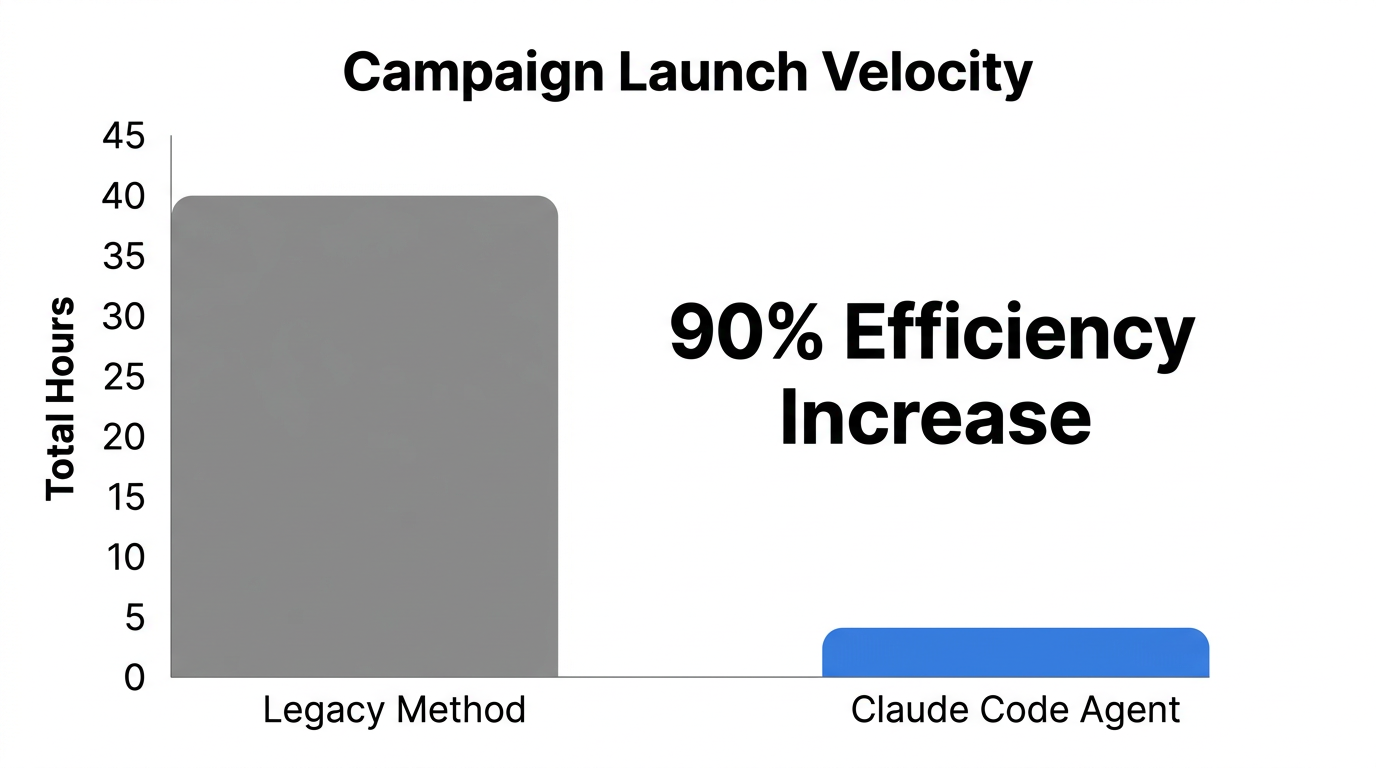
The impact of agentic tools on app marketing and ASO (App Store Optimization) is staggering. For instance, high-growth startups use Claude Code to automate the creation of personalized landing pages for various demographic niches. By turning a creative brief into functional code instantly, teams have reduced their time-to-market from 4 weeks to 2 days, resulting in a 22% increase in conversion rates.
Meanwhile, in the e-commerce sector, brands have integrated Claude Code into their Shopify backend to auto-generate and deploy Product Schema for 10,000 SKUs. This move grew organic search traffic by 14% in Q1 2026, saving companies over $120,000 in manual SEO consulting fees.
For many of these brands, technical automation is only half the battle. To truly scale, they pair their automated infrastructure with high-quality user-generated content (UGC). Platforms like Stormy AI complement this workflow by allowing marketers to discover and outreach to creators who can provide the authentic video assets that fuel these automated landing pages.
Conclusion: The Future of Growth Marketing
The shift to agentic marketing in 2026 isn't just about speed; it’s about technical sovereignty. Marketers who master Claude Code can fix their own tracking pixels, optimize their own site speed, and deploy their own programmatic SEO strategies without waiting for a developer's availability. As we look toward the rest of 2026, the competitive advantage will go to those who can effectively orchestrate these AI colleagues to handle the technical drudgery, freeing up the human mind for high-level creative strategy.
Start small: install the CLI, run a simple SEO audit, and watch as your technical debt begins to vanish. For those looking to integrate these technical wins with a robust influencer strategy, leveraging a platform like Stormy AI ensures that your technical systems are always powered by top-tier creator content.