In 2026, the retail landscape has reached a point of absolute data saturation. For ecommerce brands managing over 1,000 SKUs, the era of manual page-by-page optimization is officially over. Today, the most aggressive ecommerce growth strategies 2026 rely on programmatic SEO (pSEO) — a sophisticated architecture that automates the creation of thousands, or even millions, of high-intent landing pages. By shifting from a static keyword-based approach to a dynamic, data-driven framework, brands are capturing the "long-tail" of search that traditional SEO simply cannot reach.
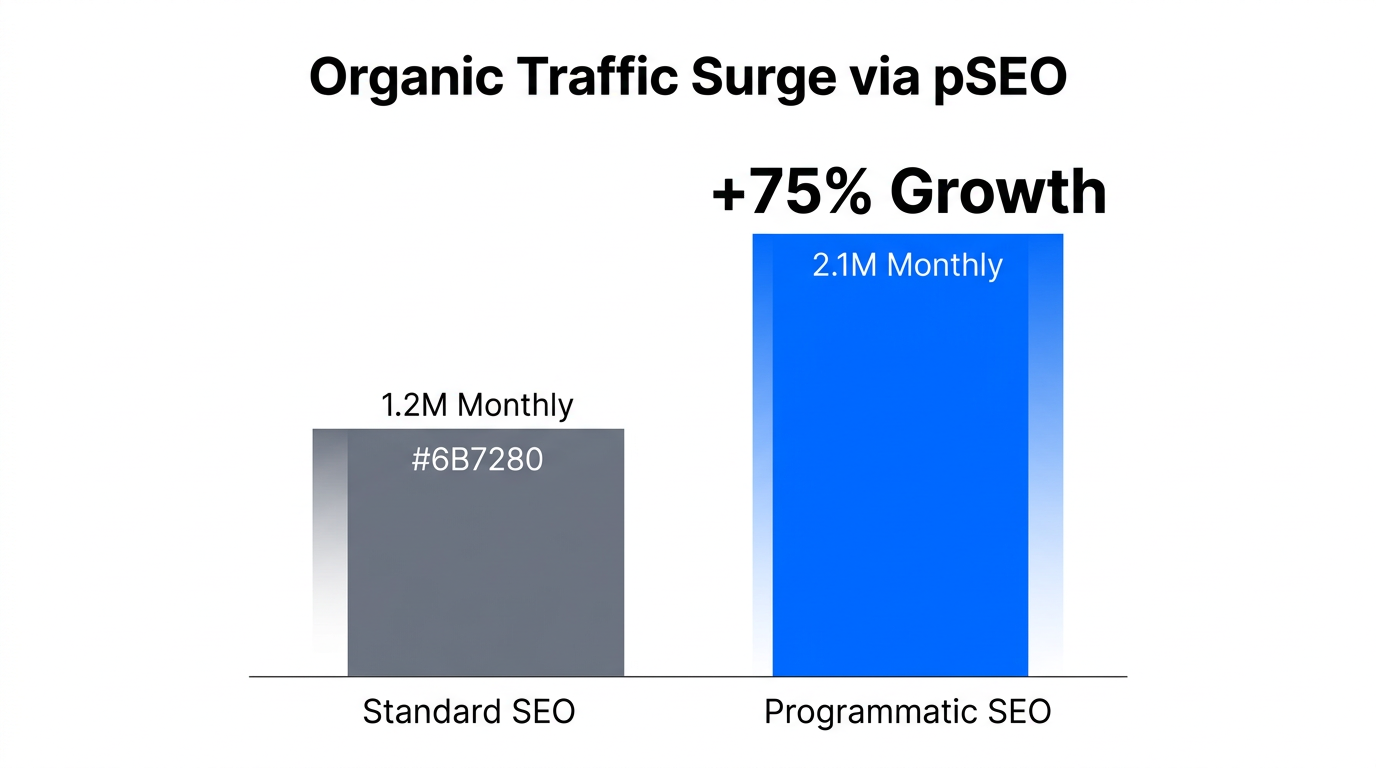
The results are transformative. High-growth brands utilizing enterprise SEO automation have reported an organic traffic surge of 30% to 80% within just months of deployment, according to data from Stormy AI. This guide breaks down how to build a programmatic engine that turns your product database into a revenue-generating machine.
The 2026 Shift: From Manual Content to Programmatic Architecture
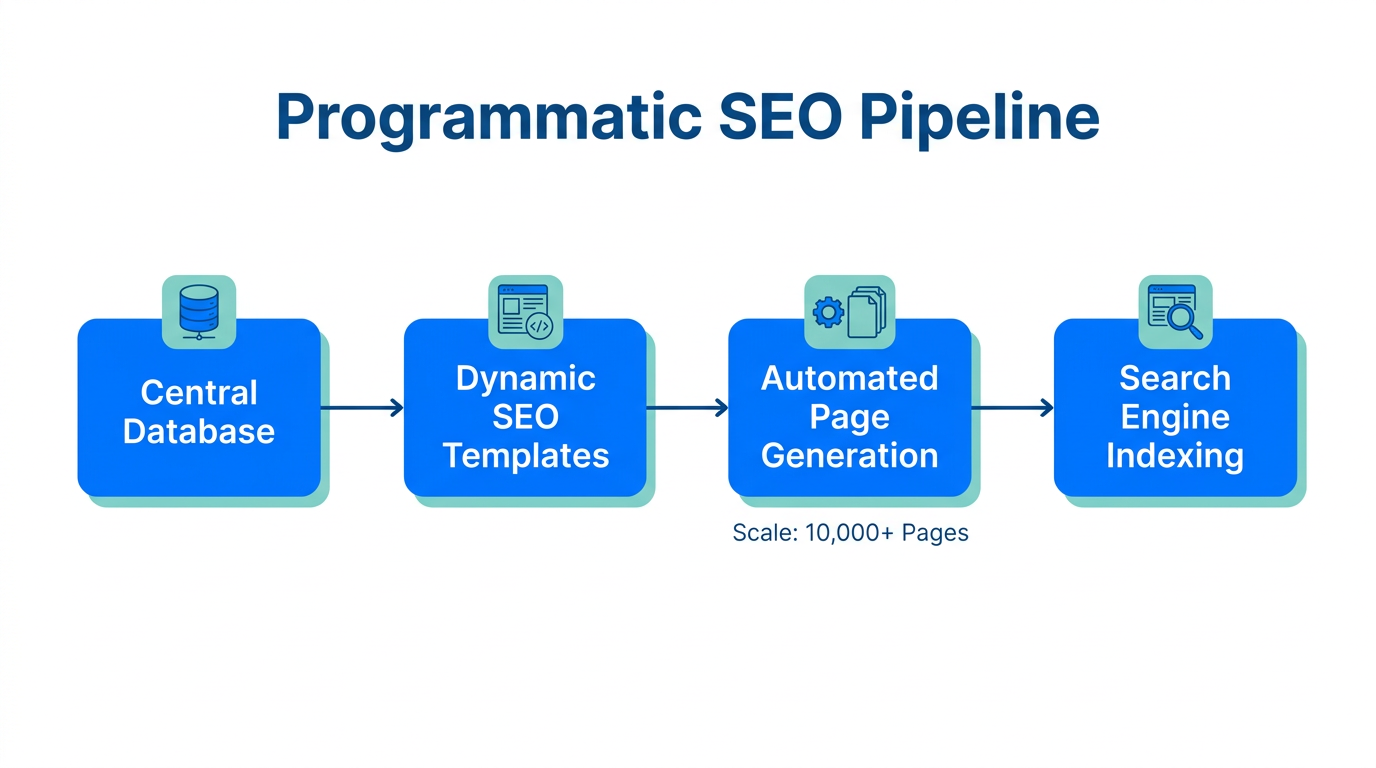
The fundamental challenge of scaling organic traffic for retail in 2026 is volume. When a brand has thousands of products across hundreds of categories, a human team can only optimize the top 10% of high-volume "head terms." This leaves 90% of the potential search volume—the long-tail—untouched. Programmatic SEO tools solve this by using your product feed as a source of truth to generate pages for every conceivable search permutation.
As noted by research from Passionfruit, this scale is what separates market leaders from laggards. In a world where Taylor Scher SEO points out that 57% of global ecommerce sales now occur on mobile devices, these programmatic templates must be lightweight, fast-loading, and perfectly structured for mobile-first indexing.
Unlocking the Long-Tail: Why 5,000,000 Pages Win
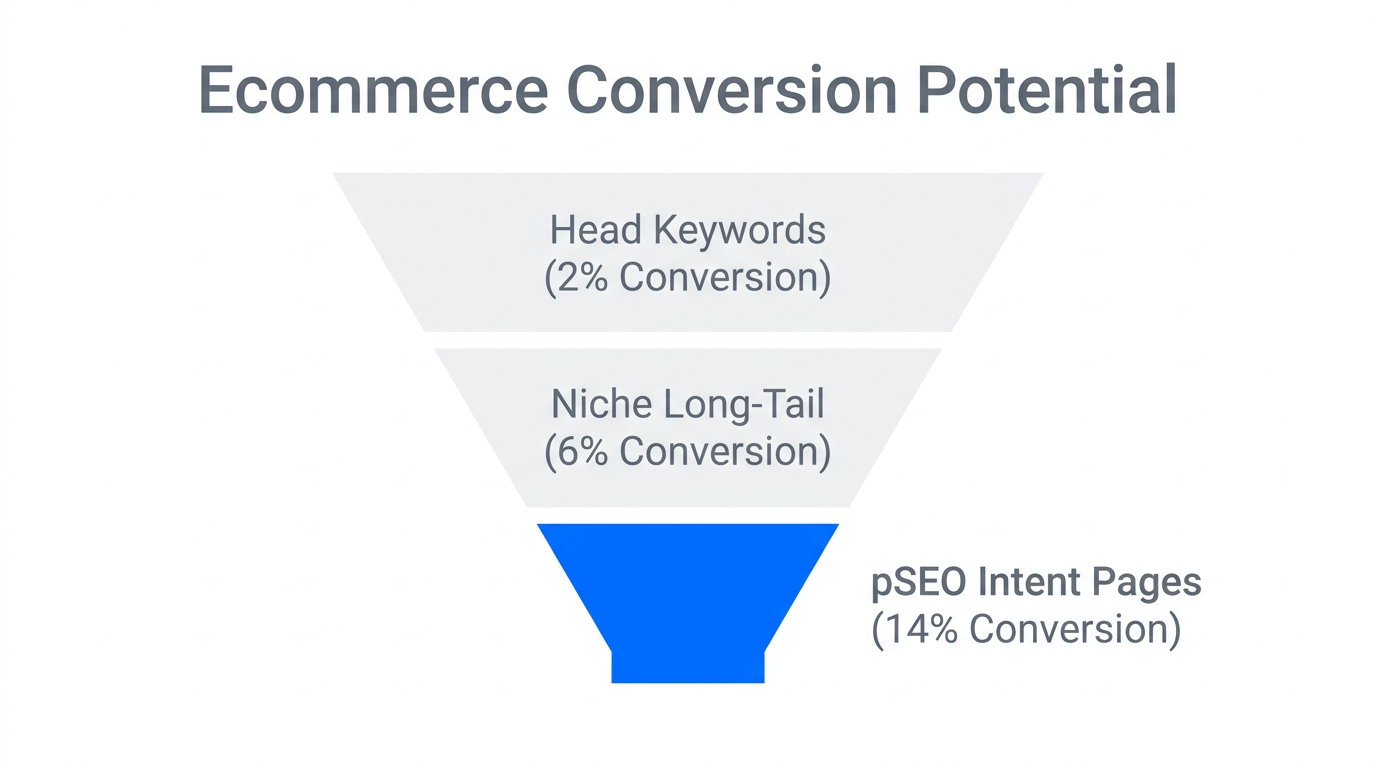
Why aim for millions of pages instead of focusing on "Women's Shoes"? The answer lies in the conversion rate. Broad terms have high volume but low intent. Conversely, long-tail queries like "size 10 sustainable red running shoes under $100" indicate a user who is ready to buy now. Data indicates that targeted long-tail pSEO pages for ecommerce transactions achieve conversion rates between 5% and 14%, significantly higher than the 1-2% average for broad category pages, according to insights from Fuel LAB.
"In the 2026 economy, the winner isn't the brand with the biggest marketing budget, but the brand that owns the most 'real estate' in the search results through automated content density."The economic impact is undeniable. The global AI SEO software market is projected to reach $4.97 billion by 2033, per Grand View Research, driven by the need for enterprise-level automation. By investing in programmatic seo tools, brands are essentially building an automated sales force that works 24/7 to capture every possible buyer intent.
The pSEO Giants: Case Studies of REVOLVE and Boohoo
We can learn the most from the pioneers who have already mastered this architecture. Retailers like REVOLVE and Boohoo don't just use SEO; they use it as a core engineering function.
- REVOLVE: By using enterprise scaling engines like Verbolia, REVOLVE identified thousands of long-tail gaps in their inventory visibility. Just 9 months post-launch, their programmatic pages saw an 80% month-over-month traffic increase, now accounting for 15% of their total unbranded organic traffic.
- Boohoo: The fast-fashion giant automated the internal linking between product listing pages and category hubs. This led to a staggering 70% top-10 ranking rate for their generated pages, ensuring that new trends are indexable almost as soon as they are uploaded to the Shopify or custom backend.
- Amazon: Often called the "Godfather of pSEO," Amazon’s entire search interface is a programmatic engine. Every filtered view (e.g., "Blue drill with lithium battery") is a crawlable, indexable landing page that captures ultra-specific Google searches.
| Brand | Strategy | Key Result |
|---|---|---|
| REVOLVE | Long-tail category expansion | 80% MoM traffic growth |
| Boohoo | Automated internal linking | 70% Top-10 ranking rate |
| Meal Delivery Co. | Dietary-specific landing pages | $968,000 revenue increase |
Framework for Selecting Your pSEO Stack
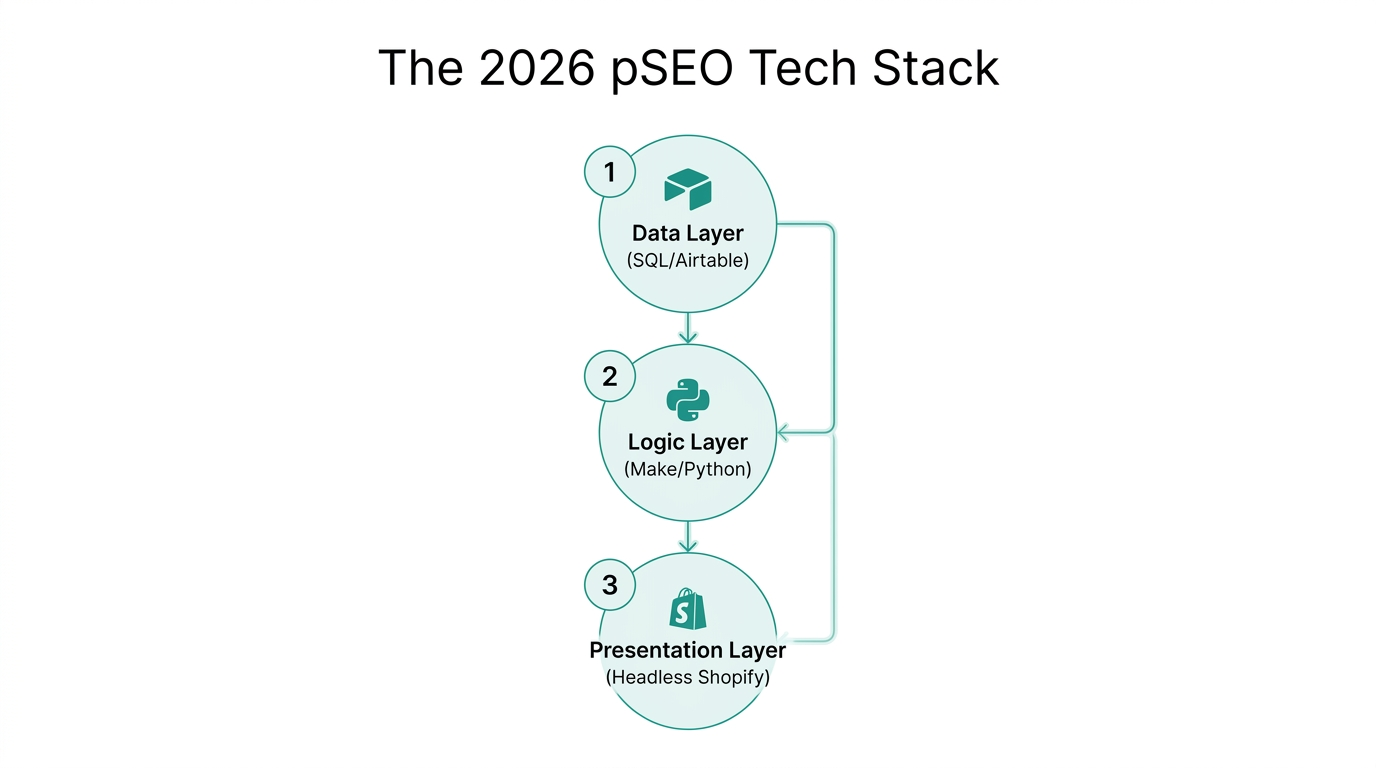
Building a programmatic engine requires three core components: a Data Source (your SKU list), a Template Engine (to design the pages), and a Publishing Mechanism (to push them live). In 2026, growth leads are moving away from manual uploads toward real-time synchronization.
1. Direct pSEO Engines for Enterprise
For large-scale retailers, tools like Verbolia are the gold standard. They sit on top of your existing site and generate high-performance landing pages without requiring a total site migration. This is essential for enterprise seo automation where speed-to-market is critical.
2. All-in-One Mid-Market Tools
If you are an agency or a mid-market brand using Webflow or WordPress, Seomatic.ai provides a seamless way to create bulk pages. For those specifically on Shopify, ConvertMate automates product descriptions and meta-tags, ensuring every SKU is optimized for conversion from day one.
3. The Connectivity Layer
Modern stacks often use Whalesync to bridge the gap between data in Airtable and the frontend CMS. This allows marketers to edit data in a spreadsheet and see it update across 10,000 live pages instantly. To ensure these pages are readable by both Google and AI search engines, integrating WordLift for automated Schema injection is a non-negotiable requirement in 2026.
"The 2026 tech stack isn't just about ranking; it's about building a Knowledge Graph that LLMs like ChatGPT and Perplexity can cite as a trusted source."Generative Engine Optimization (GEO) and Feed-Based SEO
As we look further into 2026, pSEO is evolving into GEO (Generative Engine Optimization). It is no longer enough to rank on page one of Google; you must be the primary citation for AI assistants. Tools like Passionfruit Labs now help brands track their visibility within conversational AI environments, a practice known as Answer Engine Optimization (AEO).
Furthermore, technical SEO is becoming increasingly feed-based. According to Novos, Google Shopping results are increasingly bypassing traditional category pages. This means your programmatic seo tools must focus on optimizing individual product-level data and structured attributes rather than just high-level metadata.
Avoiding the Pitfalls of Automated Scale
Scaling to 5,000,000 pages comes with significant risks. If not managed correctly, programmatic SEO can lead to "Crawl Waste" or Google penalties. To maintain a healthy architecture, avoid these common mistakes:
- Thin Content: Generating thousands of pages with only a title and a product grid will trigger a "Helpful Content" penalty. You must aim for at least 500 words of unique content or high-value data per page, often achieved via tools like Jasper AI.
- Duplicate Descriptions: Never use the same manufacturer description across multiple pages. This makes your site look like a low-quality mirror. Use AI to rewrite and unique-ify every entry.
- Orphan Pages: If your programmatic pages aren't linked from your main navigation or a dynamic sitemap, Google will never find them. Use internal linking automation tools like Omnius to create a "Hub and Spoke" model.
- Speed Latency: Huge databases can slow down your site. Since sites that load in 1 second have a 2.5x higher conversion rate than those taking 5 seconds (per VWO), technical performance is as important as content.
The Verdict for 2026 Growth Leads
The transition to programmatic SEO isn't just a technical upgrade; it’s a strategic necessity for ecommerce growth strategies 2026. By leveraging the right programmatic seo tools, brands can capture the massive revenue potential of the long-tail search market while maintaining a lean marketing team. Whether you are scaling through geotargeted collection pages (as suggested by CMAX) or automated product comparisons, the goal remains the same: be present wherever your customer is searching.
Start by auditing your current SKU visibility. If you find that 80% of your organic revenue comes from only 5% of your pages, it's time to build your programmatic engine. The long-tail is waiting.