In 2026, the landscape of digital advertising has moved far beyond the simple "set and forget" rules of the past decade. We have officially entered the era of autonomous ad management, where the distance between a creative idea and a profitable campaign is bridged not by a human clicking buttons, but by a reasoning-driven AI agent. For brands looking to maintain a competitive edge on Facebook and Instagram, Meta Ads automation 2026 is no longer about just using built-in platform tools; it is about deploying Agent-as-a-Service (AaaS) frameworks that think, act, and optimize in real-time.
From SaaS to AaaS: The Paradigm Shift in Ad Tech
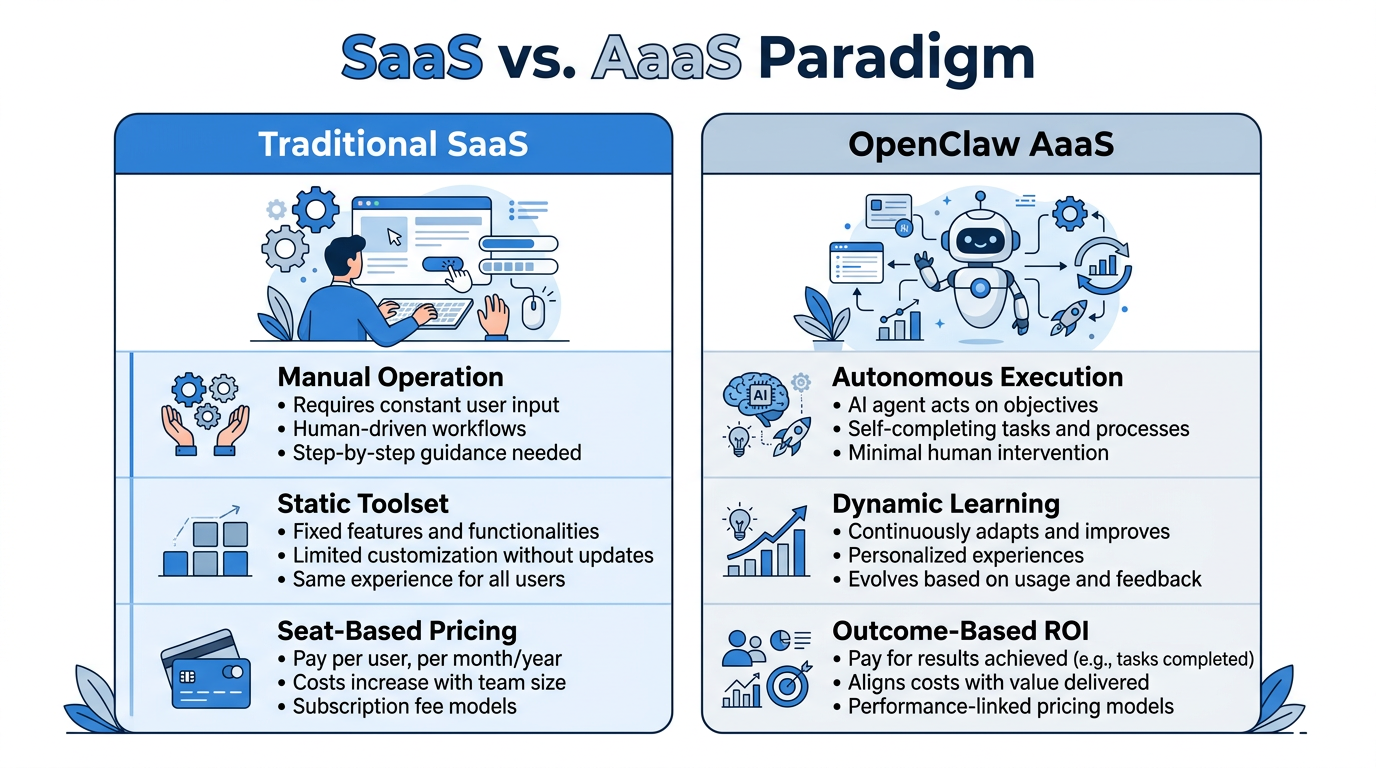
For years, marketers relied on traditional SaaS (Software-as-a-Service) tools to manage their spend. These tools were essentially glorified interfaces for the Meta Ads API, requiring constant human oversight and "if-then" logic. However, this year marks the definitive shift to AaaS (Agent-as-a-Service). Unlike legacy software, AI agents powered by the OpenClaw framework don't just follow rules—they reason. By utilizing large language models (LLMs) like Claude 3.5 Sonnet, these agents can understand context, detect nuance in consumer behavior, and make executive decisions that formerly required a senior media buyer.
While Meta’s own Advantage+ tools are powerful, they are often criticized for prioritizing platform liquidity over specific advertiser profitability. OpenClaw provides a layer of sovereignty, allowing brands to implement local-first AI. This means your sensitive first-party data stays on your own hardware—such as a dedicated Mac Mini—while the agent interacts with the Meta Ads Manager via the API. This setup satisfies strict GDPR and CCPA requirements, a priority for the 58% of top-tier brands that now avoid cloud-only SaaS for data processing.
"The shift to AaaS means the AI handles the math while the marketer handles the direction. We are moving from being pilots to being flight controllers."
The 7 Essential OpenClaw Skills for Meta Ads
OpenClaw operates through modular .md (Markdown) skill files. These files serve as the "brain" of your agent, instructing it on how to handle specific marketing challenges. Below are the seven core skills every high-volume advertiser needs in 2026.
1. The Performance Auditor
This skill acts as a 24/7 account health monitor. It scans for budget leaks—such as ad sets that have been stuck in the "Learning Phase" for too long—and ranks them by their potential impact on revenue. By running this on a Heartbeat Scheduler, the agent can catch CPA spikes in the middle of the night, pausing underperforming segments before they drain your daily budget.
2. The Creative Analyst
Creative fatigue is the silent killer of ROAS. The Creative Analyst skill monitors CTR decay over 7, 14, and 30-day windows. According to research from Ryze AI, brands using agent-assisted creative monitoring report a 22% increase in ROAS by maintaining fresh creative cycles and flagging assets for replacement before the performance drop-off actually happens.
3. The Bid & Budget Manager
Instead of relying on generic platform signals, this skill scales winning ad sets based on your actual profit margins. It follows the "10-20% Rule": instructing the agent to scale budgets by no more than 20% every 48 hours. This prevents the algorithm from being shocked back into the learning phase, ensuring stable scaling. You can find pre-configured versions of this logic on GitHub.
| Feature | Manual Management | Standard SaaS | OpenClaw AI Agent |
|---|---|---|---|
| Optimization Speed | Daily/Weekly | Hourly (Rules) | Real-time (Reasoning) |
| Data Privacy | Manual Exports | Cloud-based | Local-First / Sovereign |
| Creative Strategy | Intuition-based | Basic Stats | Automated Fatigue Detection |
| Scaling Logic | Emotional | Fixed % | Profit-Margin Driven |
4. The Audience Architect
Audience overlap is a common pitfall in complex accounts. This skill detects when your prospecting and retargeting funnels are bidding against each other for the same user. By cleaning up these overlaps, the agent ensures your Meta Ads ROAS optimization stays on track without the wasted spend associated with account fragmentation.
5. The Competitor Auditor
Using browser-control capabilities, the agent can visit the Meta Ad Library to extract competitor hooks and copy. It then scores these against your internal "Brand Bible" to suggest creative pivots. Agencies frequently use this to push weekly competitor reports directly to Slack or Microsoft Teams.
6. The Reporting Assistant
Marketers are moving away from static dashboards to "Command Centers." This skill aggregates data from the Meta API and Google Analytics 4 via the Model Context Protocol. Instead of a chart, you get a natural language summary sent to Telegram: "ROAS is up 12% today because the UGC video in Campaign X is overperforming in the Midwest region."
7. The Landing Page Auditor
Spending money on a broken link is a nightmare. This skill verifies the health of the destination URL before the ad goes live. If a "Buy" button breaks or page load speed drops, the agent pauses the ads instantly. Automated verification can save high-volume advertisers up to 13 hours per week in manual site checking.
"The landing page is 50% of the conversion equation. If your AI isn't monitoring the site as closely as the ad, you're only doing half the job."
The Business Case for Local-First AI
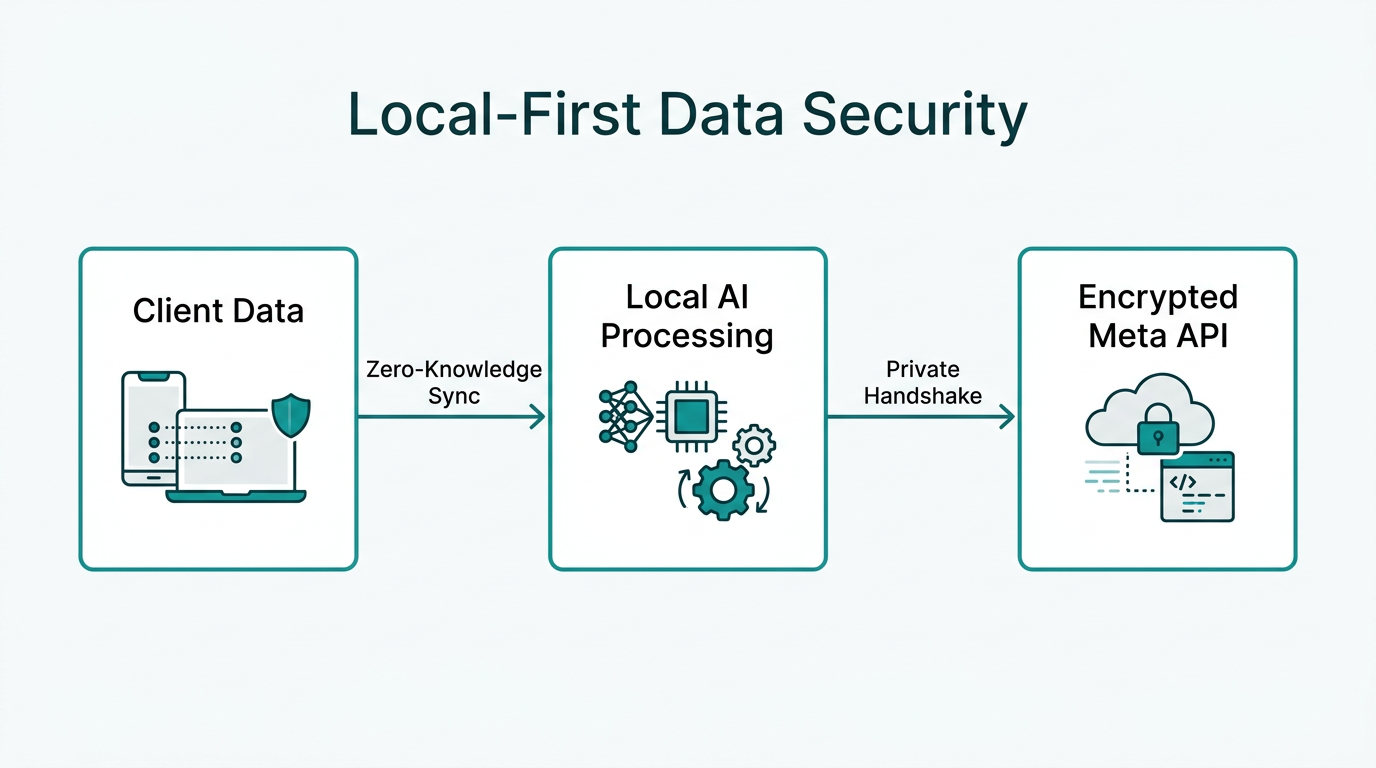
In 2026, privacy is a product feature. The trend toward Local-First AI stems from a growing distrust of massive cloud-only marketing suites. By hosting OpenClaw locally, you maintain control over your API keys and customer lists. AI-driven tools currently yield an average of $4.52 in revenue for every $1 spent on Meta platforms, but those gains are easily wiped out by data breaches or compliance fines.
For those who cannot host on-site, using a VPS like AWS Lightsail provides a middle ground—giving you a dedicated instance that you own and manage, rather than a shared SaaS environment. This infrastructure allows for 24/7 monitoring without the latency or privacy concerns of legacy tools.
Roadmap: Moving from Manual to Autonomous Growth
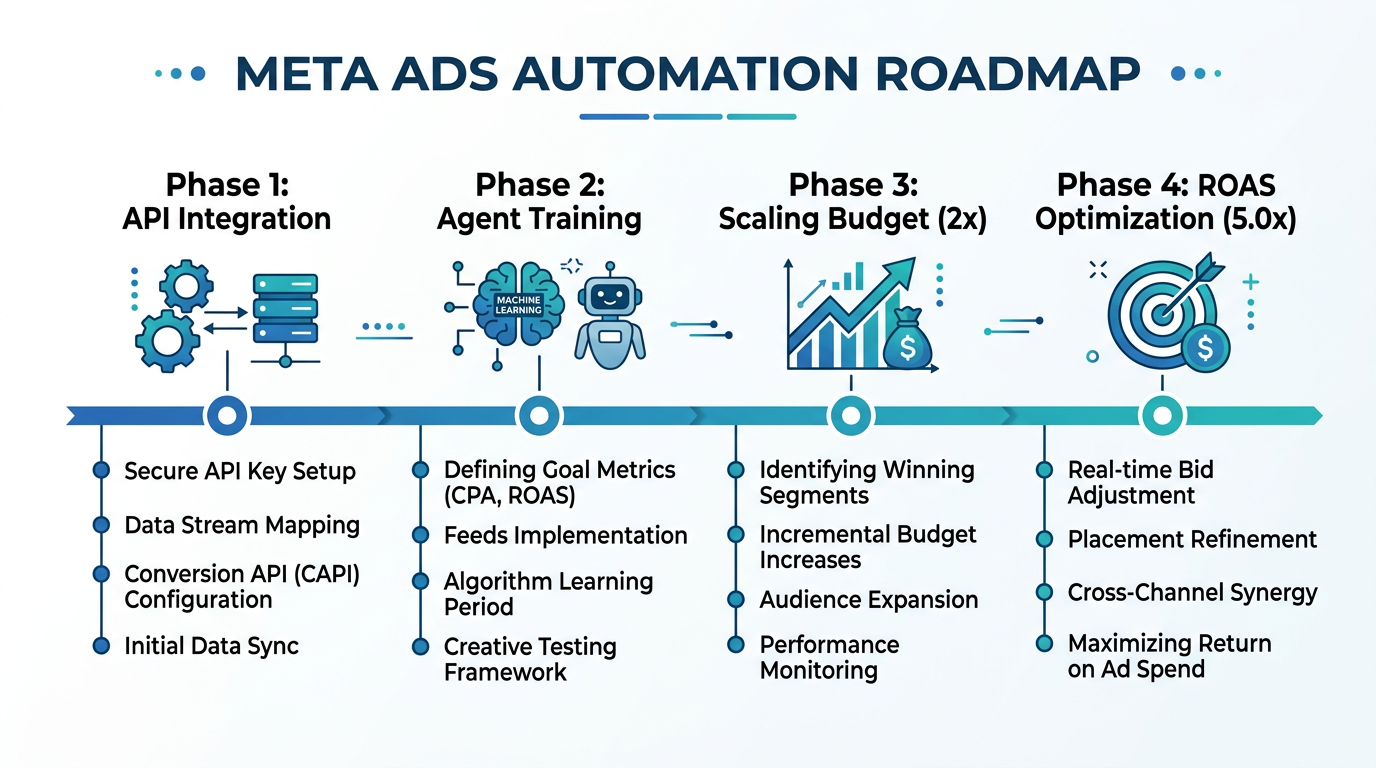
Transitioning to an AI marketing automation strategy should be done in phases to ensure the agent's reasoning aligns with your brand's goals.
Step 1: The Read-Only Phase
Deploy your agent with "Read-Only" permissions for at least 14 days. Use this time to review the agent's logic. If the agent suggests a budget cut, ask it why. Once you trust its reasoning, you can grant "Write" access.
Step 2: Install the Middleware
Use specialized plugins like the Adspirer Plugin for OpenClaw. This includes pre-configured 14KB `SKILL.md` files specifically optimized for the Meta Ads environment, saving you weeks of prompt engineering.
Step 3: Connect the Conversions API (CAPI)
An AI agent is only as good as the data it consumes. Without the Meta Conversions API (CAPI), the agent makes decisions based on incomplete browser signals. Ensuring a clean data feed results in a 30% reduction in Cost Per Acquisition (CPA) across the e-commerce sector.
Step 4: Establish the Command Center
Connect your agent to the WhatsApp Business API. This allows you to receive real-time alerts and issue commands—like "Scale the retargeting budget by $100"—directly from your mobile device while you're on the go.
Scaling with Intelligence
The future of Meta Ads isn't found in a better dashboard, but in better reasoning. By adopting OpenClaw AI agents, brands can move away from manual micro-management and toward high-level strategy. While these agents handle the heavy lifting of optimization, auditing, and reporting, marketers are free to focus on what truly moves the needle: creative innovation and customer psychology.
For those looking to find the perfect creators to fuel these automated campaigns, platforms like Stormy AI streamline the process of creator sourcing and outreach, ensuring your AI agents always have a fresh supply of high-performing UGC to analyze and scale. In 2026, the brands that win will be those that combine human-led creativity with the tireless, autonomous precision of AI agents.