In 2026, the era of the hyper-exposed "celebrity CEO" is undergoing a radical transformation. The digital landscape is shifting away from curated lifestyle aesthetics and toward raw, skill-based authority. For introverted entrepreneurs, this is the golden age. You no longer need a high-end camera or a desire for fame to build a seven-figure empire. Take the case of Nick Buzz, an anonymous designer featured on Starter Story, who scaled his design business to $1.2 million a year without ever showing his face. His journey from an immigrant in Canada with a nearly empty bank account to a million-dollar founder proves that a faceless digital marketing strategy is not just viable—it is one of the most profitable paths in the modern creator economy.
The 2026 Shift: Why Anonymity is the New Authority
Learn why Nick chose to stay anonymous while building his successful brand.
By 2026, the market has become saturated with "personal brands" that prioritize personality over product. This has led to a significant trust gap. Consumers are increasingly skeptical of influencers whose main skill is being famous. Conversely, anonymous accounts on X (formerly Twitter) that lead with high-signal content are seeing higher engagement rates and deeper community trust. According to recent influencer marketing benchmarks, niche-focused accounts often outperform personality-led ones in conversion metrics. When you remove the face, the audience focuses entirely on the value you provide.
"Being anonymous gives me peace. I didn't want any attention on who I am or where I'm coming from. It allows me to post whatever I want without affecting my personal life."
This psychological shift is fueling a new wave of an anonymous creator economy business model. Founders are realizing that anonymity offers a unique form of "creative freedom." As Nick mentions in his Starter Story interview, being faceless allowed him to escape the judgment of family and peers who doubted his career path in design. In 2026, building in the dark allows you to iterate faster, pivot without "brand damage," and focus purely on social media authority building through results rather than rhetoric.
Profile Optimization: Crafting a "Professional Ghost" Aesthetic
If you aren't using your face, your profile's visual and textual elements must work twice as hard to establish credibility. This is the cornerstone of Twitter brand building in 2026. Your goal is to move from being a "mystery account" to a recognized authority in your niche.
The Visual Identity
Instead of a headshot, successful faceless brands use high-quality custom avatars or abstract symbols that represent their industry. Use tools like Figma or Canva to create a cohesive brand kit. Your banner should not be a scenic photo; it should be a value proposition. If you are a designer, show a collage of your best UI work. If you are a coder, show a snippet of clean, elegant architecture.
The Bio and The Pinned Thread
Your bio needs to answer one question: What can you do for me? Nick Buzz's profile didn't focus on his life story; it focused on his design output. In 2026, your pinned thread is your digital storefront. It should contain:
- A clear demonstration of your expertise (a "proof of work" portfolio).
- Testimonials or screenshots of client results.
- A low-friction call to action (CTA) using a tool like Carrd or Framer.
| Feature | Personal Brand (Traditional) | Faceless Brand (2026 Model) |
|---|---|---|
| Profile Photo | Professional Headshot | Minimalist Logo or 3D Avatar |
| Bio Focus | Lifestyle & Credentials | Outcome-Based Value Prop |
| Content Style | Vlogs & Selfies | Case Studies & Visual Assets |
| Trust Metric | Likability/Charisma | Proof of Work/Utility |
The 'Roasting' Tactic: A Masterclass in Viral Authority
Discover how critique and feedback on landing pages turned into a business.One of the most effective ways to build a faceless brand is the "Roasting" tactic. Nick Buzz utilized this on X to gain massive traction. The strategy is simple: find a public project, critique it constructively, and provide a redesigned or improved version for free. This demonstrates your skill in a public forum, creating a viral loop of social media authority building.
Step 1: Identify the Target
Look for founders sharing their new landing pages or apps. They are often looking for feedback. Use the quote-tweet feature to offer a "roast."
Step 2: Provide High-Value Critique
Don't just say it looks bad. Explain why the conversion rate might be low or why the UI is clunky. This mimics the high-level consulting that clients pay thousands for.
Step 3: The 'Show, Don't Tell' Moment
Nick didn't just give text feedback; he would redesign elements of the page. By showing a before and after, he proved he was a top-tier designer. This caught the eye of high-value leads who eventually booked calls for his subscription service, Baked.
"I just took someone's post, quote-tweeted it, said 'roasted,' and then added things I thought I could improve. People started seeing it, and it worked."
By 2026, this tactic has evolved into "Value-First Outreach." Instead of cold DMing, you provide value publicly. Platforms like Stormy AI can help you discover these creators and founders by searching for keywords like "launched my first app" or "new landing page" across TikTok, X, and LinkedIn, allowing you to target your roasts for maximum impact.
The Monetization Ladder: From $9 Kits to $160K/mo Subscriptions
Follow the journey of making the first dollar to building recurring revenue.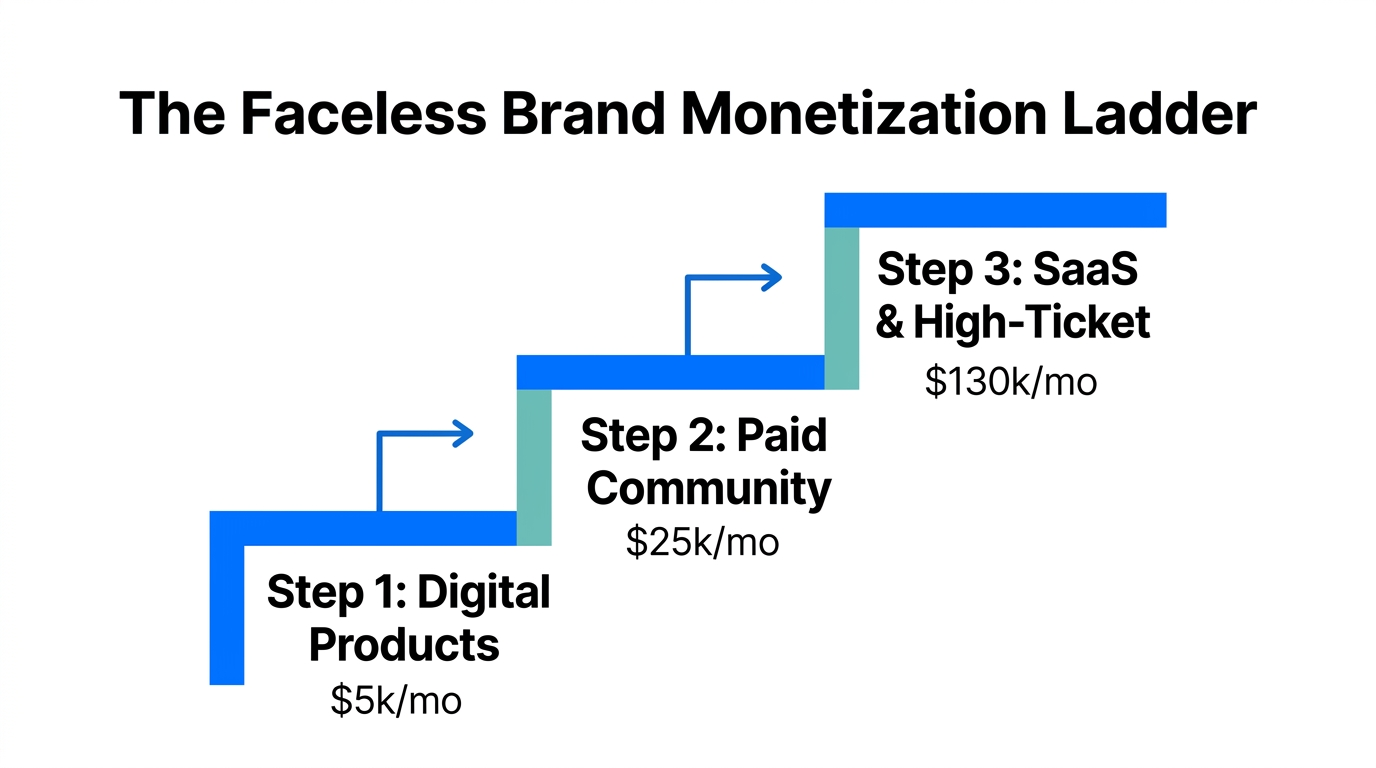
Building a $1M faceless brand requires a tiered product strategy. You cannot jump straight from an anonymous account to a $5,000/month retainer without building a ladder of trust. Nick Buzz's revenue journey is a perfect blueprint for this transition.
- The Entry-Tier Digital Product ($9 - $49): Nick launched a design kit called "Tiny UI" for $9. This wasn't meant to make him a millionaire; it was meant to validate that people would pay him. Selling digital products is the fastest way to turn followers into customers.
- The Mid-Tier Service ($150 - $500): As demand grew, he started charging for individual landing page designs. This allowed him to refine his workflow and gather testimonials.
- The High-Ticket Subscription ($2,000 - $5,000+/mo): Eventually, he launched "Baked," a design-subscription agency. This moved his business from erratic freelancing to monthly recurring revenue (MRR), a model popularized by founders like Brett Williams of DesignJoy.
At its peak, Nick and his partner scaled Baked to $160,000 in monthly revenue. This was achieved by staying aggressive with marketing and maintaining a controversial, high-authority tone on social media. They leveraged their faceless influencer marketing presence to keep the pipeline full without ever needing to run expensive Google Ads or Meta Ads.
Using Starter Story to Find Your Niche
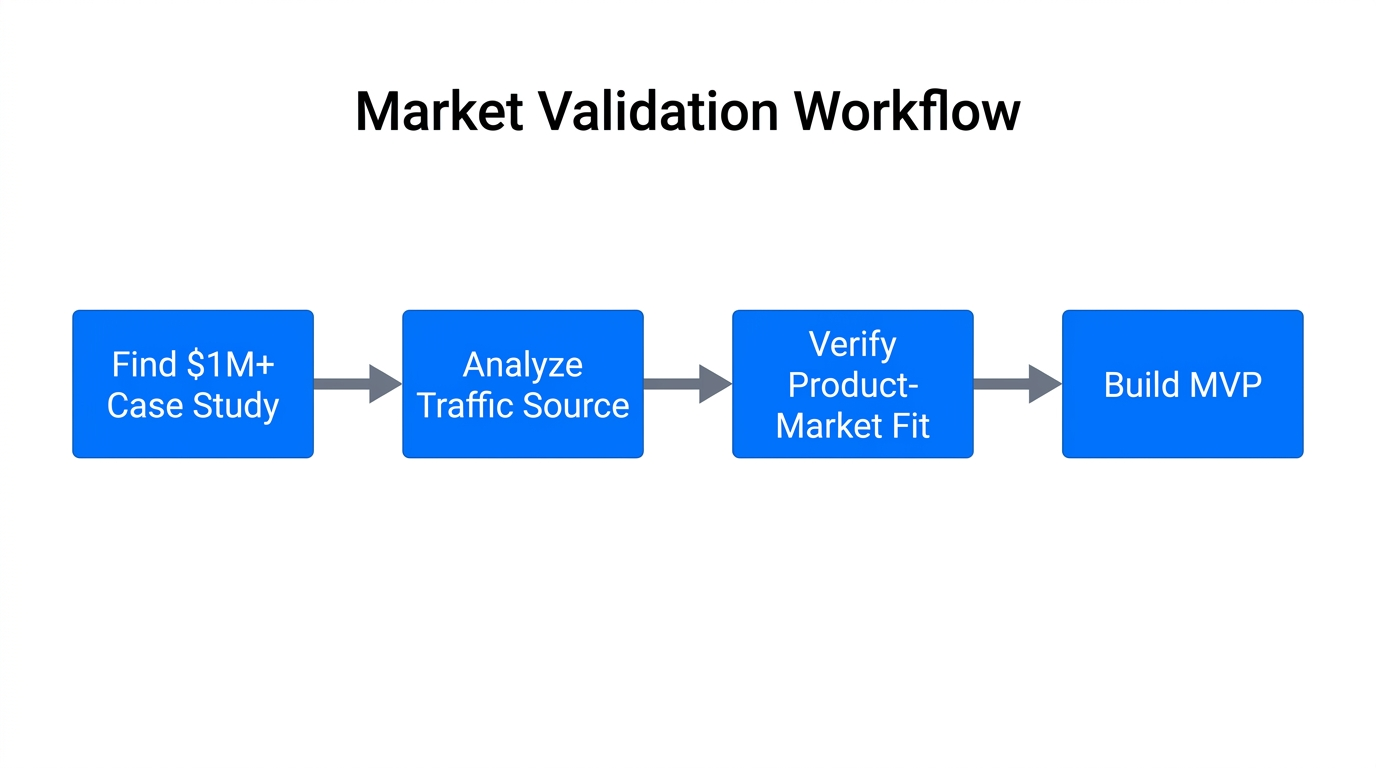
The biggest mistake entrepreneurs make is trying to reinvent the wheel. In 2026, data-driven validation is the only way to minimize risk. Nick Buzz spent years struggling in logo contests before finding his niche. You can skip those years of struggle by studying validated market gaps.
Starter Story provides a library of over 4,000 case studies from founders who have already cracked the code. When building a faceless brand, use these case studies to find:
- High-margin service niches: Look for businesses with low overhead and high recurring value (e.g., SEO, Ghostwriting, Design Subscriptions).
- Marketing playbooks: Study how other anonymous founders use Reddit or X to drive traffic.
- Operational setups: Learn how to manage multiple projects without burning out—a strategy often discussed in Notion or Zapier automation communities.
"The best way to learn is by studying people that have already done it. Starter Story is a library of inspiration and actual case studies you can use to grow."
Scaling the Ghost: Operations and AI in 2026
Scaling the business by hiring a team and managing operational growth effectively.
As an anonymous founder, your time is your most valuable asset. Nick reached a point of extreme burnout, working 16 to 20 hours a day because his focus was scattered across too many projects. To reach the $1M mark, you must ruthlessly prioritize.
By 2026, automation and AI are the force multipliers for faceless brands. Instead of manually searching for leads, tools like Stormy AI allow you to set up an autonomous AI agent. This agent can discover potential partners, handle the initial outreach, and follow up with creators while you sleep. This allows you to focus on the creative output (the roasts and the design kits) while the AI handles the repetitive faceless influencer marketing and business development tasks.
The 2026 Tech Stack for Faceless Brands:
- Outreach: Stormy AI for discovering and contacting high-quality niche creators.
- Payments: Stripe for seamless global billing.
- Management: Linear or Trello for tracking design requests and client deliverables.
- Content: Buffer or Metricool for scheduling authority-building threads across platforms.
Conclusion: Don't Wait for Permission
The story of Nick Buzz is a testament to the power of persistence and the strategic use of anonymity. He went from being a 17-year-old immigrant who had never been on a plane to a millionaire founder with the freedom to pay for a full-time nanny and support his family. He didn't wait for his parents' approval or a job offer from Meta to validate his worth. He built his own table, anonymously, in the digital trenches of X.
If you are looking to build a seven-figure business in 2026, stop worrying about your headshot. Start worrying about your output. Find a niche on Starter Story, build your authority through high-value roasts, and scale your operations with modern AI tools. The anonymous creator economy is waiting for you to take the leap.