In 2024, we were impressed when AI could write a decent ad headline. In 2025, we marveled as it generated short-form video scripts. But in 2026, the marketing landscape has undergone a tectonic shift from Generative AI to Agentic AI. We are no longer just asking machines to create content; we are deploying autonomous agents to manage, optimize, and scale multi-million dollar ad budgets across the digital ecosystem. This is the era of agentic marketing 2026, where the distance between a growth strategy and its execution is measured in milliseconds, not weeks.
The Great Shift: From Generative to Agentic Marketing in 2026
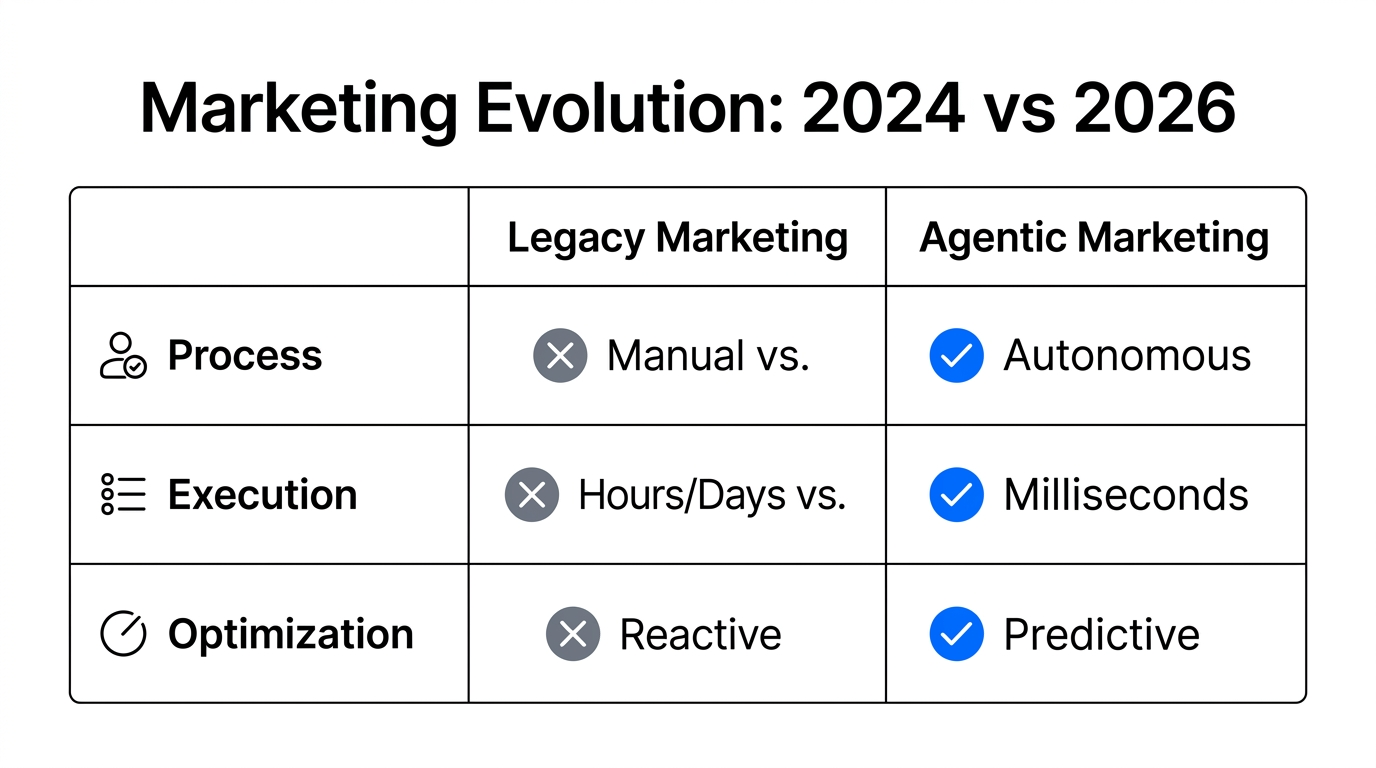
The distinction between the two is simple but profound. While generative AI focuses on output (text, images, video), agentic AI focuses on outcomes (ROAS, CPA, conversion volume). According to industry reports, 85% of marketing companies now leverage AI tools, with the highest growth occurring in these autonomous ad management models. This shift is fueling a market projected to reach a staggering $217.33 billion by 2034, growing at a CAGR of 26.7% [source: Precedence Research].
"The era of the manual PPC agency is over; the era of the 'Agent Architect' has begun."
For CMOs and growth leads, this isn't just about efficiency; it’s about survival. Manual optimizations are too slow for the modern real-time bidding environment. Early agentic adopters are already seeing a 23% bump in lead conversion rates by removing the human bottleneck from daily campaign maintenance. This transition is being spearheaded by OpenClaw, the open-source framework that has become the gold standard for high-performance marketing teams.
| Feature | Generative AI (2024-2025) | Agentic AI (2026+) |
|---|---|---|
| Core Function | Content Creation | Autonomous Execution |
| Human Role | Prompting & Editing | Governance & Strategy |
| Primary Metric | Content Volume | Business Outcome (ROAS/CPA) |
| Feedback Loop | Manual Review | Self-Healing & Real-Time |
OpenClaw: The Open-Source Engine Powering Autonomous Ad Ops
With over 300,000 GitHub stars, OpenClaw (formerly known as Clawdbot) has eclipsed proprietary SaaS tools to become the AI paid media strategy foundation. The reason is simple: privacy and control. Unlike cloud-based platforms that ingest your first-party data into their black-box models, OpenClaw is Local-First. You host it on your own DigitalOcean or Hetzner VPS, ensuring your sensitive customer lists and performance data never leak to third-party servers.
The community refers to these autonomous agents as "Lobsters"—a nod to the platform's mascot. A Lobster isn't just a script; it's a sophisticated entity capable of "Self-Healing" ad accounts. When a tracking pixel breaks or a conversion window shifts, the agent detects the anomaly and applies a fix automatically. As Peter Steinberger, the creator of OpenClaw, notes, the focus has shifted from managing tools to managing workflows.
The 7 Core OpenClaw Skills for Paid Media Scale
To succeed in agentic marketing 2026, your Lobsters must be trained in specific functional areas. These are known as "Skills" in the ClawHub ecosystem. Below is the strategic playbook for deploying them effectively.
1. Performance Auditor
The Performance Auditor is your first line of defense. It scans Google and Meta accounts to detect structural issues, broken tracking, or low-quality scores. We recommend deploying this as a "Read-Only" agent for the first 14 days. It provides a weekly "Health Score" in Slack, allowing you to build trust before granting it permission to make live changes.
2. Creative Analyst (Fatigue Monitor)
Creative is the 2026 equivalent of targeting. The Creative Analyst skill monitors CTR decay and ROAS at the asset level. Research from Stormy AI shows that brands using automated creative auditing reduced production waste by 70%. By flagging creative fatigue before performance tanks, your team can rotate assets proactively using tools like Canva or CapCut.
"Creative is the new targeting. If you aren't rotating assets based on fatigue signals, you're overpaying for attention." — Nikhil Kumar, Growth Marketer.
3. Bid & Budget Manager
This agent autonomously scales winning ad sets and trims "laggards" based on real-time ROAS or CPA triggers. For example, a B2B SaaS founder recently maintained a 1.8x ROAS while traveling, using an OpenClaw bid manager via Telegram. Avoid setting broad scaling rules; instead, use "Step Scaling" based on a 7-day conversion window to prevent algorithmic volatility.
4. Audience Architect
The Audience Architect identifies audience overlap and suggests new "Custom Intent" segments. With 26% of ad budgets traditionally wasted on ineffective targeting, this skill is critical. Use it to exclude recent purchasers across Google Ads and Meta Ads Manager simultaneously, eliminating the "overlap tax."
5. Search Term Analyzer
Negative keyword mining is no longer a monthly chore; it's a real-time process. This skill scans Google Search Term reports for irrelevant, high-spend queries and adds them as negative keywords instantly. This prevents your budget from being drained by zero-conversion queries that only look good on paper.
6. Pacing & Budget Watcher
To prevent the dreaded "Friday night overspend," this skill monitors daily pacing. By connecting it to the Ad Context Protocol (AdCP), as detailed in the Stormy AI Agentic Ad Ops Guide, the agent can read across 100+ different tools to ensure your monthly budget is distributed optimally across TikTok, LinkedIn, and Meta.
7. Cross-Platform Reporting Agent
Early adopters of agentic reporting report saving 10–13 hours per week per account. This skill unifies data from all platforms into a single Markdown file, which can be summarized by Claude or ChatGPT for high-level executive briefings.
The "Human-in-the-Loop" Framework: SOUL.md and Approvals
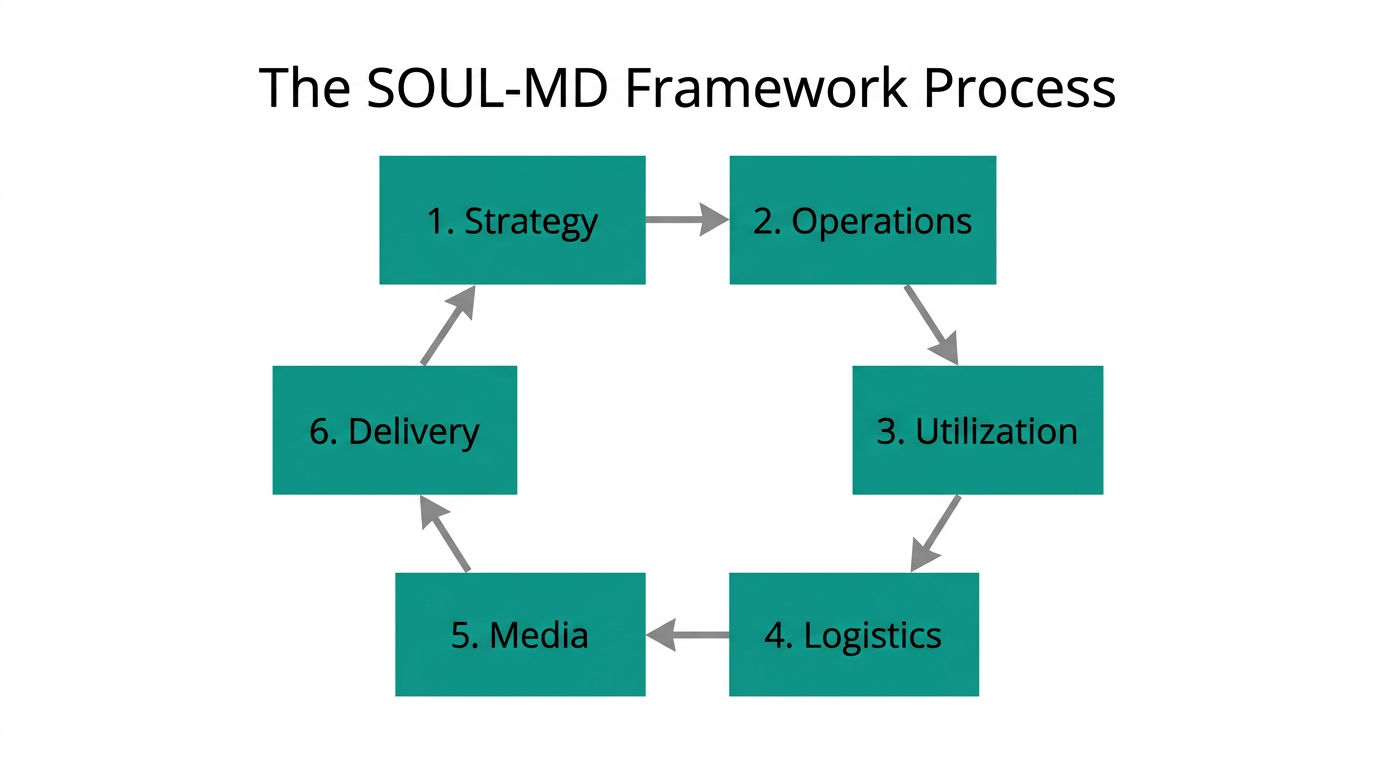
One of the biggest hurdles in marketing agent workflows is trust. You cannot simply "close the laptop" and hope for the best. This is where the SOUL.md (Standard Operating Usage Logic) file comes into play. It is the "soul" of your agent—a configuration file that defines the agent's constraints, brand voice, and escalation paths.
OpenClaw utilizes a Human-in-the-Loop (HITL) protocol. Before a Lobster changes a bid or pauses a creative, it drafts the proposed change and sends a "Draft Approval" message to your team. No action is taken until a human clicks "Approve" in the agent workspace. This ensures that the AI acts as an amplifier of human strategy, not a replacement for it.
Playbook: Deploying Your First "Lobster" Agent on a VPS
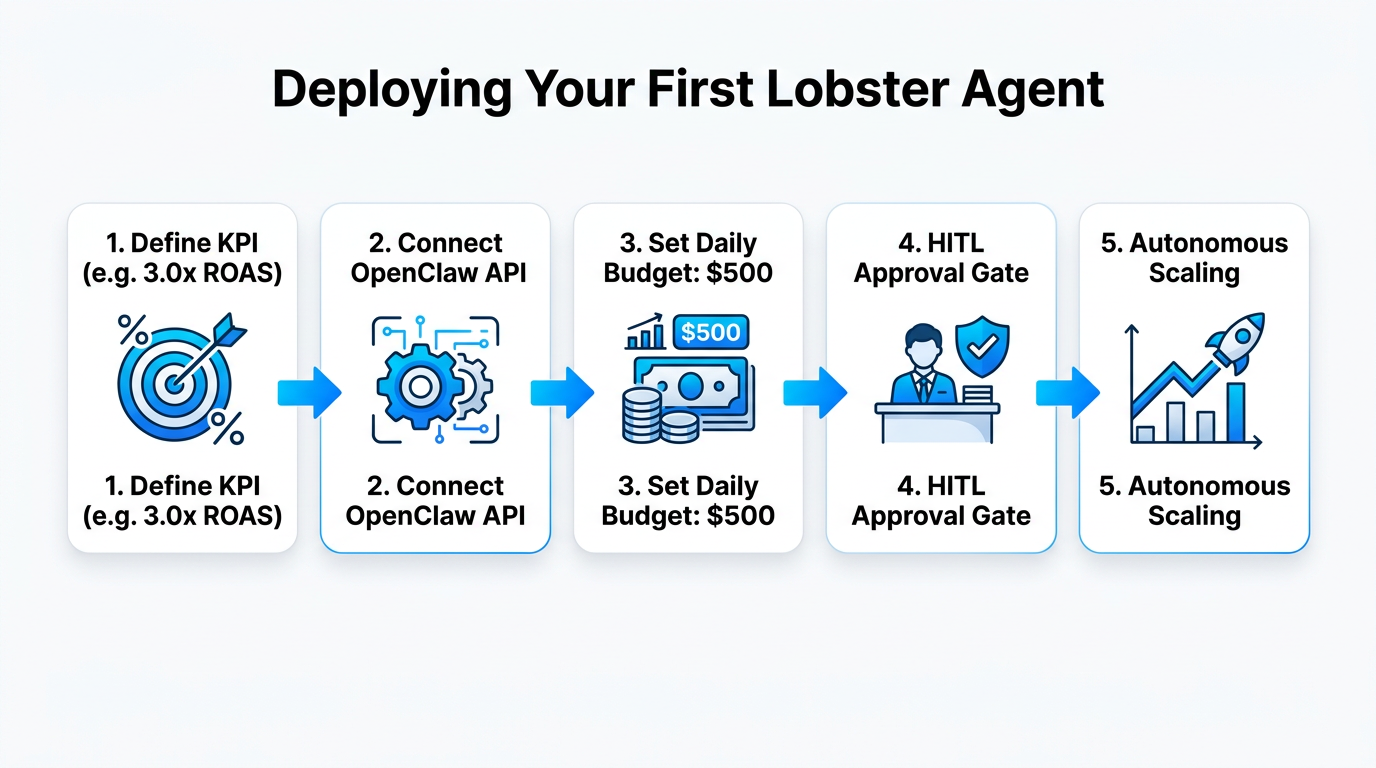
Ready to move beyond OpenClaw automation theory? Follow this step-by-step roadmap to deploy your first Lobster agent.
- Step 1: Provision a VPS. Sign up for a provider like DigitalOcean. Choose a server with at least 4GB of RAM to ensure smooth execution of the OpenClaw engine.
- Step 2: Install OpenClaw. Use the command line to pull the latest image from the official repository.
- Step 3: Secure Your Secrets. Never hard-code API keys. Use the
openclaw secretscommand to securely store credentials for TikTok Ads Manager and Apple Search Ads. - Step 4: Configure the SOUL.md. Define your constraints. For example: "Do not increase daily budget by more than 20% every 48 hours."
- Step 5: Run the Audit. Launch the Performance Auditor in read-only mode for 14 days. This builds the baseline data the agent needs for future optimizations.
Managing these agents becomes significantly easier when paired with a centralized influencer and creator management platform. While OpenClaw handles the paid media math, platforms like Stormy AI help you discover and vet the human creators whose UGC (user-generated content) will fuel your high-performing ads.
The $217 Billion Future: Navigating the Agentic Economy
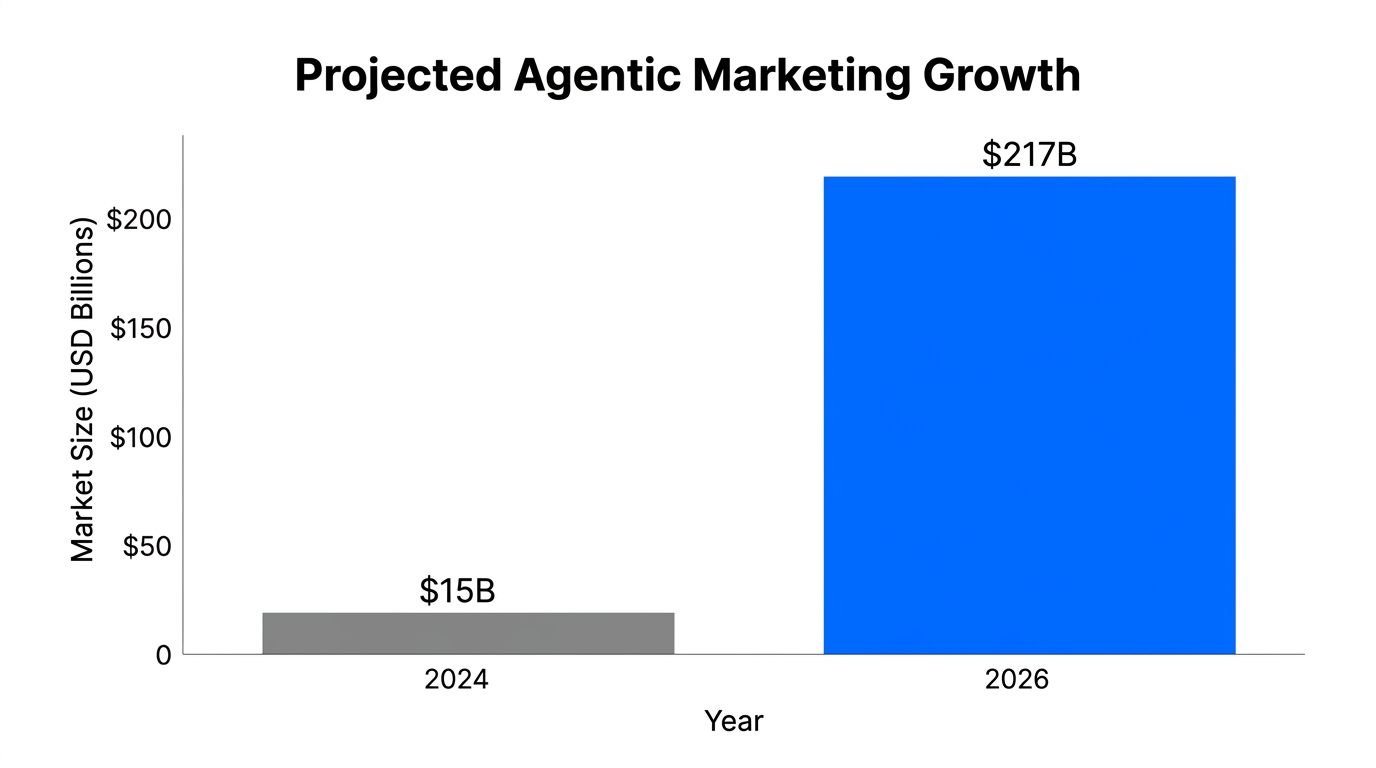
As we move deeper into 2026, the AI paid media strategy of yesterday is being replaced by the agentic economy. The brands that win will be those that view AI agents not as tools, but as digital employees. By delegating the repetitive, data-heavy tasks of bid management and keyword mining to Lobsters, growth teams are finally free to focus on high-level creative strategy and brand positioning.
The shift to agentic marketing 2026 is not just a technological upgrade; it is a fundamental redesign of how we work. With a clear HITL framework, a robust VPS setup, and the right OpenClaw skills, you are no longer just participating in the market—you are orchestrating it.