In the rapidly evolving landscape of 2026, the blueprint for digital entrepreneurship has shifted from building broad SaaS platforms to deploying hyper-specialized AI agents. The success story of Lancer, an AI-powered agent that reached $10,000 Monthly Recurring Revenue (MRR) in just four months without a single dollar spent on ads, has become the gold standard for modern builders. This framework isn't about chasing the next viral trend; it is about identifying boring, repetitive tasks on high-traffic platforms and solving them with surgical precision. If you are looking for a SaaS go-to-market strategy that bypasses the noise of social media algorithms, you need to understand the 'connector' model and the power of platform-native automation.
Finding Ideas in Plain Sight: The $10k/Month Automation Gap
Discover how to identify high-quality business opportunities that are often hidden in plain sight.
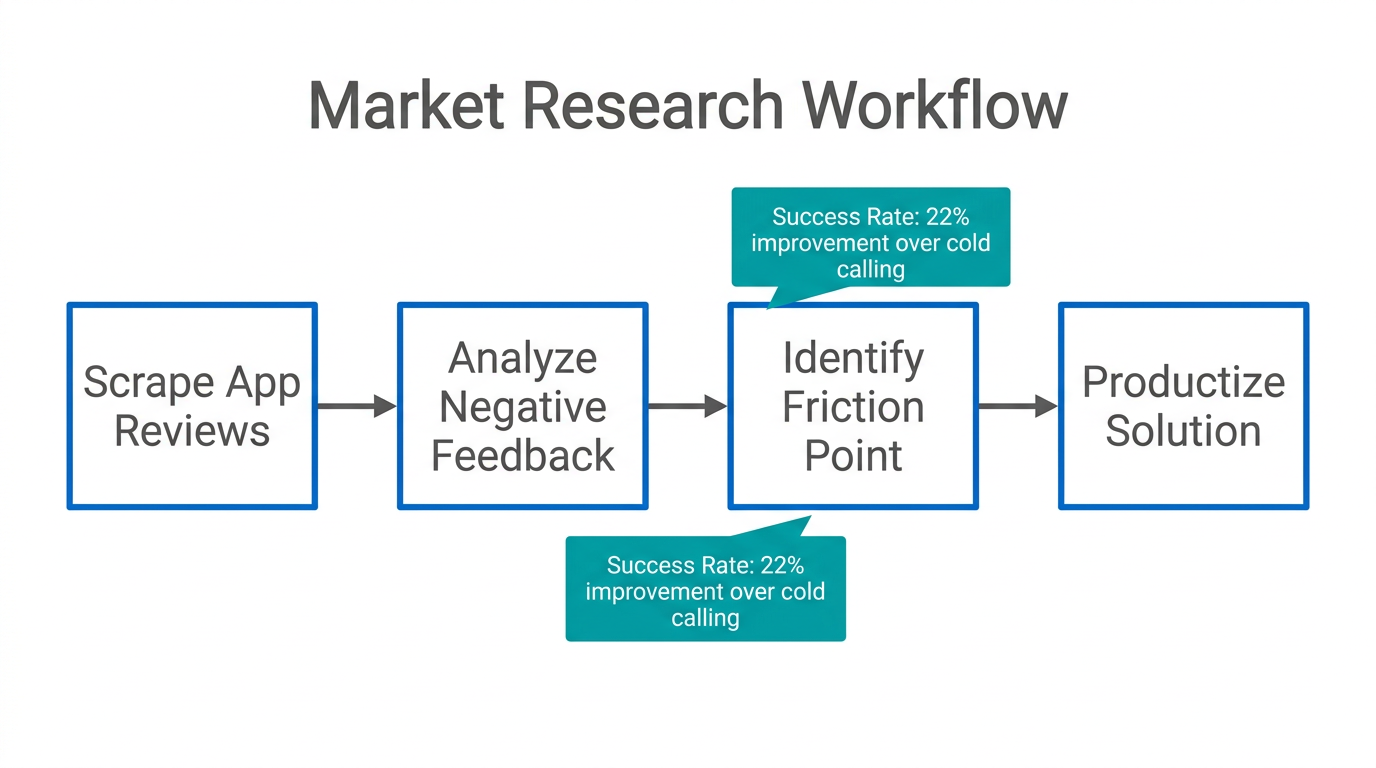
Most entrepreneurs fail because they try to solve problems that don't exist. In 2026, the most lucrative opportunities are hidden within the workflows of established marketplaces. Take Upwork, for example. Every month, over 200,000 jobs are posted on the platform. For a freelancer or agency, qualifying these leads and writing personalized proposals is a grueling manual process that can consume 10+ hours a week. This is what we call a 'boring' problem, and it is exactly where how to build an AI agent business 2026 begins.
When Ivonne built Lancer, he didn't invent a new market; he built a layer on top of an existing one. By using Large Language Models (LLMs) to automate job discovery and bidding, he created a tool that outperformed human speed by 10x. The shift in 2026 is that users are no longer looking for 'tools'—they are looking for 'outcomes.' They don't want a CRM; they want the leads. They don't want a writing assistant; they want the submitted proposal. Identifying these high-intent moments on platforms like LinkedIn or Shopify is the first step toward monetizing AI agents effectively.
"The most interesting part of how we grew Lancer is that we did zero paid ads. We focused on connectors who already had the trust of our ideal customers."The 5-Step Launch Playbook: From Internal Utility to Premium SaaS
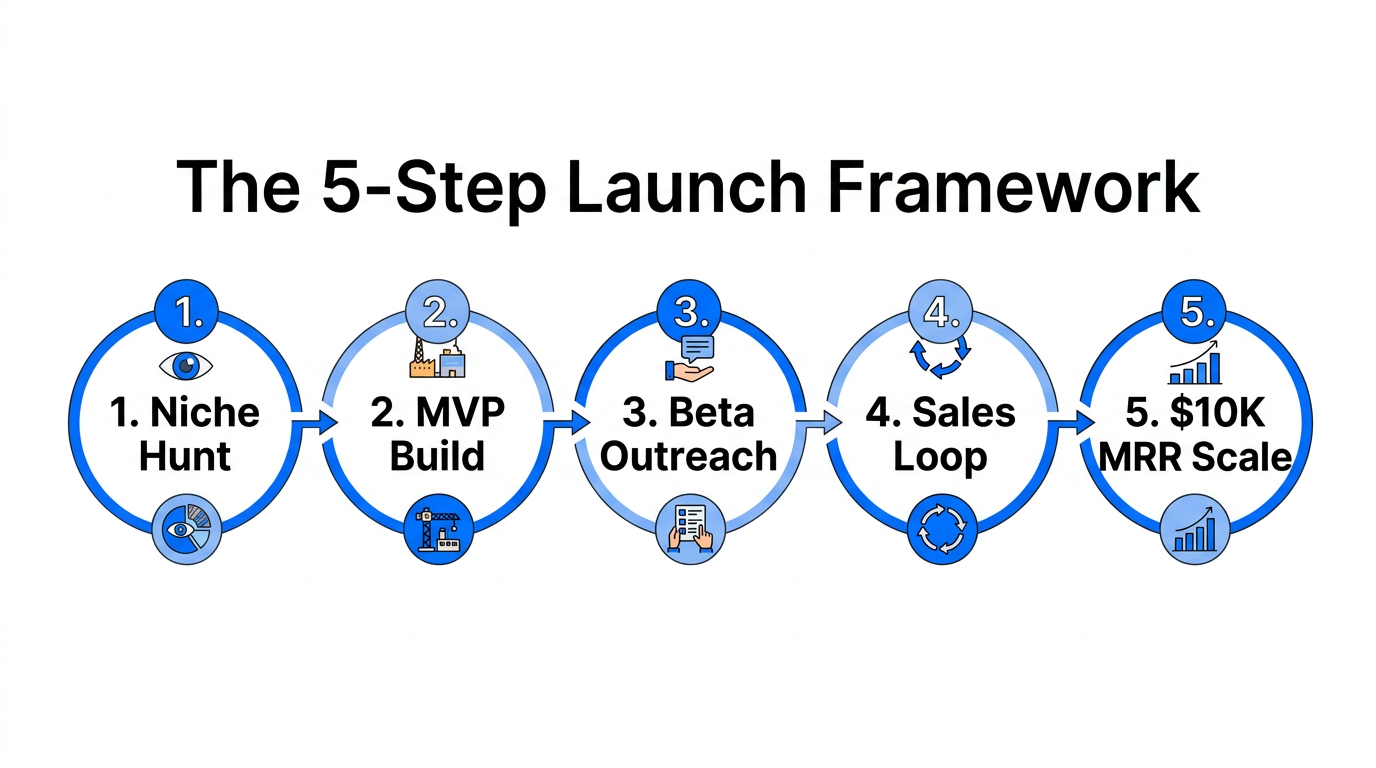
Moving from a script on your laptop to a $10k MRR business requires a structured approach. The following playbook, inspired by the Lancer growth model, focuses on high-leverage distribution rather than brute-force marketing.
Step 1: Define the Hyper-Specific ICP
Your Ideal Customer Profile (ICP) should be the group that experiences the most friction. For Lancer, while freelancers were a target, it was the high-volume agencies that became the most valuable users. These customers stay longer, have higher budgets, and require the automation most urgently. Before you write a line of code, use a framework to define your ICP as the person who would feel physical relief if your agent solved their problem.
Step 2: Identify Your 'Connectors'
A 'connector' is an individual or entity that already has the attention and trust of your ICP. Instead of cold emailing 1,000 prospects, you pitch the one person who influences them all. In the Upwork niche, these are 'Upwork Coaches' or agency consultants. By turning them into affiliates, your product becomes a high-ticket recommendation rather than a cold sell.
Step 3: Build the MVP with an 'Agency-First' Mindset
Leverage modern tech stacks to move fast. Lancer was built using Next.js and Node.js, hosted on GCP. By using OpenRouter for LLM access, you can swap between models (like Claude or GPT-4) to ensure the highest quality output for your specific niche. The goal is a functional tool that solves the core pain point immediately.
Step 4: Execute the 'Loom Pitch'
Don't send generic emails. Create a personalized, long-form Loom video for your identified connectors. Show them exactly how the tool works, the results it generates, and the commission structure. This level of personalization is rare and commands respect in a world of automated spam.
Step 5: Automate Affiliate Management
Once you have 2-3 connectors, manual tracking becomes a bottleneck. Use dedicated affiliate software like Tolt to manage payouts and track referrals. This allows you to focus on product development while your connectors handle the SaaS go-to-market strategy for you.
Pricing Strategies for AI Agents in 2026: Maximizing LTV
Explore commission structures and revenue models that power successful AI-driven agency operations today.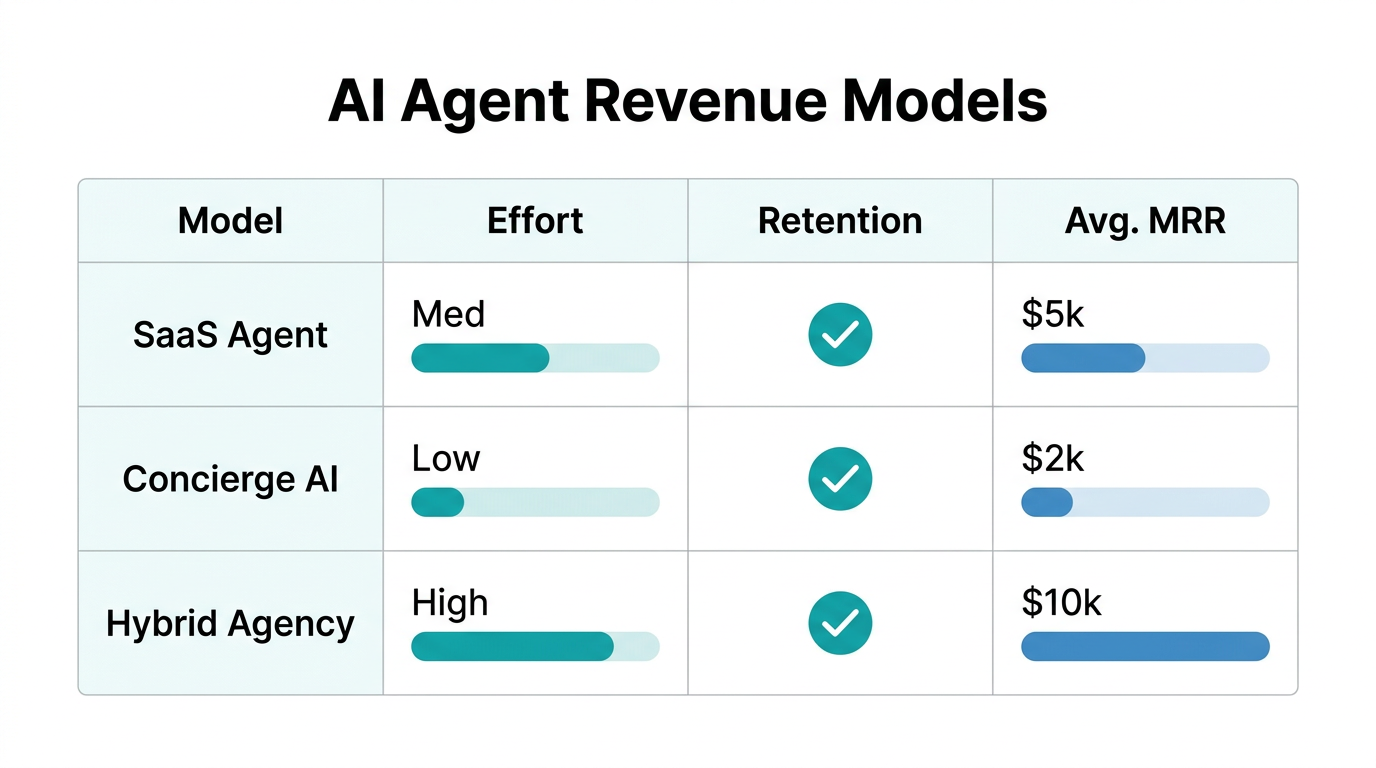
Pricing an AI agent is different from pricing traditional SaaS. Because agents often incur variable costs (API tokens), your AI agent revenue models must balance profitability with user perceived value. In 2026, we see a shift toward 'usage-plus' models. Below is a comparison of the most successful tiers for a $10k MRR trajectory.
| Tier Name | Pricing Model | Ideal For | Key Benefit |
|---|---|---|---|
| Pay-As-You-Go | $79 / 30 Actions | Freelancers | Low entry barrier, zero risk. |
| Light Plan | $300 / Month | Boutique Agencies | Predictable cost for scaling teams. |
| Unlimited | $500+ / Month | High-Growth Agencies | Maximum leverage and priority support. |
Charging a premium ($300-$500/mo) is often easier than charging $20/mo. Why? Because you are targeting businesses where the ROI is clear. If an agent helps an agency close one $5,000 contract, a $500 monthly fee is an easy 'yes.' This is the heart of monetizing AI agents: pricing based on the value of the outcome, not the complexity of the code.
"The goal is to turn a manual acquisition channel into an automated one that generates five to six figures for your users. If you do that, price is never an issue."The Unfair Advantage: Why Agency Founders Are Winning
Learn how freelancers and agencies can leverage their existing networks to scale effectively.In 2026, the most successful SaaS products aren't coming from Silicon Valley garages; they are coming from agency back-offices. Agency founders are uniquely positioned to build the next wave of AI products because they are solving their own documented pain points. Lancer started as an internal tool for a software development agency. It was only after it 'crushed' for them internally that they decided to launch it to the public.
This 'eat your own dog food' approach ensures product-market fit from day one. When you are looking for creators or partners to scale your outreach, platforms like Stormy AI can help you identify high-leverage influencers and automate the discovery process, mirroring the same automation principles you are building into your agent. By treating your own agency's bottlenecks as product opportunities, you eliminate the guesswork out of entrepreneurship trends 2026.
From Security to Leverage: The 2026 Career Pivot
Transition from manual workflows to building software solutions as a high-leverage skill for 2026.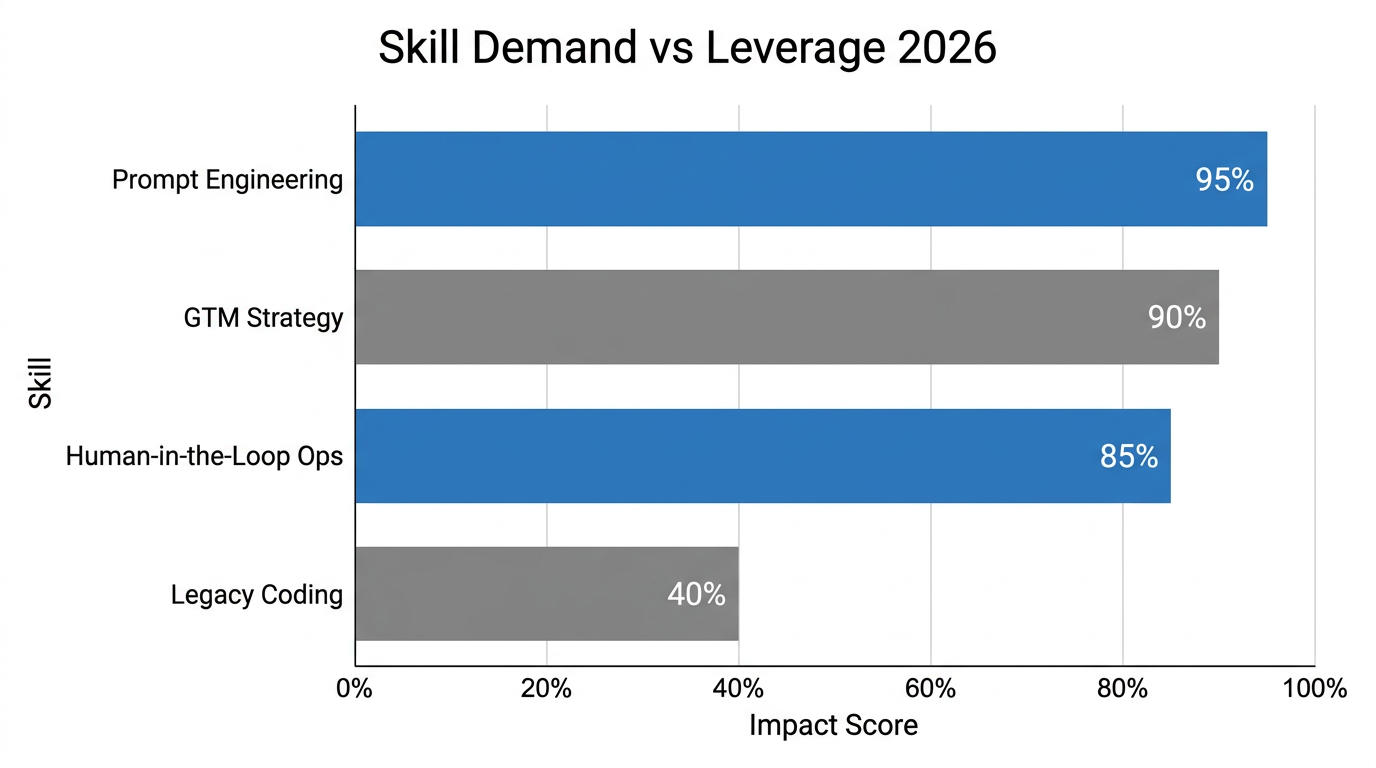
The final piece of the 2026 GTM framework is a mindset shift. Many entrepreneurs delay launching because they are optimizing for income security in their current roles. However, the tech revolution driven by AI has made specialized skills the only true form of security. Mastering the ability to build and grow a software product is a high-leverage skill that is applicable to any business environment.
Building in public and creating automated systems allows you to 'enter the arena.' Even if your first agent doesn't hit $10k MRR, the technical stack you master—using tools like OpenAI's API and building robust backend systems—positions you ahead of 99% of the workforce. We are still early in the AI agent era. The opportunity to automate tedious work on platforms is a wide-open field for those willing to look at 'boring' problems with new eyes.
Conclusion: Your Roadmap to $10K MRR
The 2026 GTM framework for AI agents is simple but requires disciplined execution. Start by auditing your own daily repetitive tasks. Look at the platforms you already use—whether it's Upwork, Shopify, or TikTok Ads Manager—and find the friction. Build a solution for yourself first, then identify the 'connectors' who can bring you to the masses.
By focusing on high-ticket pricing, affiliate-led distribution, and platform automation, you can build a sustainable, highly profitable business without the need for massive venture capital or a huge social following. The arena is waiting—it's time to start building.