In 2026, the digital gold rush isn't just about who has the best video content—it’s about who can win the battle for the click in under 1.5 seconds. For the past decade, Adobe Photoshop and Canva were the industry standards for creator design. But as we move deeper into this year, a seismic shift is occurring. Elite creators like MrBeast and high-performance marketing agencies are officially ditching manual design for agentic AI workflows. The goal? To replace human intuition with data-backed, generative precision that targets the YouTube algorithm with terrifying accuracy.
The $10.2 Billion Thumbnail Explosion
The scale of this shift is reflected in the numbers. According to recent data from Market.us, the global generative AI content creation market has ballooned to $24.08 billion in 2026. Within this massive sector, the specialized niche of AI thumbnail generation is projected to hit $10.2 billion by 2035, growing at a blistering CAGR of 27.4%.
Why the sudden rush? Because manual design is no longer just slow; it’s a competitive bottleneck. While a traditional designer might spend two hours layering assets in Photoshop, DemandSage reports that over 80% of top YouTube creators now use AI-native tools to generate, test, and deploy thumbnails in under five minutes. In a market where speed of iteration is the only moat, the old guard of "drag-and-drop" is failing.
"We are transitioning from human-centered production to generative-AI-centered production. AI isn't just a tool; it's a substitute for the technical friction of design."
Manual Design: The 2026 Bottleneck
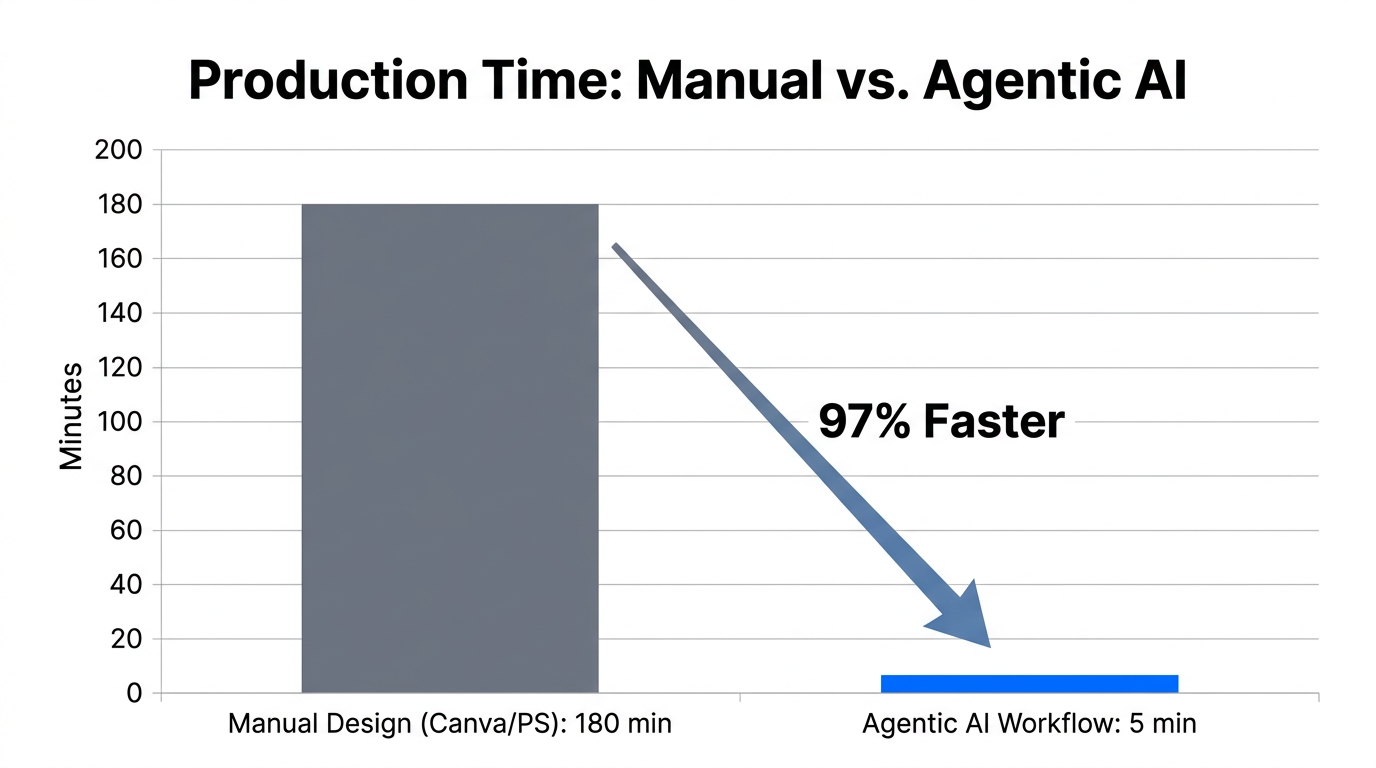
For high-volume YouTube channels and agencies, the traditional creative workflow is broken. A standard manual process involves briefing a designer, waiting for a draft, providing feedback, and eventually settling on a single version. This "intuition-only" approach lacks the data integration required to survive in 2026's hyper-competitive feed.
| Feature | AI Generation (2026) | Manual (Photoshop/Canva) |
|---|---|---|
| Time per Thumbnail | < 5 Minutes | 30 - 120 Minutes |
| Cost Efficiency | ~$0.50 per image | $50 - $150 per image |
| Skill Barrier | None (Agentic/Prompt-based) | High (Technical mastery) |
| Optimization | Built-in CTR prediction | Human intuition only |
Platforms like Simplified and Juma.ai have replaced the need for technical design skills by focusing on brand-consistent AI prompts. Instead of moving pixels, creators are now orchestrating agents that understand safe zones for timestamps, mobile readability, and color psychology natively.
Case Study: The 35% CTR Lift
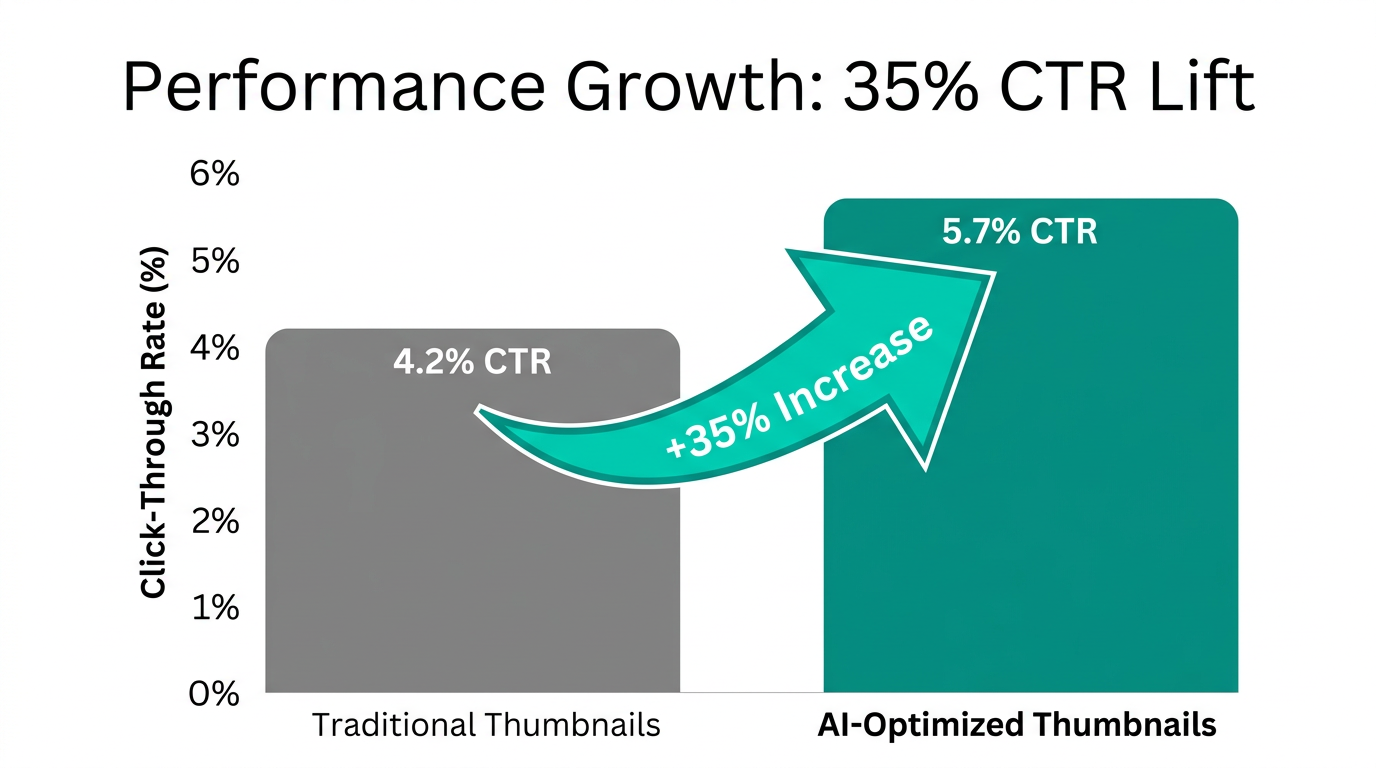
The shift isn't just about saving time; it's about mathematical superiority. A 2025 study analyzed the thumbnails of top-tier creators like SSSniperWolf and Mark Rober. The findings, published on Medium, revealed that AI-optimized "surprised" expressions—designed to hit specific facial geometry benchmarks—led to a consistent 35% increase in Click-Through Rate (CTR) compared to static, human-captured poses.
Jimmy Donaldson (MrBeast) has notoriously pushed this boundary. By integrating AI into his testing pipeline, his team reported a 25% lift in views for videos where AI assisted in identifying "curiosity gaps" in the composition. Tools like Pikzels allow these teams to swap faces into hyper-realistic, AI-generated environments with 100% lighting matching, ensuring a cinematic look without the cost of a physical photoshoot.
"In 2026, the thumbnail is a micro-advertisement. If your heat map shows attention is focused on empty space, the AI has failed its primary job of psychology."
Precision Generators vs. All-in-One Suites
The creator economy trends for 2026 show a bifurcation of tools. On one side, we have "Precision Generators" like Pikzels and Thumbmagic, which focus purely on viral styles and CTR optimization. These tools are often part of a larger influencer marketing automation stack used by agencies to manage hundreds of accounts simultaneously.
On the other side are the "All-in-One" suites like vidIQ, which integrate AI generation directly into the YouTube Studio sidebar. While suites offer convenience, elite creators often prefer the precision generators for their superior "FaceSwap" technology and real-time heatmapping, which shows exactly where a viewer's eye lands on a mobile screen.
For brands looking to find creators who are already leveraging these advanced strategies, using an AI-powered search engine like Stormy AI is essential. Agencies use Stormy AI to discover and vet influencers who maintain high engagement rates by using these very 2026 growth strategies.
The 5-Minute "Viral" Playbook
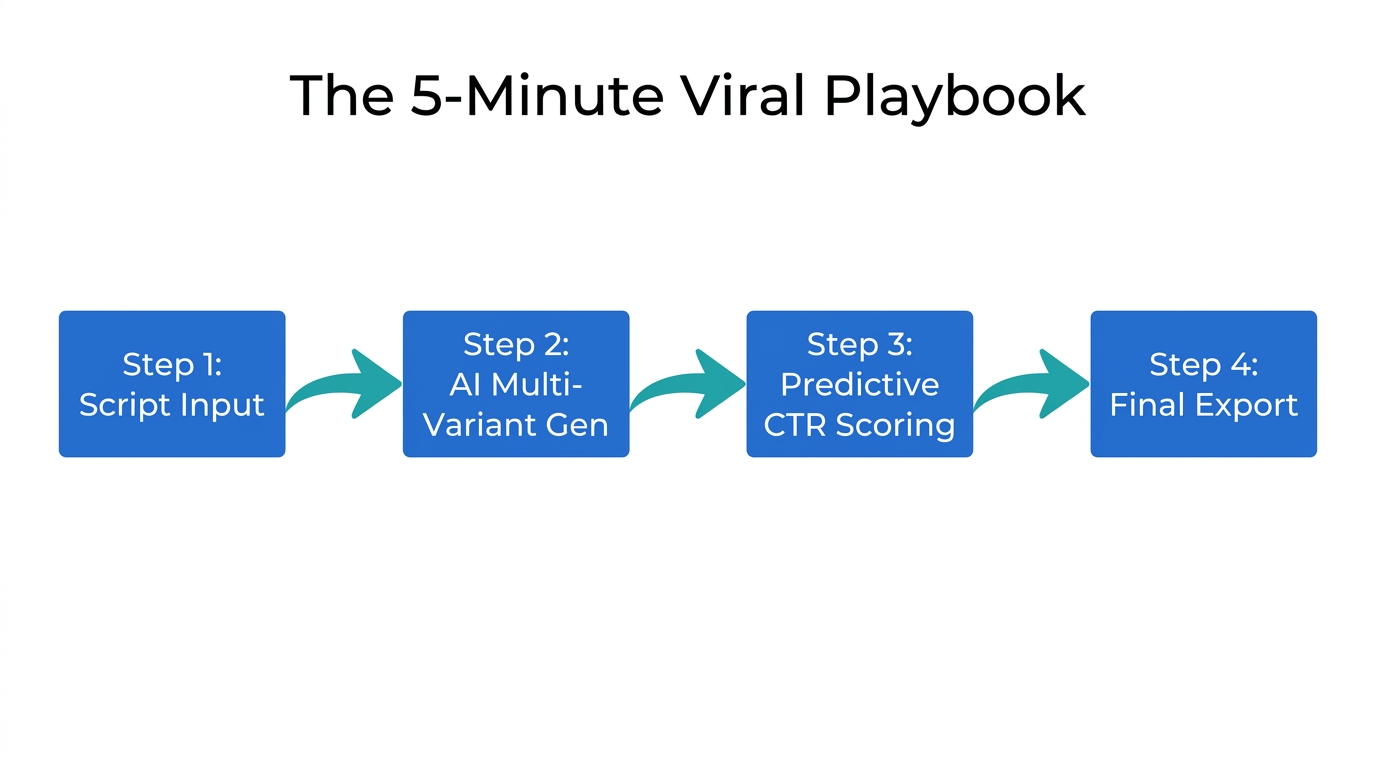
Ready to ditch Photoshop? Here is the agentic workflow currently being used by top-tier production houses in 2026:
- Data Input: Paste your video link into a tool like vidIQ. The AI scans the transcript to identify the "climax" or the primary curiosity gap.
- Environment Generation: Use a generative agent to create 5 distinct backgrounds—from cinematic "Netflix" styles to high-contrast "MrBeast-style" action scenes.
- Persona Injection: Use a Face Kit from a library (pre-saved high-res photos) and use DeepFace technology to swap the creator’s face onto the generated scene with perfect texture matching.
- Heatmap Validation: Run the variations through a predictive CTR scorer like Test My Thumbnails to see which one draws the most "eye-focus" to the core object or text.
- Algorithmic A/B Testing: Upload the top 3 variations to YouTube’s native "Test & Compare" feature and let the real-time traffic determine the winner.
Conclusion: The Future of Creator Design
The year 2026 marks the end of the "manual era" for the creator economy. Ditching Canva and Photoshop isn't just about software—it's about adopting a growth-first mindset where data dictates design. As creators like MrBeast have proven, those who embrace specialized AI design tools and agentic workflows will dominate the feed, while those stuck in manual workflows will struggle to keep up with the algorithm's demand for volume and precision.
Whether you are an individual creator or a brand manager, the message is clear: automate or be out-clicked. By integrating tools like Pikzels for design and Stormy AI for creator discovery and outreach, you can build a 2026 growth strategy that is both scalable and statistically superior.