In the high-stakes world of digital growth, the year 2026 has marked a definitive end to the era of sluggish, template-heavy web builders. For years, founders and growth marketers accepted a trade-off: the ease of no-code platforms versus the raw performance of custom code. Today, that compromise is dead. With the global AI coding assistant market surging to $7.1 billion in 2026, a new standard has emerged: Claude Code. This agentic CLI tool is no longer just for engineers; it is the secret weapon for marketers seeking a 20% higher landing page conversion rate in 2026 by deploying ultra-fast, React-based architectures that achieve perfect 100/100 Core Web Vitals.
The 2026 Shift: Why 68% of Startups Are Leaving No-Code
As of March 2026, the data is undeniable: 68% of Series A and B startups have transitioned their primary marketing assets from traditional no-code builders like Webflow to agentic CLI tools (Source: State of AI Report 2026). The driver isn't just cost; it's performance. In a world where AI search engines and ad algorithms prioritize page speed and technical SEO with brutal efficiency, the "platform bloat" of legacy builders has become a conversion killer.
High-performance, custom-coded pages now command a 40% premium in lead generation ROI because they eliminate the JavaScript overhead that plagues standard templates (Forrester Research). By using Claude 4.0 through the Claude Code interface, marketers are now "vibe coding"—describing high-converting layouts and letting the agent handle the heavy lifting of Next.js and Tailwind CSS implementation.
"In 2026, the best landing pages are not built; they are generated and iterated upon by agents that understand both the code and the conversion metrics."
The 2026 Tech Stack: Claude Code vs. The Field
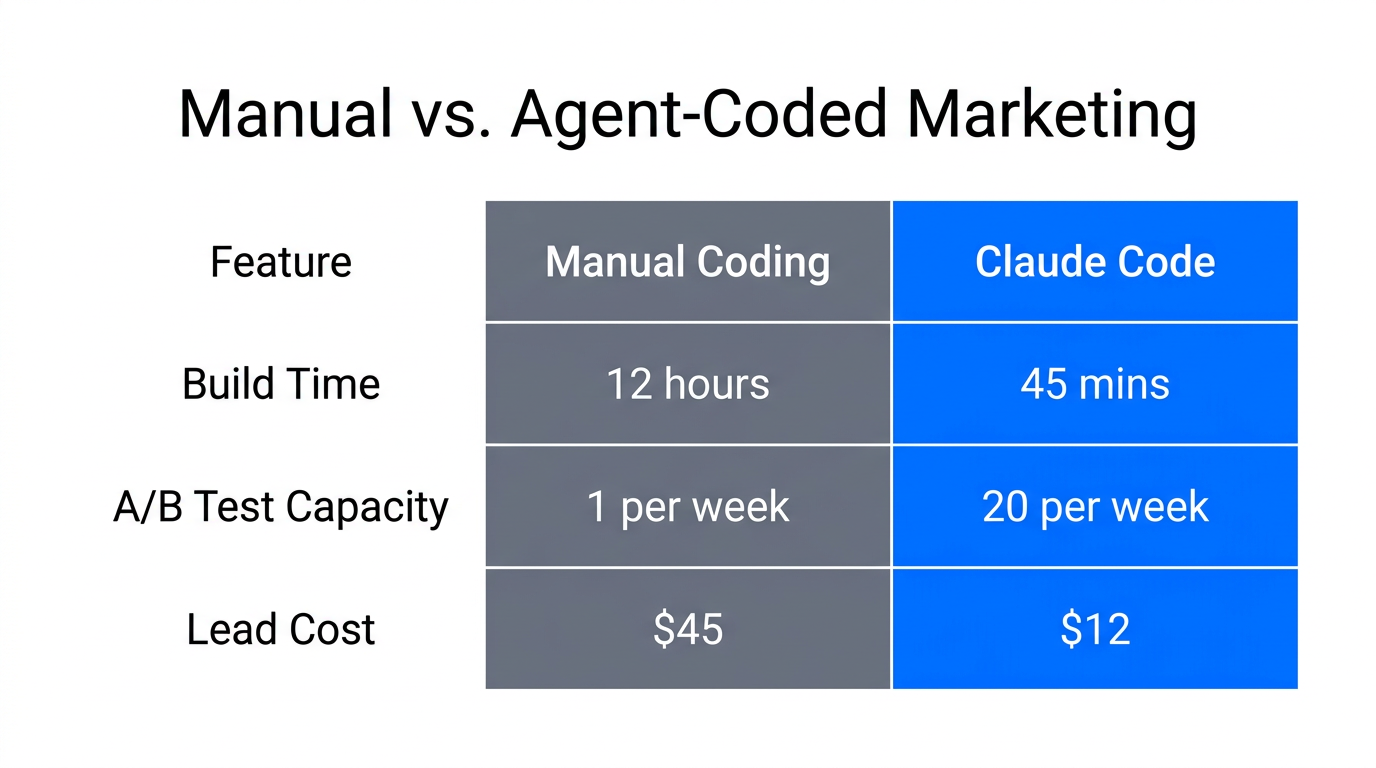
While Claude Code holds a dominant 34% market share in the professional developer AI agent segment (Stack Overflow 2026 Survey), it is part of a broader ecosystem. Choosing the right tool depends on whether you are refactoring a massive corporate site or launching a quick experiment for a mobile app campaign.
| Platform | Role in 2026 Ecosystem | Best For |
|---|---|---|
| Claude Code | Agentic CLI for terminal power users | Complex refactors & architecture |
| Cursor | Standard AI-native IDE | Real-time tab completion & editing |
| Lovable.dev | GPT Engineer successor (GUI-based) | Non-technical founders |
| Vercel v0 | Generative UI component builder | Rapid UI prototyping |
For growth marketers, the workflow often starts with a "Design Agent" like v0.dev and ends with Claude Code for the final deployment and landing page optimization. This multi-agent orchestration ensures that every pixel is aligned with brand guidelines while maintaining a zero-JS "heavy" footprint for maximum speed.
The Practitioner's Playbook: Building for 100/100 Performance
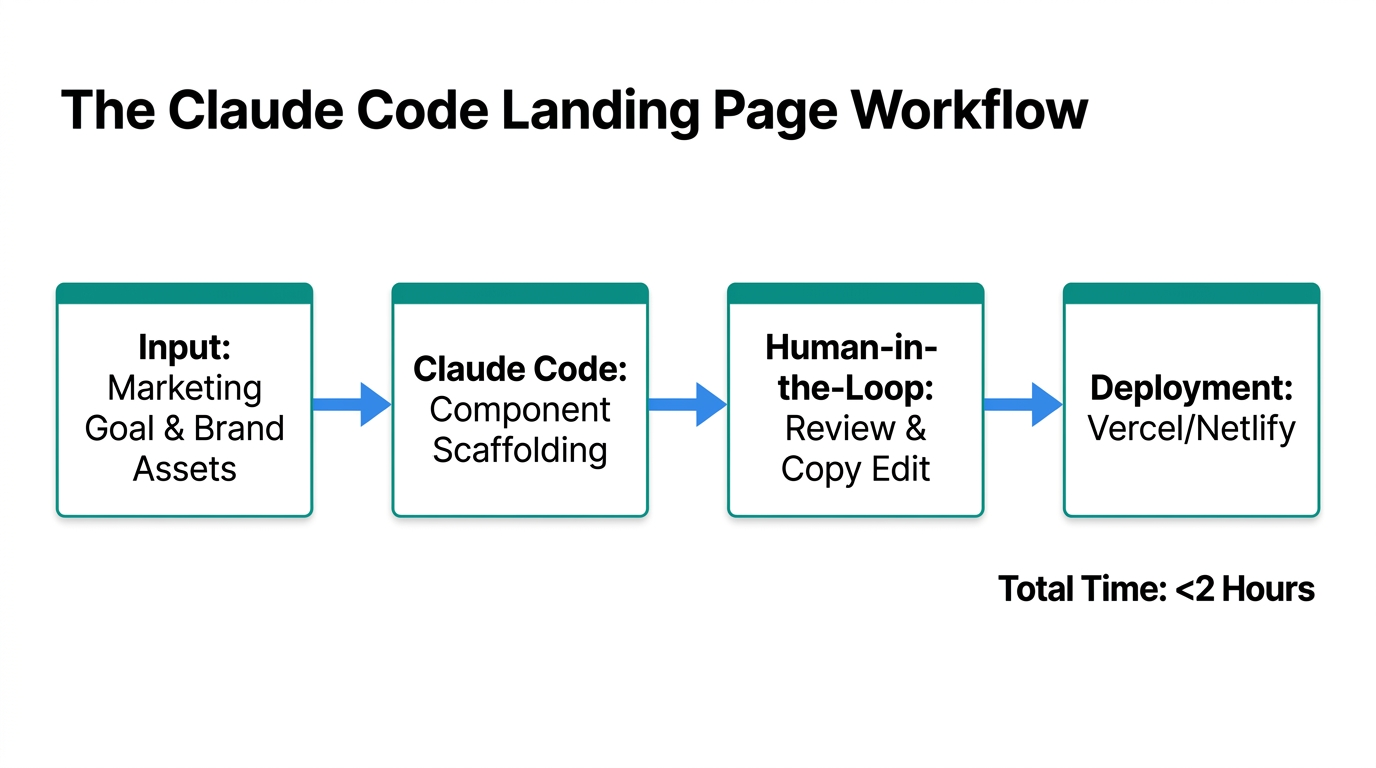
To achieve high-performance landing pages, you must follow a structured agentic workflow. This is no longer about dragging boxes; it is about directing an autonomous agent through specific phases of the conversion engineering cycle.
Step 1: Scaffolding the Core Architecture
Start by initializing a project that prioritizes server-side rendering (SSR). Use the Claude Code CLI to scaffold a Next.js 16 environment. A typical command in 2026 looks like: "Initialize a Next.js project with Tailwind CSS. Create a high-conversion hero section for a B2B tool. Use a dark theme, include a sticky nav, and a multi-step lead form." This ensures your base is built on clean, performant code from second one.
Step 2: Copy and "Vibe" Injection
Static copy is a relic of 2024. In 2026, we use Claude Code to build pages that address customer pain points dynamically. You can feed a CSV of customer insights directly to the agent. Many practitioners use a CLAUDE.md file to define architecture constraints, preventing the agent from "hallucination drift" during the build (AdVenture Media).
"Claude Code is designed to be a collaborator that understands the intent behind the software, not just the syntax." — Dario Amodei, CEO of Anthropic
Step 3: Autonomous Tracking and Integration
One of the biggest friction points for marketers is wiring up the "plumbing." Claude Code solves this by autonomously integrating tools like PostHog for A/B testing or Segment.io for lead tracking. Simply instruct the agent: "Integrate the Beehiiv API for the signup form and wire the tracking pixel to all primary CTA buttons." This level of automation is why Stormy AI users are increasingly pairing agent-coded pages with AI-powered creator sourcing to create seamless, high-converting funnels.
Case Study: How a Fintech Startup Gained a 22% Conversion Lift
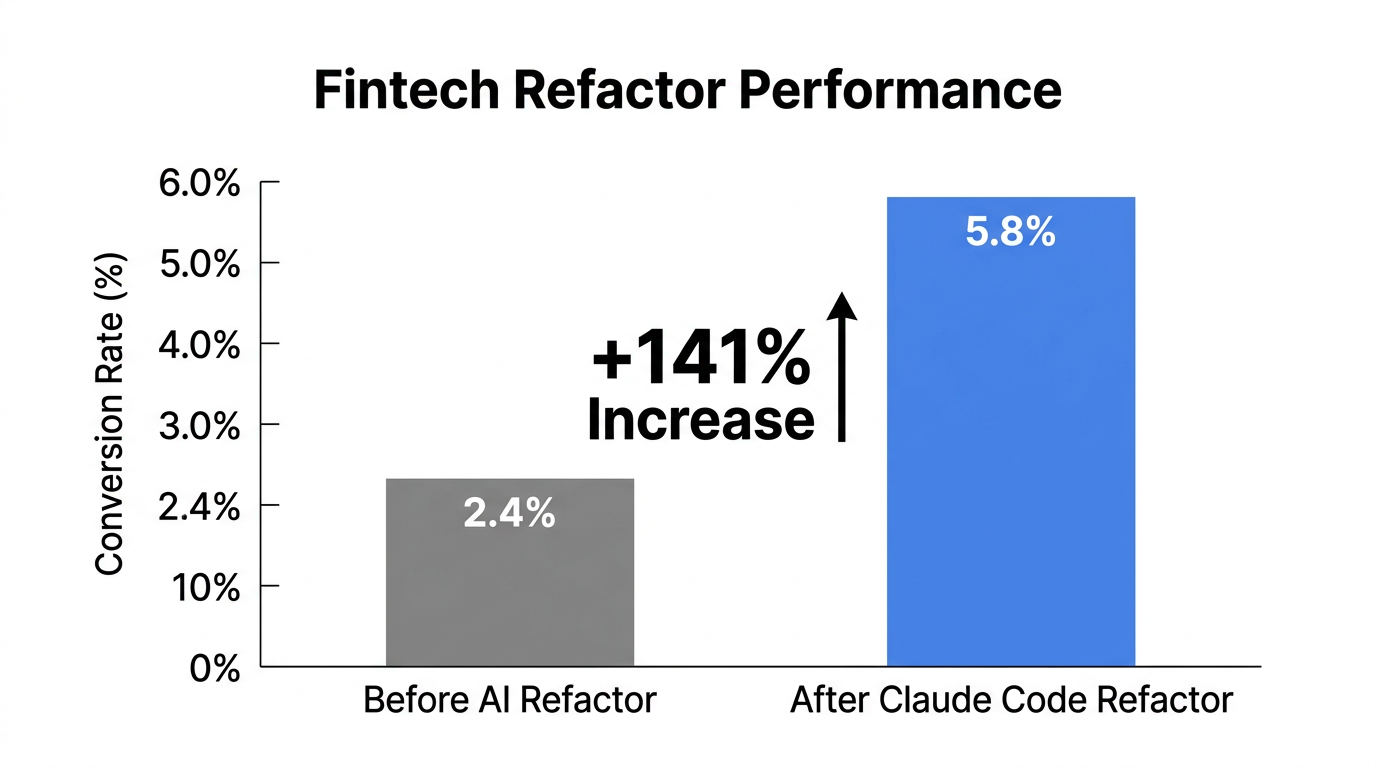
In early 2026, a prominent neo-bank faced a common problem: their landing pages, built on a popular no-code platform, were too slow for mobile users, resulting in a 2.8s Largest Contentful Paint (LCP). They used Claude Code for marketers to migrate 12 core landing pages to a custom Next.js and Tailwind stack.
The strategy involved refactoring complex Figma designs into React components with Framer Motion animations. By using Claude Code to "clean" the code and optimize images via Next/Image, the startup achieved a 100/100 Google PageSpeed score, which significantly boosted their Apple Search Ads and Google Ads performance by lowering their Cost Per Acquisition (CPA).
Advanced 2026 Strategies: MCP and Dynamic Personalization
The latest breakthrough in 2026 is the Model Context Protocol (MCP). This allows Claude Code to read live data from external sources like Shopify or Salesforce to generate "Dynamic Pricing" or inventory-aware components that convert better. Brands like Tushy have seen conversion rates as high as 15% by using these agentic integrations to handle technical queries in real-time (Stormy AI Blog).
For app developers, this is particularly powerful. You can use Stormy AI to identify the perfect UGC creators for your niche, then use Claude Code to build a dedicated landing page for each creator that dynamically features their content, achieving what we call the "Infinite Landing Page" effect.
"The barrier to entry for high-end web design has vanished. The 'developer' is now a product manager of AI agents." — Amjad Masad, CEO of Replit
Managing the Risks: Token Bleed and Logic Errors
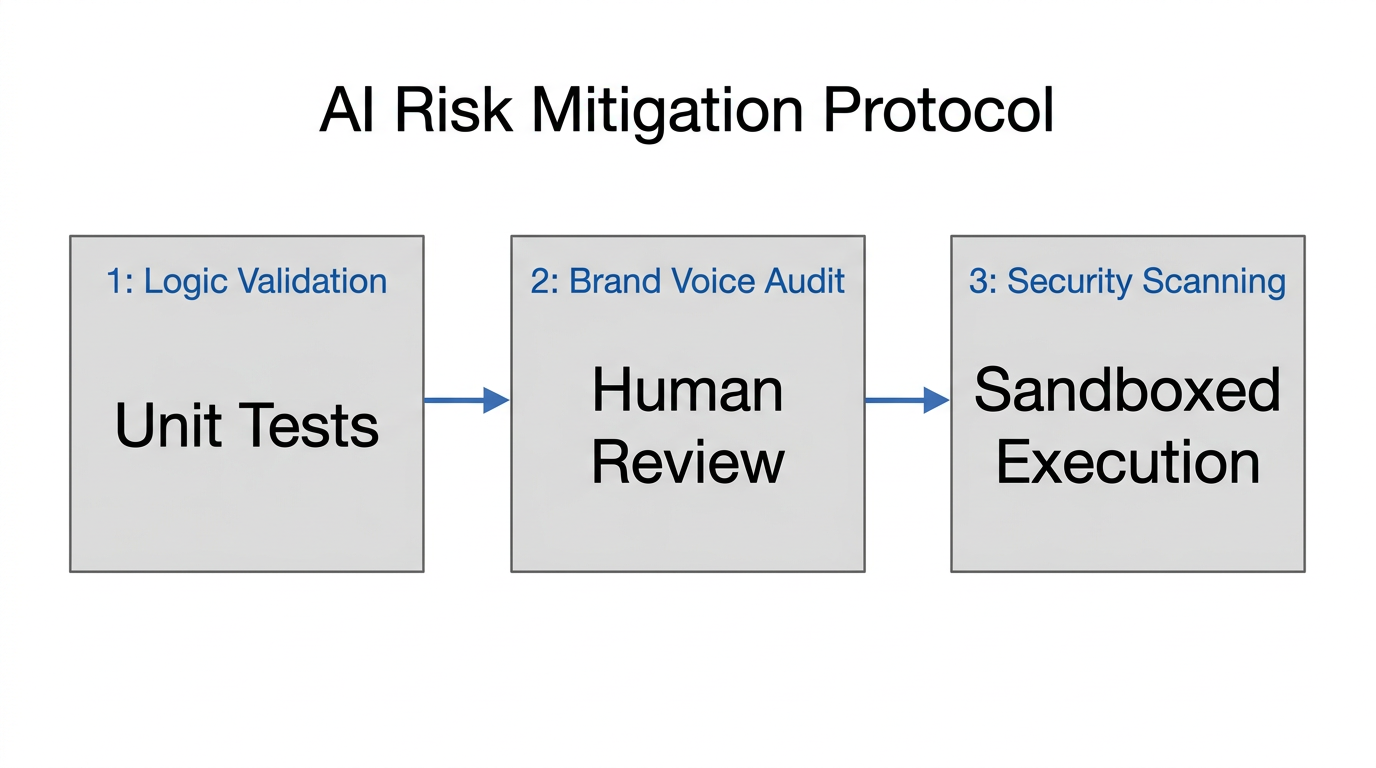
Despite the power of AI agent web development, marketers must be wary of the "quality cliff." A 2026 study found that AI-authored pull requests can have 75% more logic errors than human code, even if they look visually perfect (Stack Overflow Blog).
- Token Bleed: If Claude Code gets stuck in a CSS loop, it can consume $5–$10 in tokens within minutes if not monitored (O-Mega AI).
- Brand Drift: Agents may use a hex code like #f3f3f3 instead of your official #f4f4f4. Always use a style guide to keep your agent aligned.
- Maintenance Debt: Agents can sometimes "silently swallow" exceptions in edge cases, leading to broken lead forms that appear functional on the surface (Level Up Coding).
The Future is Generated
The 2026 growth playbook is clear: to maintain a competitive landing page conversion rate, you must move beyond the limitations of no-code. By leveraging the power of Claude Code, growth teams can build high-performance, personalized, and technically superior pages that ad platforms love and users trust. Whether you are refactoring a legacy site or building a new funnel for a mobile app, the agentic era of web development is here—and it’s time to start coding at the speed of thought.