In the early 2020s, a startup with 50 employees and $10 million in Annual Recurring Revenue (ARR) was considered a healthy, scaling business. By the standards of 2026, that same company is viewed as dangerously bloated. The new benchmark for high-performing, AI-native startups has shifted dramatically: $5 million in revenue per employee. This isn't just a goal for solo founders or lifestyle businesses; it is the core lean startup operations 2026 standard for venture-backed companies aiming for 100x exits. The secret to hitting these benchmarks lies in the total automation of the sales cycle, moving away from manual CRM entries and human-led screening toward a Granola AI sales productivity model that captures value at the hardware level.
"The lifestyle business label is dead. In 2026, a 5-person team doing $25 million in revenue isn't a niche experiment; it's the inevitable result of the AI application age."
The $5M Revenue-Per-Employee Benchmark: Why Efficiency is the Only Moat
 24:17
24:17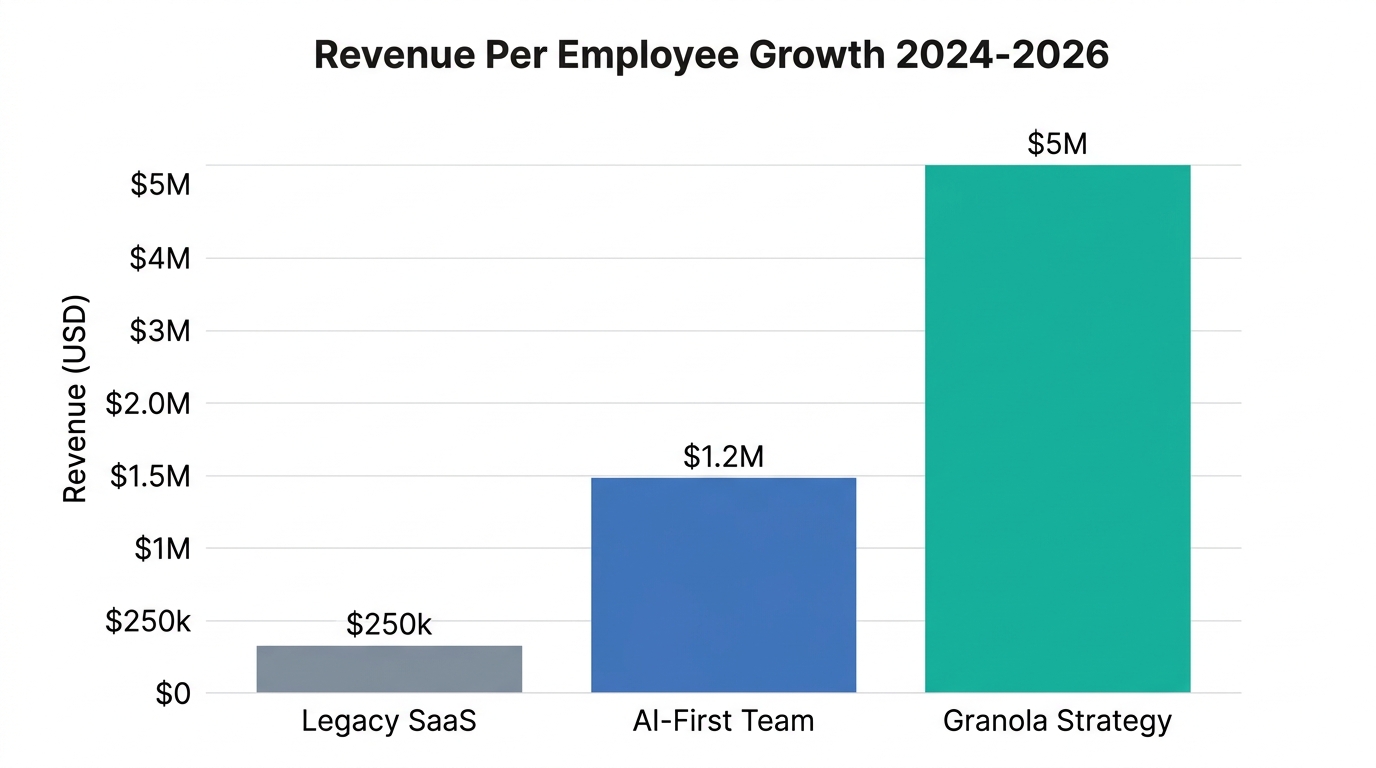
In previous years, growth was often bought with headcount. If you wanted to double your revenue, you doubled your Sales Development Representative (SDR) and Account Executive (AE) teams. Today, that linear relationship has shattered. As SaaStr has recently highlighted, the transition from 'impossible' to 'inevitable' in the $10M-$100M ARR journey now requires a fraction of the traditional workforce. When companies like Anthropic jump from $1 billion to $3 billion in revenue in just five months, they aren't doing it by hiring thousands of people; they are doing it through infrastructure and sales automation strategy.
The current revenue per employee benchmarks 2026 indicate that the top 1% of SaaS companies are operating with teams of 5 to 10 people while generating $25M to $50M in ARR. This is possible because AI has moved beyond being a 'co-pilot' and has become the infrastructure itself. Startups no longer need a middle layer of managers to review calls or verify data; they need architects who can string together protocols like MCP (Model Context Protocol) to let their AI agents talk directly to their databases without human intervention.
Using Granola to Automate Post-Sales Summary and Documentation
58:32One of the biggest leaks in sales productivity has always been the 'administrative tax'—the 20 minutes every AE spends after a call updating the CRM, writing summaries, and sending follow-up emails. In 2026, Granola AI for growth teams has solved this by moving documentation to the hardware level. Unlike legacy meeting bots that require invasive permissions and often fail to capture nuance, Granola and similar tools record and process information directly at the system level.
This allows for a Granola AI sales productivity workflow where 100% of the sales context is preserved without the AE typing a single word. Because these tools listen to everything in the background, they can generate hyper-accurate board deck updates, sales scripts, and technical summaries instantly. This isn't just about saving time; it's about eliminating the cognitive load of memory. As AI-native founders have discovered, an AI 'intellectual stunt double' that remembers 20 million words of company history is mathematically superior to any human memory when it comes to closing complex deals with tools like Notion and Slack.
Replacing SDRs with AI Screening: Handling 50,000+ Conversations Automatically
63:39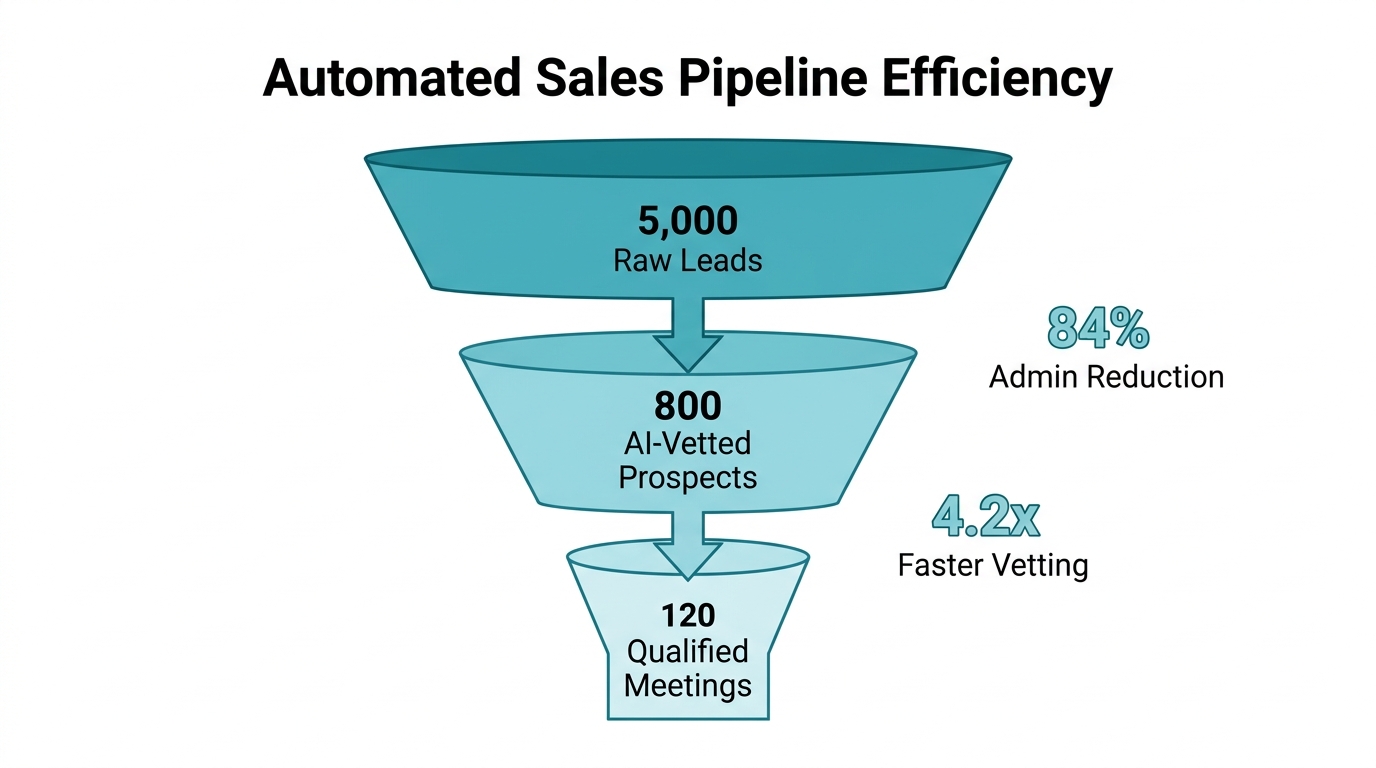
The role of the SDR is effectively extinct in 2026. High-intent lead conversion is now handled by AI screening agents capable of managing 50,000+ simultaneous sales conversations. Platforms like Deli.ai allow founders to ingest their entire corpus of content—blogs, tweets, and past interviews—to create an AI advisor that can talk to prospects with the same depth as the CEO.
These agents don't just 'chat'; they vet. They can review a prospect's board deck, analyze their growth rate, and provide a tailored pitch before a human AE ever enters the room. This level of scale was previously impossible. A human SDR might manage 50 conversations a day; an AI sales automation strategy manages 50,000 without a drop in quality. For companies focusing on niche markets, this means total market ownership is finally within reach, often facilitated by robust automation on LinkedIn and X/Twitter.
"Users will tell an AI things they won't tell a human. They share their deepest fears about runway, board conflicts, and churn, giving the AI the data it needs to provide a truly consultative sales experience."
| Feature | Legacy Sales Ops (2024) | AI-Native Ops (2026) |
|---|---|---|
| Lead Gen | Manual SDR Outbound | AI Autonomous Discovery |
| Documentation | Human CRM Updates | Granola Hardware-Level Capture |
| Personalization | Generic Templates | Hyper-Personalized AI Clones |
| Team Structure | Large Middle Management | 5-Person Ultra-Lean Teams |
The 2026 Lean Team Structure: Eliminating the Middle Layer
27:58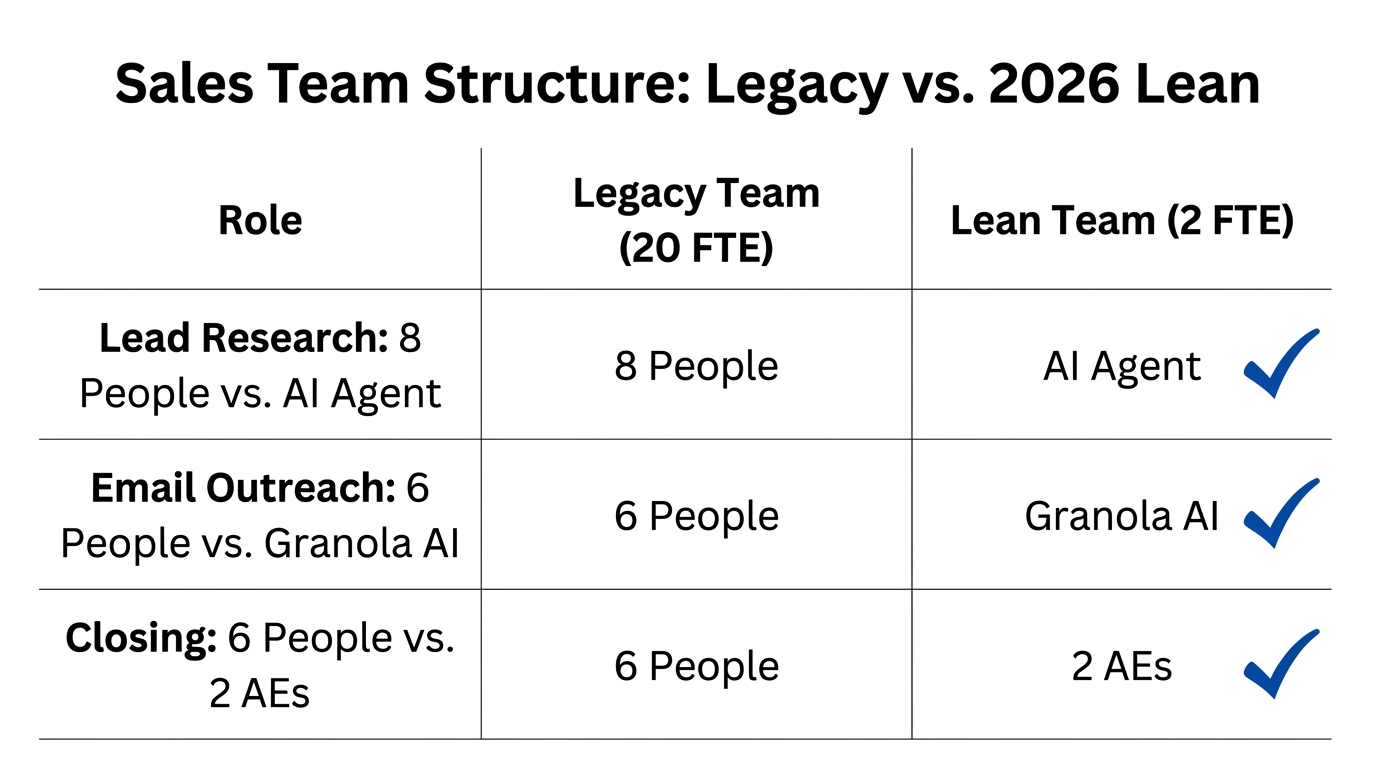
The most successful companies this year have realized that more people equals more friction. The 'middle layer' of content reviewers, ghostwriters, and junior designers has been entirely replaced by high-performance AI tools. For example, instead of waiting months for a design agency, lean teams use Higgsfield to generate 10-second personalized video promos for every speaker or prospect in seconds.
This shift also applies to influencer marketing and creator sourcing. While tools like Granola handle internal documentation, platforms like Stormy AI are revolutionizing the top-of-funnel by automating influencer discovery and hyper-personalized outreach. This allows a single growth lead to manage what used to require a 10-person agency, further driving up the revenue-per-employee metric. When the administrative work of finding, vetting, and contacting creators is handled by an AI agent, the human team can focus exclusively on strategy and high-level negotiation.
How to Audit AI Sales Scripts for High-Intent Conversion
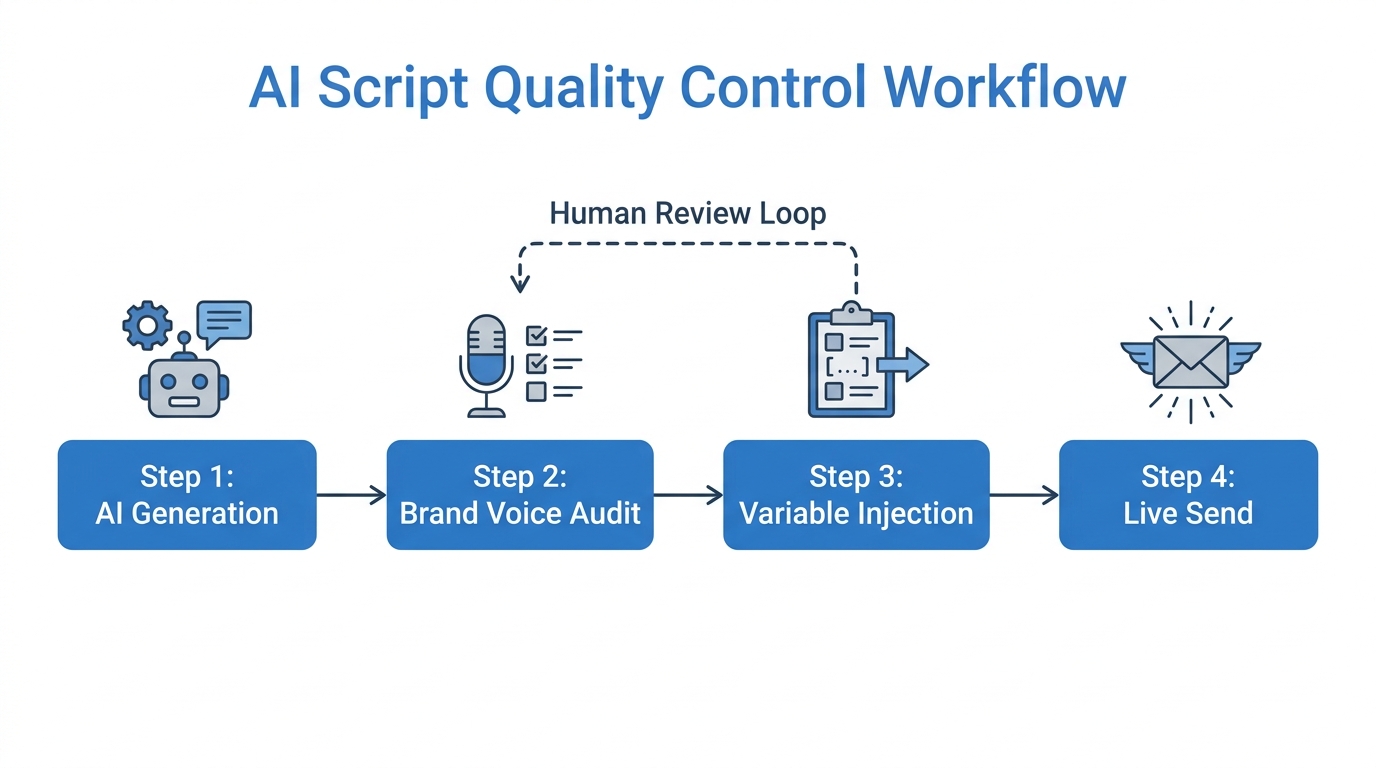
Automation without auditing leads to hallucinations and brand decay. To maintain a $5M revenue-per-employee efficiency, founders must spend at least 15 minutes a day 'training the brain.' This involves auditing the AI's responses to ensure it isn't making up facts about product features or meeting history. In 2026, the best CEOs are not managers of people; they are editors of AI output.
Step 1: The RAG Audit
Ensure your company's data is properly vector-weighted. Tools like OpenAI's latest models allow you to heavily weight your own content (like transcripts from your Granola summaries) over generic training data. This ensures the AI sounds like your brand, not a generic chatbot.
Step 2: Voice Cloning and Personalization
Use tools like ElevenLabs to ensure your automated outreach sounds human. However, the 2026 consensus is to be transparent: don't try to fool the prospect into thinking the AI is you. Instead, position it as a 'Prime Version' of yourself that is available 24/7 to solve their problems.
Step 3: Real-Time Data Syncing via MCP
Instead of manual API integrations, use the Model Context Protocol to let your AI read directly from a modern creator CRM or legacy systems like Salesforce. If your AI can see a deal's status and the latest email sentiment in real-time, it can adjust its screening questions to move the lead through the funnel faster.
Conclusion: Building for the Trillion-Dollar Era
The lean startup operations 2026 playbook is clear: leverage AI to handle everything that isn't a high-stakes human interaction. By implementing a Granola AI sales productivity workflow and replacing the SDR layer with AI-native screening, you aren't just saving money—you are building a business that is durable in an age of total disruption. The companies that win this year will be those that embrace the $5M revenue-per-employee benchmark not as a dream, but as a operational necessity. Start by automating your documentation, then your screening, and finally your outreach. The era of the bloated startup is over; the era of the AI-powered powerhouse has begun.