The ecommerce landscape in 2026 has officially moved beyond the era of manual bidding and granular keyword management. With Google's ad revenue projected to hit $321.6 billion this year, according to Statista, the competition for search real estate is at an all-time high. For Shopify founders, the goal is no longer just "getting clicks"; it is about leveraging Agentic Commerce—a world where AI agents handle the discovery, interaction, and back-office management of your store while you focus on brand vision.
To scale a brand to $800,000 per month today, you cannot rely on the strategies of 2024. You need a setup that accounts for the mandatory Google Merchant API migration, the shift to AI Max for Search, and the integration of autonomous teammates like Stormy AI to manage the operational overhead. This tutorial provides the exact 2026 playbook used by top-tier agencies to achieve a 4.5:1 ROAS at scale.
Phase 1: The Infrastructure — Merchant Center Next and API Migration
As of March 2026, Google completed the mandatory migration from the legacy Content API to the new Google Merchant API. If your Shopify store hasn't been updated to this standard, you are likely seeing significant data loss or "Item ID" history resets, which Griffin & Associates warns can trigger a 14-day algorithm re-learning period that kills performance.
Step 1: Configure Merchant Center Next
Login to your Google Merchant Center Next dashboard. In 2026, your feed isn't just for Shopping ads; it powers AI Overviews and Google Lens searches. Ensure your Feed Quality Scorecard is in the green by optimizing the following fields:
- Product Titles: Use the Merchant Advisor AI co-pilot inside GMC to rewrite titles based on real-time search trends.
- Video Link Attribute: Per the Google Ads Developer Blog, you must now include a
video_linkattribute pointing to YouTube Shorts for your products to appear in the new Shoppable CTV (Connected TV) placements. - Visual Standards: Images must be a minimum of 500x500 pixels. Use the GMC "Product Studio" to upscale low-res assets before Google's auto-upscaler distorts your branding.
Phase 2: Leveraging 'AI Max for Search' and Intent Clusters
The biggest shift in 2026 is the transition from "Keywords" to Search Themes. Traditional keyword logic is dead. Instead, AI Max for Search uses intent-based clusters to find customers based on their behavior, not just their queries. According to Digital Applied, Performance Max (PMax) now accounts for 45% of all Google Ads conversions, but only when configured with the right audience signals.
"Product data is the new infrastructure. In 2026, the feed isn't just for Shopping; it powers AI Overviews, Lens, and Business Agents." — Ginny Marvin, Google Ads Liaison.
Instead of bidding on "men's shoes," you now define up to 25 Search Themes per asset group. These should be long-tail, intent-driven phrases. For example, a high-growth Shopify brand doesn't just target a category; they target phrases like "best waterproof men's running shoes for wide feet under $150." This approach allows Google's AI to map your products to the specific generative answers users receive in AI Mode.
Phase 3: The '7-Day Rule' of Learning Phases
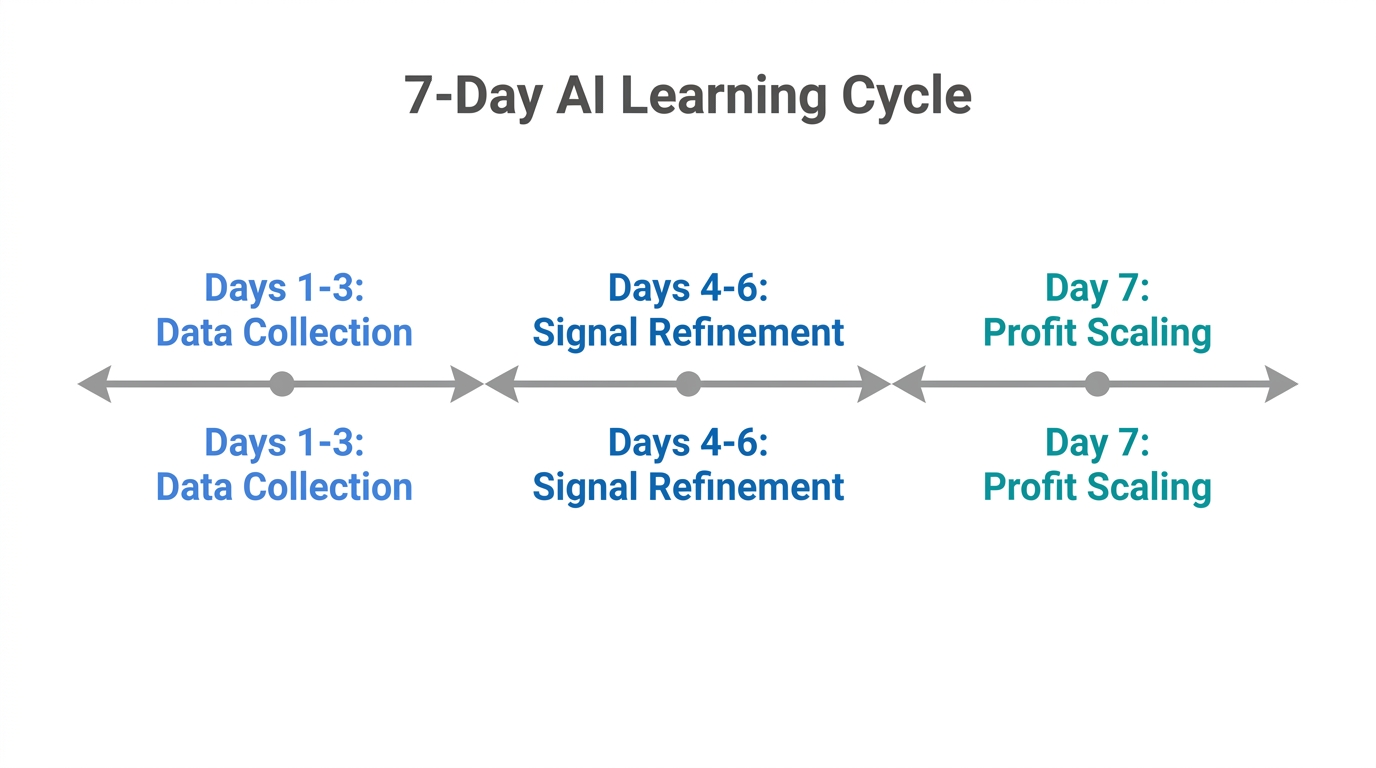
One of the most common reasons Shopify stores fail to scale is "tinker-itis." In 2026, Google’s machine learning is highly sensitive to feed changes. Dror Aharon, CEO of COREPPC, notes that changing product titles or prices daily resets the AI's learning phase, effectively killing your ROI.
You must never touch your Shopify feed changes or campaign settings more than once a week. When you update a price or a title, Google requires a full 7-day re-indexing period to re-evaluate the bid weight of that specific SKU. If you make changes on Tuesday and then again on Thursday, your campaign will remain in a permanent state of "Learning," leading to the dreaded "PMax Trap" where spend skyrockets while conversions flatline.
Phase 4: Agentic Commerce — Setting Up Business Agents
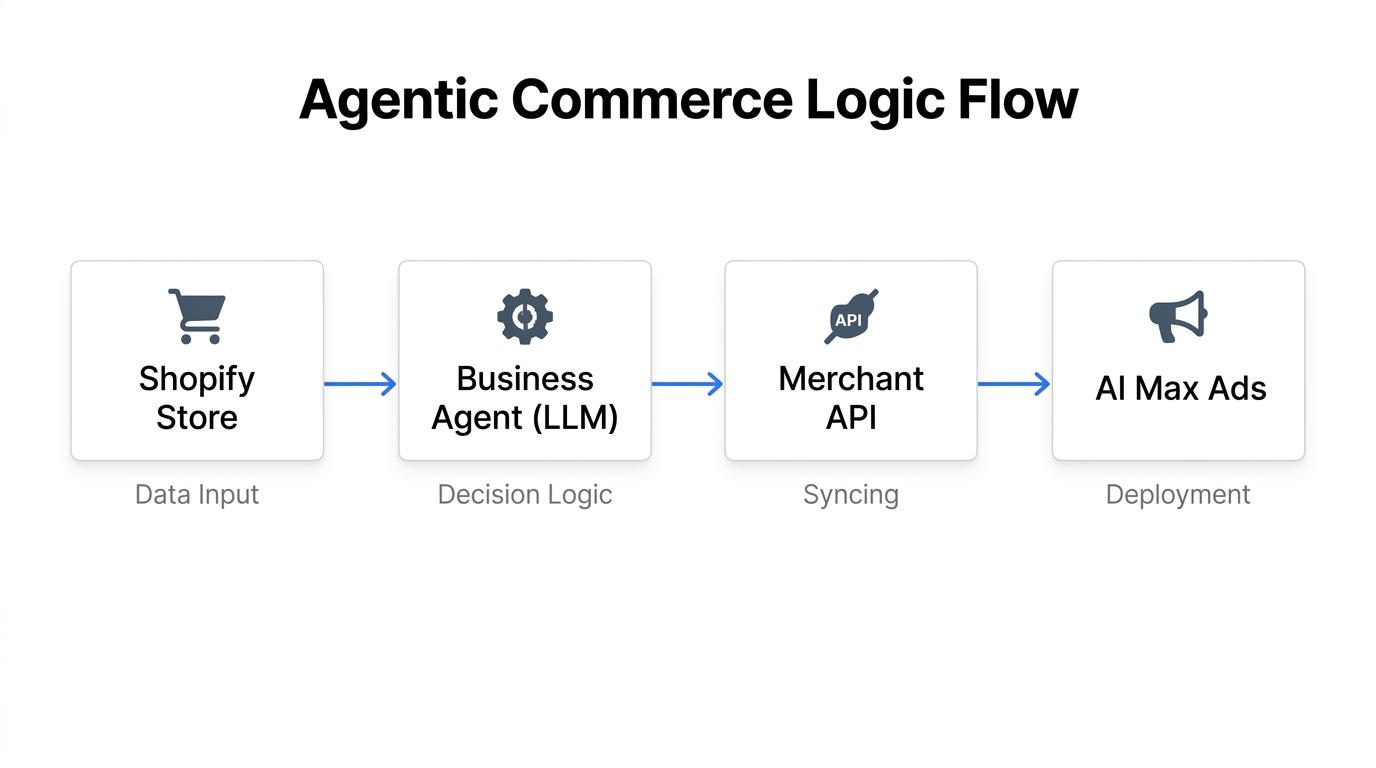
Google’s Business Agent (introduced in late 2025) is the 2026 secret weapon for scaling. This feature allows Google's AI to interact with users directly in the search results. If a customer asks, "Does this weighted blanket come with a cooling cover?" your Business Agent answers using your Merchant Center data before the customer even clicks through to your store.
To implement this, you must have Product JSON-LD schema (Price, Availability, Reviews) fully optimized on your Shopify store. Stores that utilize these conversational ad formats have reported up to an 80% increase in revenue, as seen with fashion giant Aritzia in Search Engine Land reports.
Phase 5: Integrating Stormy AI for Operational Efficiency
As you scale toward $800k/month, the "messy back office" becomes your biggest bottleneck. This is where Stormy AI acts as your AI ecommerce employee. While Google Ads finds the customers, Stormy handles the logic that prevents wasted spend.
For instance, Stormy AI can monitor your inventory levels across Shopify and Amazon. If a high-performing SKU goes out of stock, Stormy can automatically pause the corresponding Google Ads or move the budget to a similar item with healthy stock levels. This prevents the "Zombie Product" problem—where automated feeds waste budget on items that get clicks but can't be fulfilled—a common issue cited by PPCROY.
Furthermore, Stormy AI can build weekly performance reports directly into a shared workbook, comparing your Google Ads spend against Meta and TikTok to suggest budget shifts based on actual Gross Profit, not just ROAS.
2026 Platform Comparison: Where to Allocate Budget
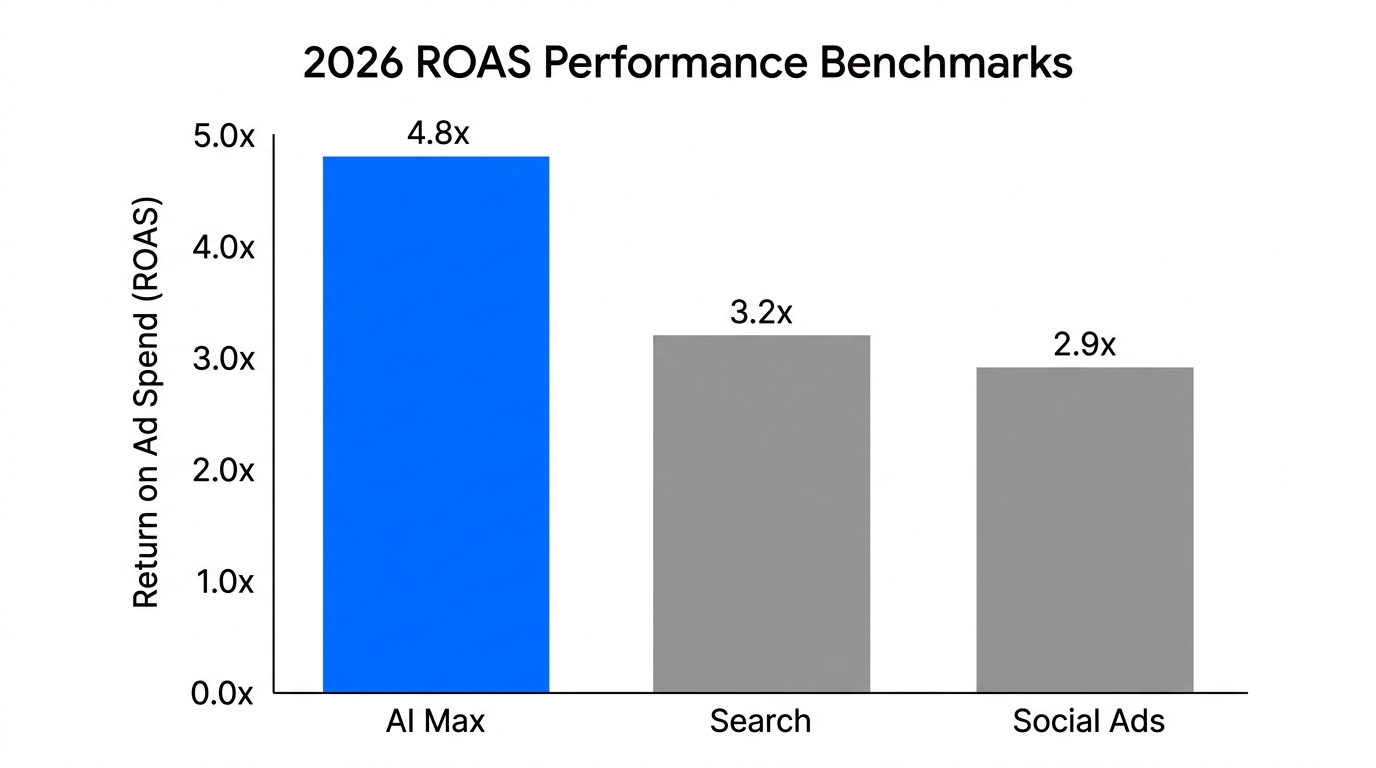
While Google remains the king of Demand Capture, the most successful brands in 2026 use a hybrid model. Use the table below to benchmark your current channel mix against industry standards.
| Feature | Google Ads (2026) | Meta Ads (2026) | TikTok Ads (2026) |
|---|---|---|---|
| Core Strength | Demand Capture | Demand Generation | Discovery / Trends |
| Avg. CPC | $2.96 | $0.50 – $2.50 | $0.20 – $1.00 |
| Setup | Complex (Feed-based) | Simple (Creative-heavy) | Medium (Creator-led) |
| Best For | High-intent / Searchable | Lifestyle scaling | Gen Z / Impulse buy |
According to RedClaw, stores using a Meta Ads to Google Funnel see 25-35% higher ROAS than those using Google alone. Meta generates the initial "Halo Effect," and Google captures the subsequent branded searches via TikTok Ads and other discovery platforms.
Scaling to $800k: The 'Portfolio ROAS' Strategy
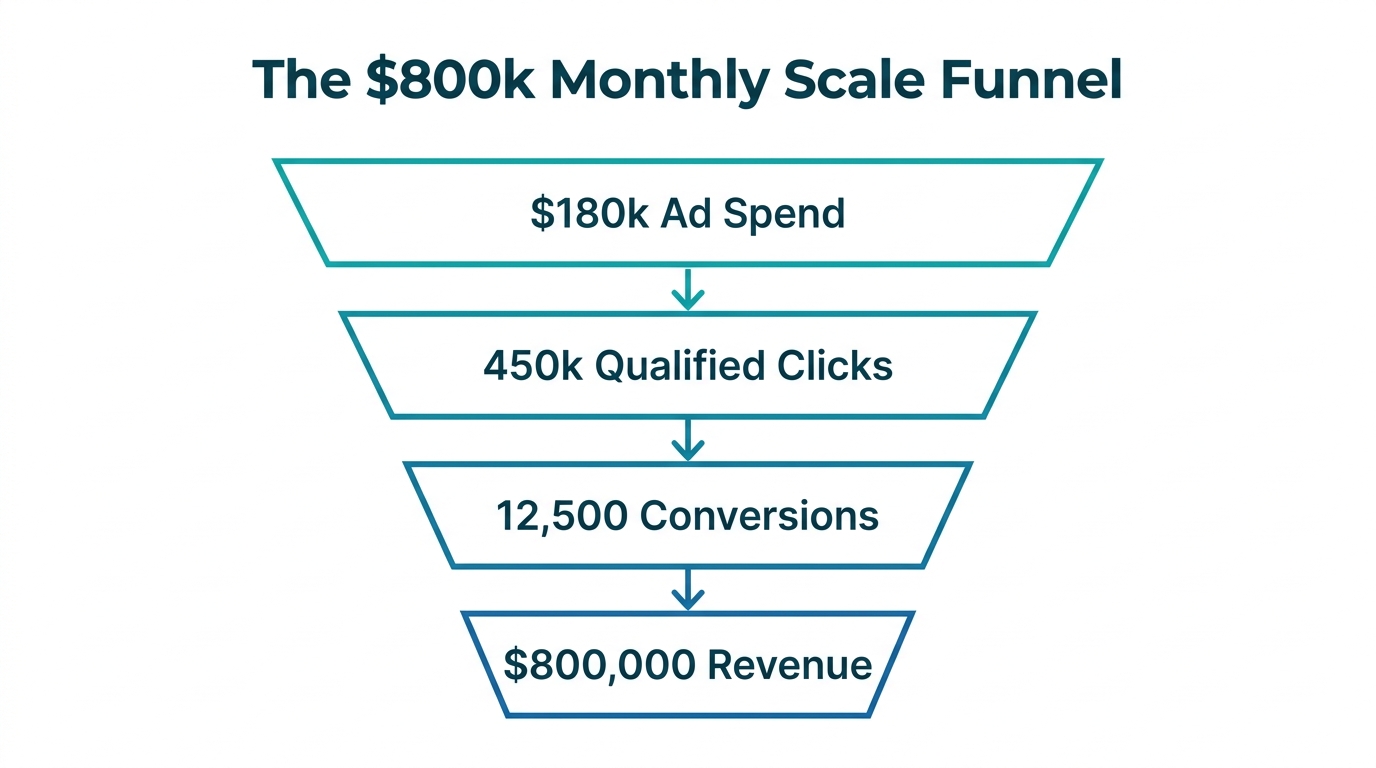
To reach the $800k/month milestone, you cannot treat every product the same. Excella PPC demonstrated that scaling a merchant from $20k to $800k in 60 days required a Portfolio Target ROAS bid strategy with a Max CPC cap.
- Segment by Margin: Create separate PMax asset groups for "High Margin," "Standard," and "Clearance" items.
- Brand Exclusion: Use Brand Exclusion Lists to force your PMax campaigns to find new customers rather than cannibalizing organic branded search.
- Server-Side Tracking: Implement G-CAPI (Google Conversion API) via tools like Aimerce.ai or LittleData. Relying on browser-based tracking in 2026 results in a 30-40% data loss due to ad blockers.
"The key to scaling in 2026 isn't more data; it's better first-party data. If your server isn't talking directly to Google, you're bidding with a blindfold on."
Conclusion: The Autonomous Future
Scaling a Shopify store to $800k/month in 2026 is an exercise in operational discipline. By mastering the Merchant API migration, respecting the 7-Day Rule, and deploying Business Agents, you position your brand at the forefront of Agentic Commerce.
The winners of 2026 will be those who automate the boring parts. By letting an AI ecommerce employee like Stormy AI handle the inventory pulses, supplier follow-ups, and ad auditing, you free up your time to focus on product innovation and creative storytelling—the only things AI can't replace. Start by auditing your Google Merchant Center Next settings today and ensure your Google Ads are ready for the AI-first world.