In 2026, the marketing landscape has undergone a tectonic shift from simple automation to fully autonomous agentic workflows. The era of the "Copilot"—where AI merely suggested the next sentence or email draft—is officially over. Today, enterprise leaders are deploying "Agent Factories" that operate with minimal human intervention. According to recent data from Research & Markets, the global AI agents market has exploded to $12.06 billion, driven by a desperate need for efficiency in a saturated digital economy. For CMOs, the question is no longer whether to use AI, but how to orchestrate a fleet of agents that can outperform human teams in speed, precision, and cost-effectiveness.
The Rise of Agentic Marketing in 2026
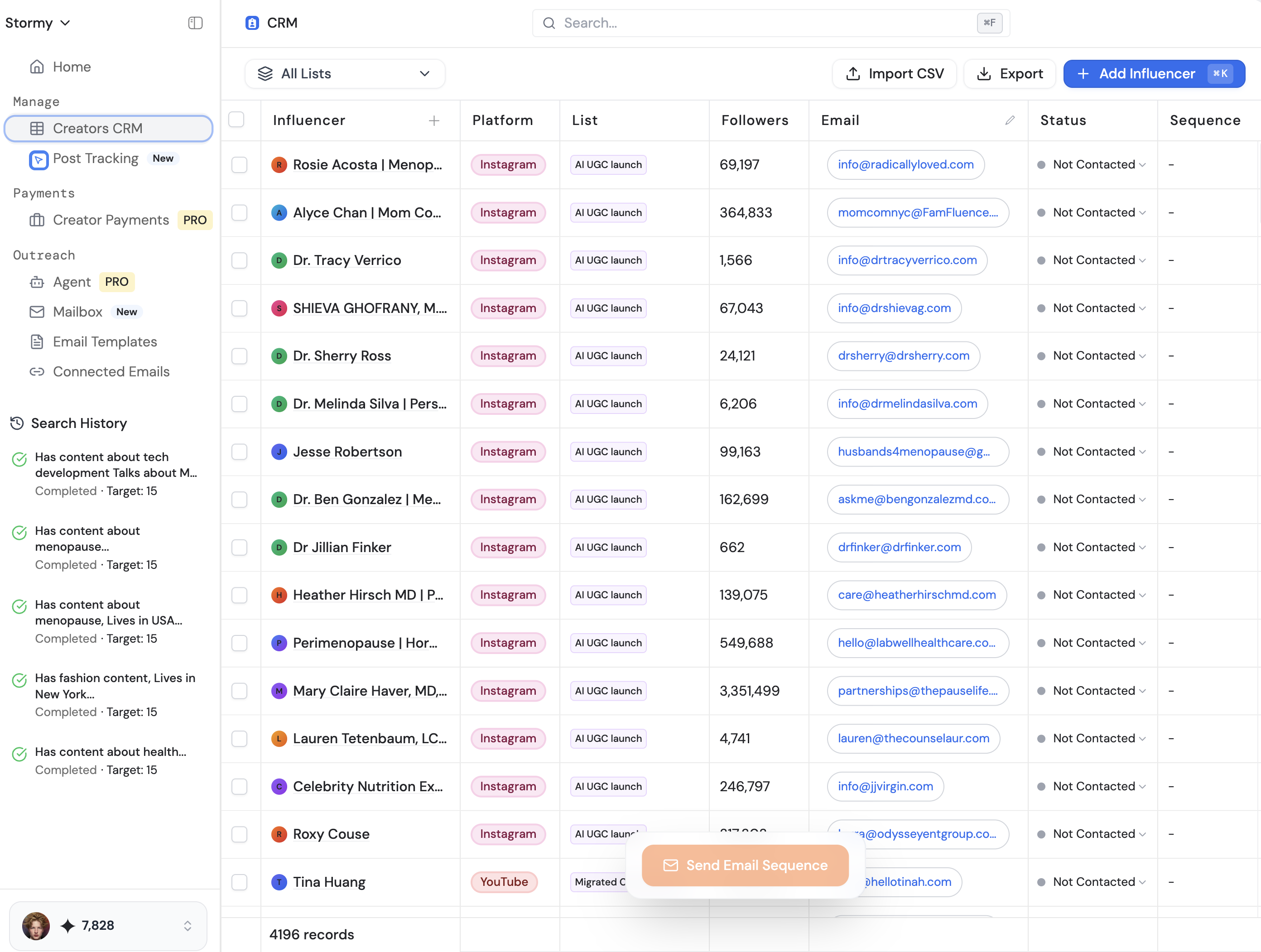
The current year marks a turning point where 51% of large enterprises have successfully moved past pilot programs into full-scale autonomous deployments, as reported by DemandSage. This shift is fueled by a new standard known as Agentic Marketing. Unlike traditional tools that follow rigid "If-This-Then-That" logic, 2026 agents use reasoning to achieve goals. They don't just send an email; they research the lead, synthesize a personalized value proposition, and adjust their strategy based on real-time engagement data. Platforms like Stormy AI are already leading this charge in the creator economy, allowing brands to find, vet, and outreach to influencers autonomously through high-reasoning AI agents.

"In 2026, the competitive advantage isn't having AI—it's having the most efficient Agentic Workflow Pattern. Companies are no longer scaling by headcount, but by compute."
The efficiency gains are staggering. Organizations utilizing autonomous marketing agents report a 40-70% reduction in operational costs. Even more impressive is the average 171% ROI seen within the first year of deployment, according to research by Planetary Labour. By shortening campaign development timelines by 73% and content creation cycles by 68%, agentic systems have effectively decoupled growth from human labor constraints.
The CRM Battle: HubSpot Breeze vs. Salesforce Agentforce
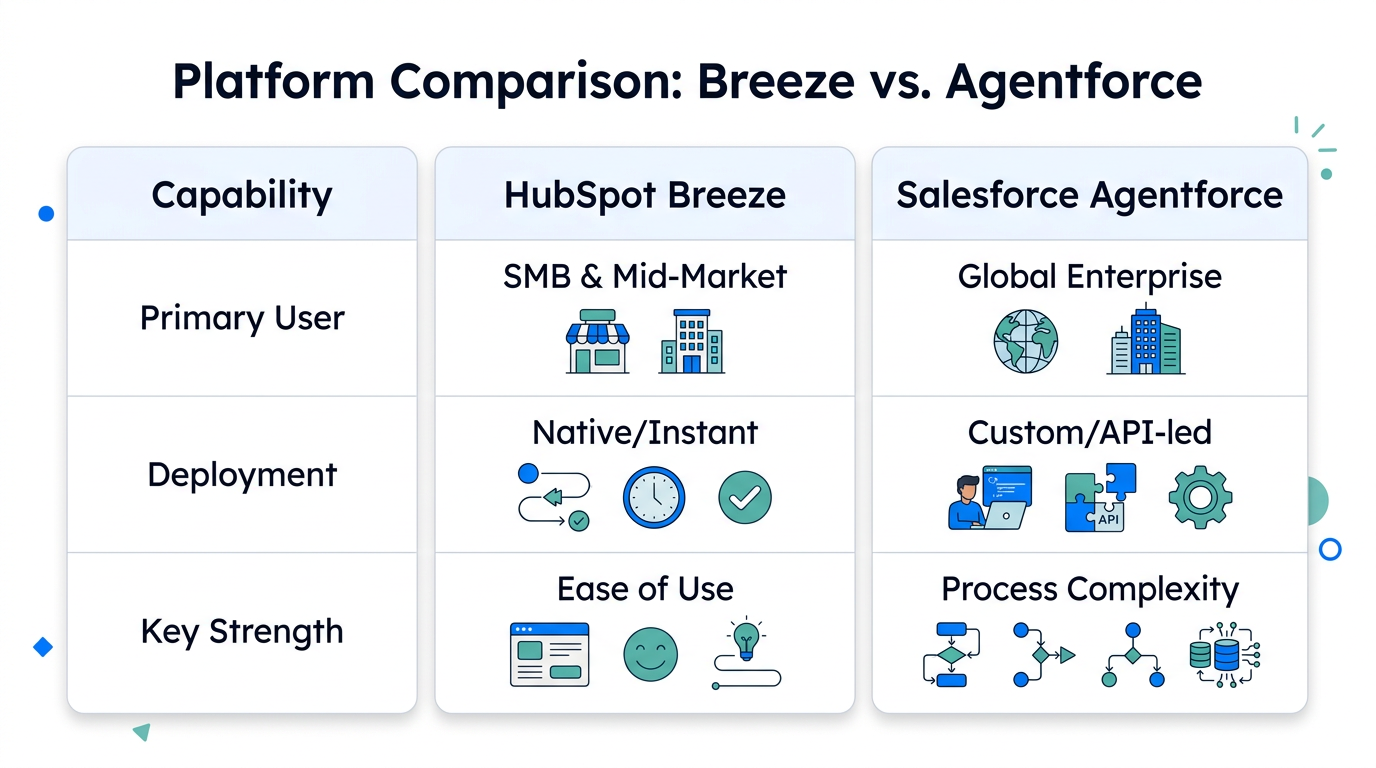
Two titans dominate the 2026 CRM-native agent landscape: HubSpot Breeze and Salesforce Agentforce. While both aim for total automation, their philosophies and pricing models cater to different tiers of the market. HubSpot Breeze focuses on accessibility, embedding agents for prospecting, social media management, and customer service directly into its existing tiers. Conversely, Salesforce Agentforce offers a high-octane, enterprise-grade swarm across the entire Customer 360 stack, priced at a premium of $2 per agent conversation. For specialized workflows like influencer marketing, Stormy AI offers a more tailored CRM experience designed specifically for the creator economy.
| Feature | HubSpot Breeze | Salesforce Agentforce | Traditional Automation (Zapier) |
|---|---|---|---|
| Logic Engine | Goal-Oriented Reasoning | Autonomous Swarms | Rigid "If-This-Then-That" | Primary Use Case | Inbound/SMB Sales | Global Enterprise Ops | Linear Data Transfer | Pricing Model | Subscription-based (Pro/Ent) | Usage-based ($2/chat) | Task-based | Implementation | Low-code/Plug-and-play | High-config/Custom Agents | Manual setup |
As noted by MarTech, 90.3% of marketing organizations now use some form of agentic tool. Scott Brinker, VP of Platform Ecosystem at HubSpot, suggests that the marketer’s role has shifted from "writer" to "editor and governor." This is particularly evident in 2026’s multi-agent systems (MAS), where a Strategy Agent drafts a brief, a Content Agent like Jasper AI writes the copy, and a Compliance Agent reviews it for brand safety—all in under 60 seconds.
The 3.7x ROI Rule and Financial Benchmarks
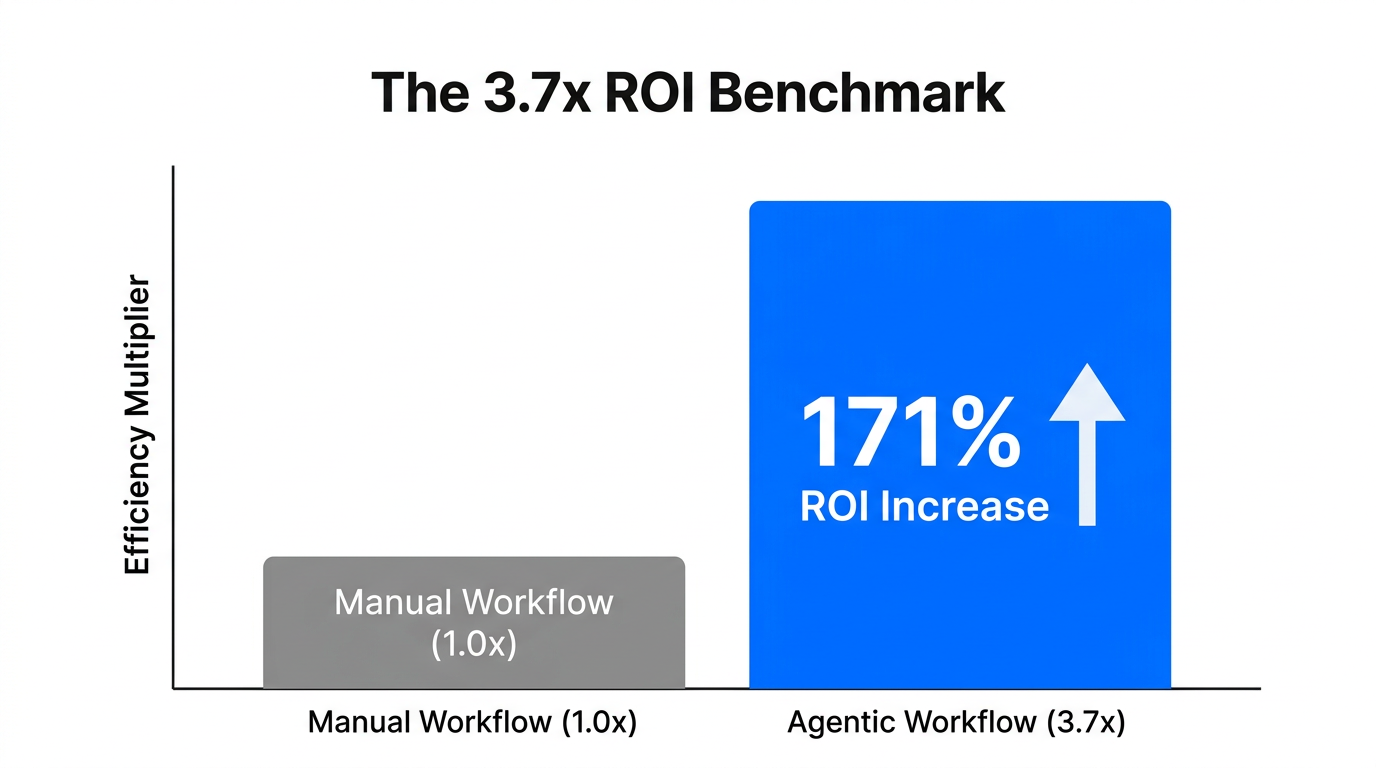
For CMOs building their 2026 budgets, the "3.7x Rule" has become the gold standard for ROI benchmarks. This rule indicates that mature agentic implementations generate $3.70 in value for every $1 spent on token costs and orchestration fees. This efficiency is most visible in the sales department. AI-powered SDR agents are currently outperforming their human counterparts by 70% in lead conversion while slashing operational costs by nearly half, according to data from Landbase.
"The 'payback period' for an enterprise-grade agent swarm is now 5.2 months. In the history of enterprise software, we have never seen capital efficiency move this fast."
Take the case of Klarna, a pioneer in the agentic space. By 2026, their AI customer service agent handles 2.3 million conversations—representing 66% of all customer chats. This single agentic swarm effectively replaced the labor equivalent of 700 full-time human agents, resolving issues 80% faster and contributing an estimated $40 million in annual profit improvement. This isn't just a productivity boost; it is a fundamental restructuring of the corporate balance sheet. Similar results are seen in other sectors, with JPMorgan saving $1.5 billion through agentic fraud and market analysis.
Solving the 'Data Foundation Gap'
Despite the glowing ROI statistics, the path to 2026 agentic maturity is littered with failures. Approximately 60% of AI projects are still abandoned because companies lack a proper "Data Foundation." As expert Bernard Marr points out, agents are only as effective as the data they can access. If your CRM data is siloed, messy, or outdated, your agents will hallucinate or fail to execute simple commands. This "Data Foundation Gap" is why many leaders are now prioritizing AI-ready data architectures over new front-end features.
Furthermore, security has become the #1 concern for 2026 deployments. Prompt injection—where malicious users trick agents into issuing unauthorized refunds or leaking sensitive CRM data—is a threat that requires robust AgentOps. Tools like MindStudio and StackAI have risen to prominence by offering "The Vault" philosophy: highly secure, SOC2-compliant environments where agents can reason safely without exposing company secrets.
The 2026 Playbook: 10 Minutes, 200 Prompts
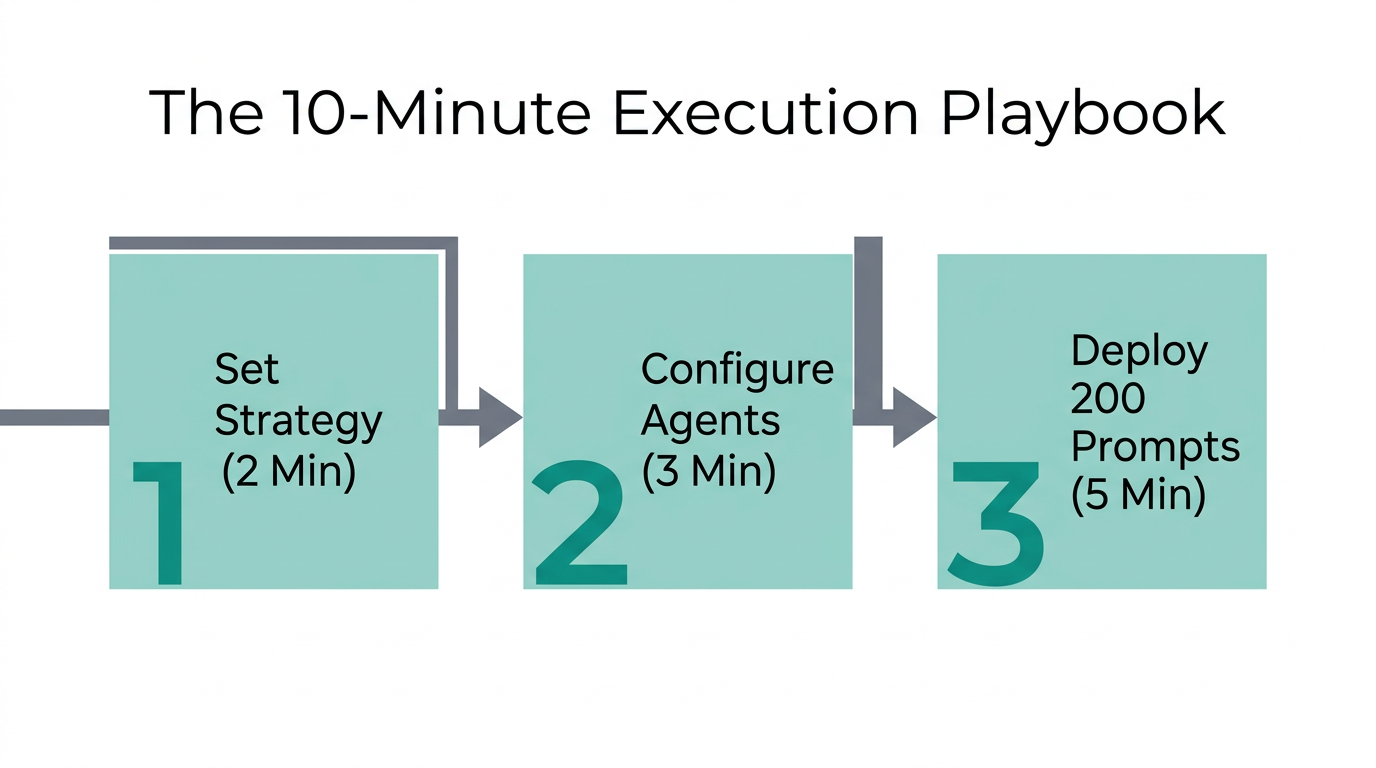
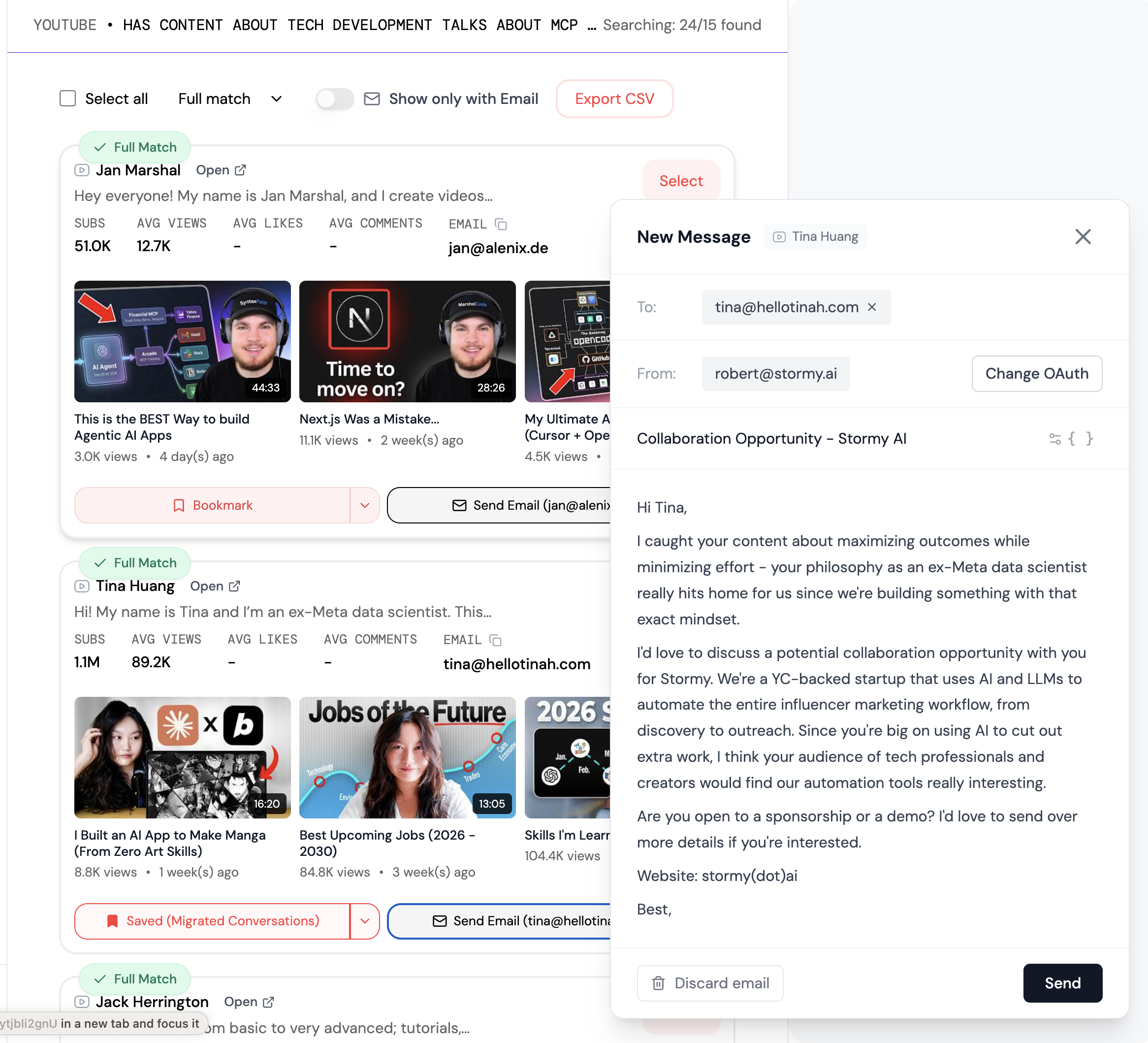
How do modern growth teams actually execute this? The strategy of choice in 2026 is Bulk Prompt Orchestration. Instead of manually prompting an LLM one by one, teams use tools like Gumloop or NoimosAI to run massive "batch loops." This allows a single marketer to process 200 leads, generate 200 personalized LinkedIn posts, and schedule them all in under 10 minutes. This isn't just faster; it's a new dimension of marketing scale.
Step 1: Define the "Command"
Instead of writing granular prompts, use a Command Center to set a high-level goal. For example: "Increase Q3 leads by 20% using personalized outreach on LinkedIn."
Step 2: The Parallel Execution Loop
Utilize the "Planner-Critic-Executor" pattern. The Planner breaks your goal into 200 sub-tasks; the Executor runs them in parallel threads (often using high-efficiency Small Language Models to save costs); and the Critic reviews every output for brand alignment.
Step 3: Human-in-the-Loop (HITL) Guardrails
Set a "Confidence Threshold." If the agent is less than 90% confident in the quality of a lead or the tone of a message, it flags the task for human review. This prevents the "Over-Automation Trap" that leads to brand backlash.
"2026 is the year of Agent-to-Agent (A2A) commerce. Your marketing agent is no longer just selling to humans—it's selling to a buyer's agent."
Conclusion: The Autonomous Future
The 2026 ROI Report makes one thing clear: the gap between the "agent-powered" and the "human-only" enterprise is widening into a canyon. With a 3.7x ROI rule and the ability to replace thousands of human labor hours with a single agentic swarm, the financial incentives are undeniable. Whether you choose the native integration of HubSpot Breeze or the enterprise power of Salesforce Agentforce, the success of your deployment will ultimately hinge on your data readiness and your ability to transition from a doer to a governor.
For brands looking to dominate specialized channels like influencer marketing, Stormy AI provides the essential agentic infrastructure to find and outreach to creators at a scale that was previously impossible. As we move further into 2026, the goal is simple: automate the routine, reason through the complex, and scale without limits. The agents are ready. Are you?