The 2026 Retention Playbook: Post-Purchase and Win-Back Email Flows for DTC Brands
Master the 2026 ecommerce retention strategy with advanced post-purchase email flows and win-back email sequences to boost your customer lifetime value naturally.
In 2026, the landscape of direct-to-consumer (DTC) marketing has shifted from the aggressive pursuit of new customers to the surgical optimization of existing ones. With acquisition costs remaining at historic highs, the most successful brands are those that treat their email list not as a megaphone, but as a sophisticated engine for Customer Lifetime Value (LTV) marketing. Data from the latest Omnisend 2025/2026 Reports reveals a staggering reality: while automated flows account for only 2% of total email volume, they drive over 30% of total revenue for top-tier merchants.
The days of "batch-and-blast" newsletters are officially over. Today's consumer expects hyper-personalized, behavior-triggered communication that feels like a concierge service rather than a sales pitch. If your brand isn't leveraging automated post-purchase email flows and win-back email sequences, you are leaving the most profitable segment of your business to chance. This playbook outlines the exact strategies required to turn one-time buyers into lifelong advocates in the current 2026 environment.
The Economics of Retention: Why LTV is the Only Metric That Matters
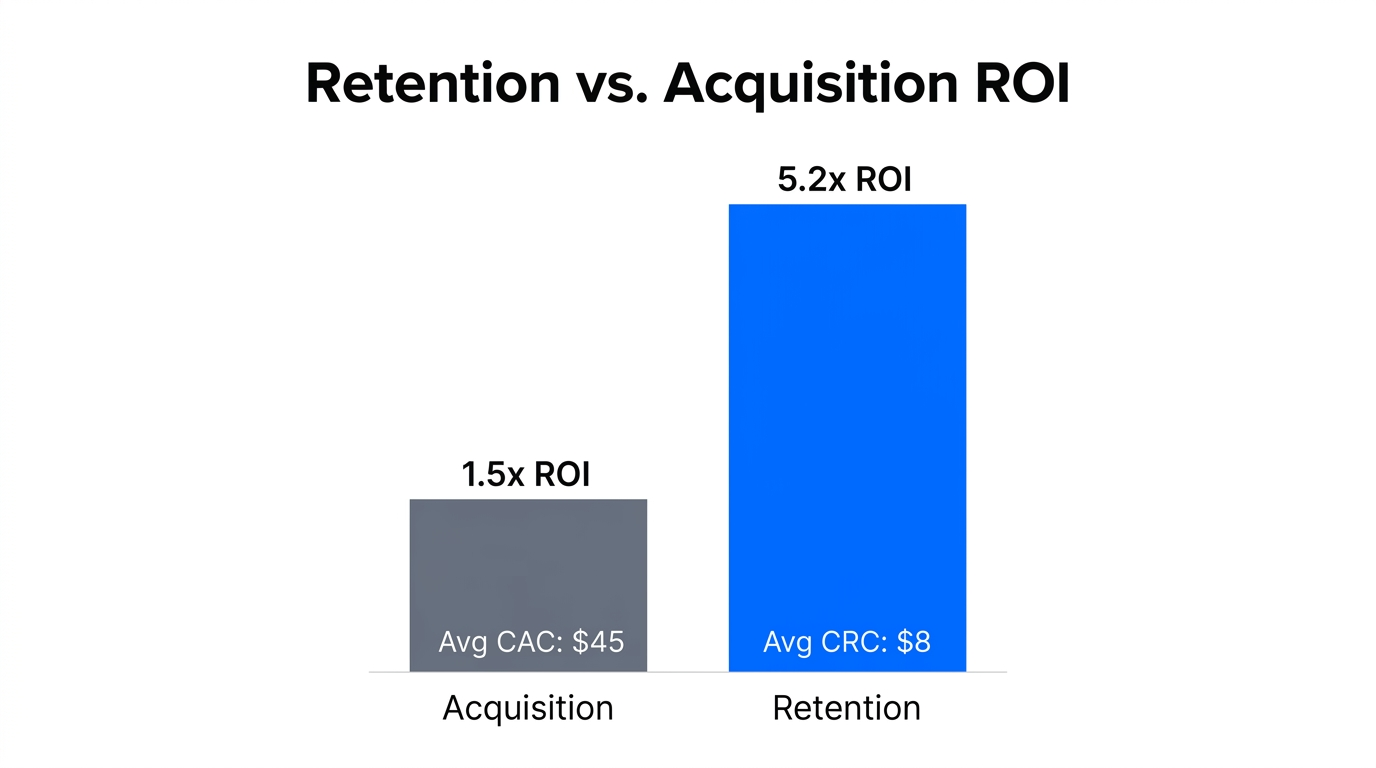
In the current fiscal year, the ROI of email marketing continues to outpace every other digital channel, yielding an average of $36–$40 for every $1 spent, according to research by Litmus. However, for those using advanced AI-driven automation, that figure can skyrocket to as much as $76 ROI. The core of this profitability lies in the Revenue Per Recipient (RPR). According to Klaviyo Benchmarks, automated flows generate up to 30x more revenue than standard one-off campaigns.
Beyond the immediate revenue, retention is about protecting your margins. By focusing on ecommerce re-engagement campaigns, you bypass the expensive cycle of social media ad auctions on platforms like TikTok Ads. When 99% of your customers are checking their inbox daily, the goal is to ensure your brand is the one they engage with—provided your content is mobile-optimized, as 70% of users will immediately delete emails that don't render correctly on smartphones, according to Shopify.
"In 2026, your email list is not a distribution channel; it is a proprietary data asset that dictates the valuation of your entire DTC brand."
The Post-Purchase Powerhouse: From Transaction to Transformation
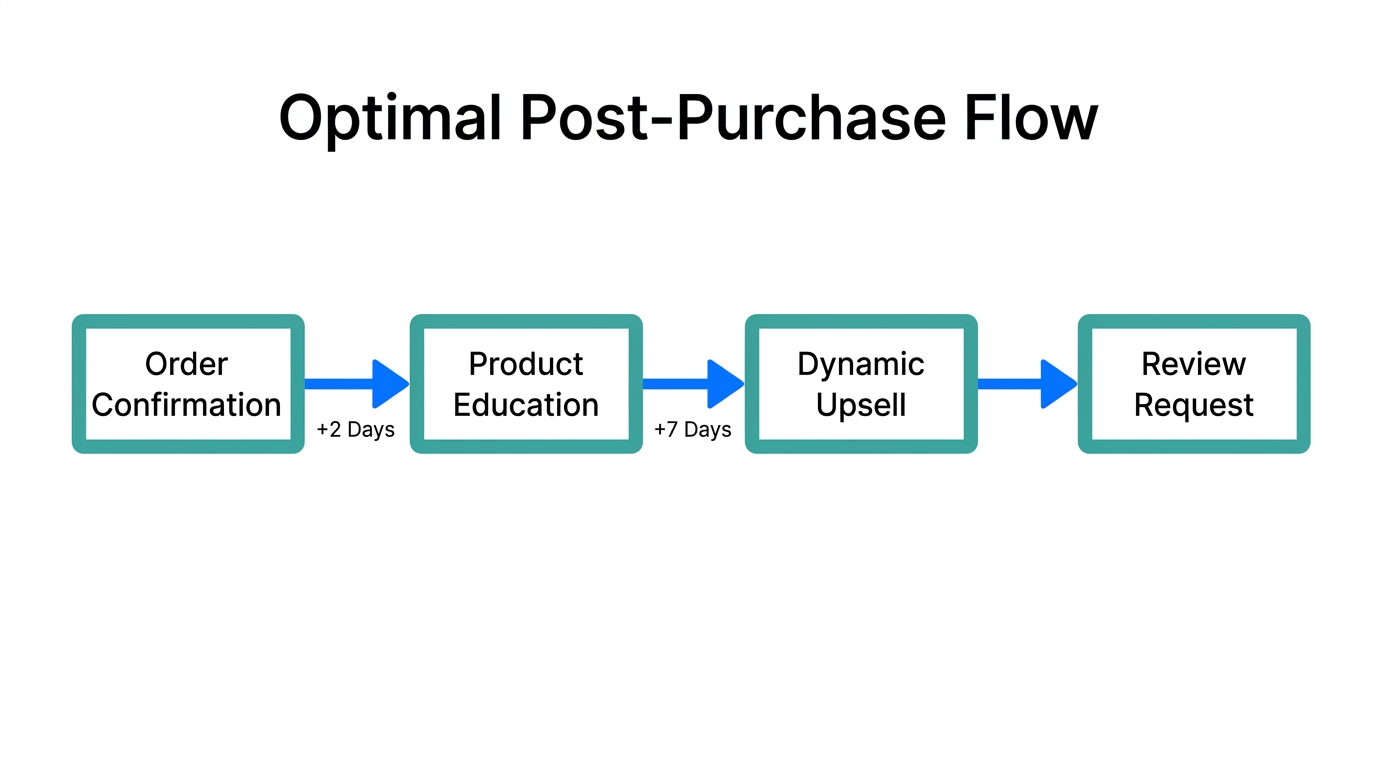
The most critical window for retention opens the second a customer hits the "Purchase" button. Many brands make the mistake of stopping at the order confirmation. A world-class post-purchase email flow uses this high-dopamine moment to cement the relationship and increase immediate order value.
The 15-Minute Upsell
Timing is everything. Within 15 minutes of a purchase, a customer is in a "buying state." Leading brands utilize one-click offers for complementary products that enhance the original purchase. For example, if a customer buys a high-end espresso machine, the 15-minute upsell should be for a specific roast or a cleaning kit. Utilizing tools like Yotpo to facilitate these seamless cross-sells can increase post-purchase profits by up to 30%, according to data from Scurri.
Educational Nurturing (The 3-5 Day Rule)
Between days three and five post-delivery, the initial excitement can fade into "buyer's remorse" if the customer hasn't yet mastered the product. This is where educational content becomes a retention tool. Instead of asking for another sale, send a "How to Use" guide. This builds immense brand trust and reduces return rates. Brands like Cheeky Wipes have mastered this by offering customer support and tips rather than a hard sell in their early post-purchase stages, as noted by Klaviyo UK.
| Flow Type | Primary Goal | Optimal Timing | Expected Conversion |
|---|---|---|---|
| Transactional | Order Confirmation | Immediate | Open Rates > 70% |
| Upsell | Increase AOV | +15 Minutes | 3-5% |
| Educational | Reduce Returns/Build Trust | 3-5 Days Post-Delivery | N/A (LTV Focus) |
| Review Request | Social Proof Generation | 7-14 Days Post-Delivery | 8-12% |
RFM Analysis: The Secret to High-ROI Win-Back Sequences
You cannot win back every customer with the same message. Effective win-back email sequences in 2026 rely on RFM Analysis: Recency, Frequency, and Monetary value. This segmentation allows you to tailor your discount strategy and messaging based on the customer's historical importance to your brand.
- Recency: How long has it been since their last purchase? (At 60 days, they are "fading"; at 180 days, they are "lapsed").
- Frequency: How many times have they bought from you? A repeat buyer who stops is a much higher priority than a one-time discount seeker.
- Monetary: How much have they spent in total? High-value segments deserve personalized outreach or higher-tier incentives.
By segmenting your list this way, you avoid the common mistake of over-discounting. You don't need to offer 30% off to a loyal customer who simply forgot to restock; a gentle nudge or a "new arrivals" showcase might suffice. However, for a high-value customer who hasn't visited in six months, a "gift for your return" is a justified investment. Expert marketer Chase Dimond emphasizes that having multiple emails in these flows—rather than a single "we miss you" note—results in 69% more orders recovered.
"Don't train your customers to wait for a discount. Use RFM analysis to identify who needs an incentive and who just needs a reminder."
Predictive Churn Scoring: AI as Your Early Warning System
In 2026, we no longer wait for a customer to disappear before we act. Predictive Churn Scoring uses machine learning to identify "at-risk" customers before they actually stop engaging. By analyzing patterns such as decreasing email open rates, fewer site visits, or a longer-than-usual gap between habitual purchases, AI triggers a preemptive ecommerce re-engagement campaign.
Platforms like Klaviyo AI allow brands to automate these triggers seamlessly. For instance, if the AI detects a high probability of churn, it can trigger a personalized video testimonial from a creator who shares the customer's profile. Sourcing this kind of User-Generated Content (UGC) is now a cornerstone of modern retention. Brands often use Stormy AI to quickly find and collaborate with creators who can provide these authentic, high-converting video assets for their automated sequences.
The 'Sunset Notification' and List Hygiene
A successful ecommerce retention strategy also knows when to let go. Carrying "dead weight" on your email list hurts your deliverability and skews your data. The Sunset Notification is the final step in your re-engagement flow. It is a transparent, GDPR-compliant way of asking: "Is this goodbye?"
Proper list hygiene involves moving unengaged subscribers into a final 3-email sequence. If they don't engage with the final "Is this goodbye?" message, they are automatically suppressed. This ensures that your emails reach the primary inbox of your active customers and keeps you compliant with evolving privacy regulations like those highlighted by Gravytrain. Remember, a smaller, highly engaged list is infinitely more valuable than a massive list of people who never open your mail.
Building Your 2026 Retention Tech Stack
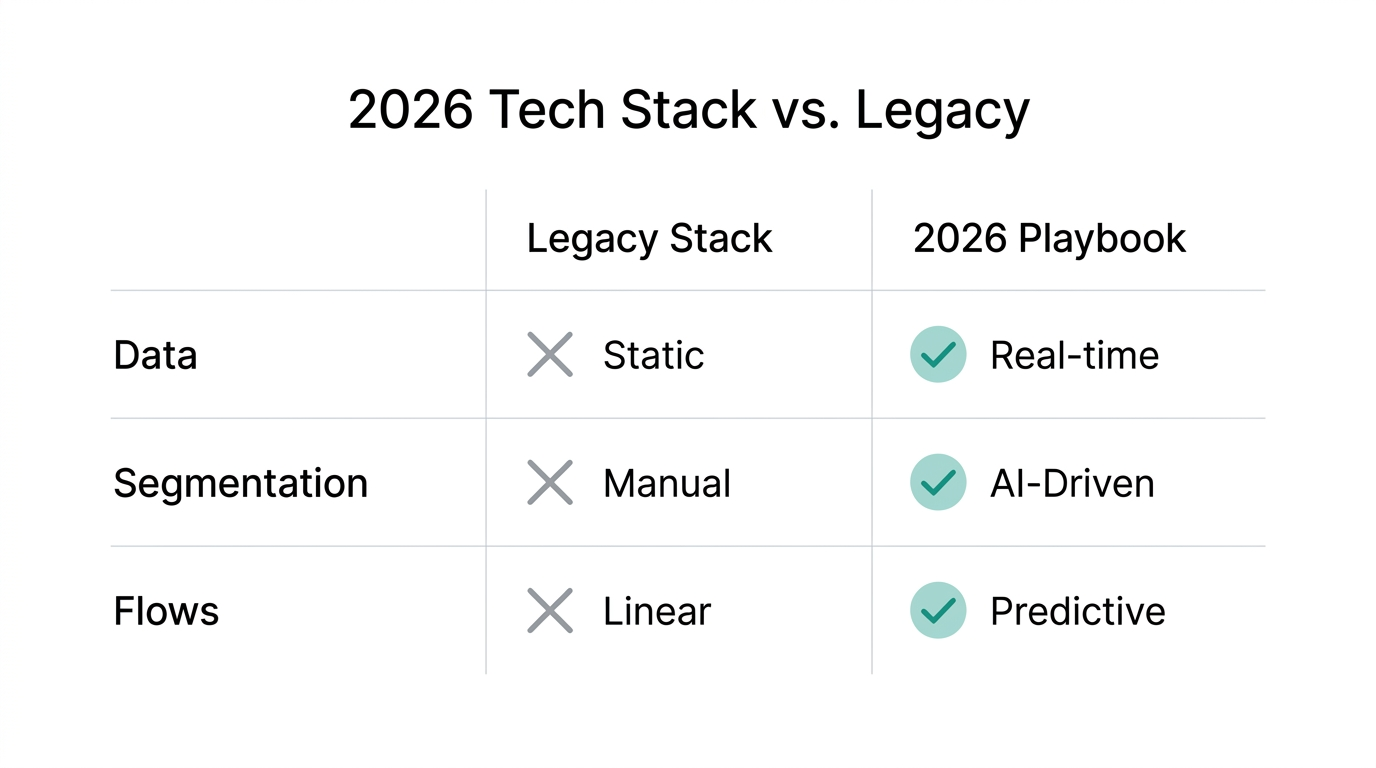
To execute this playbook, you need an integrated ecosystem where data flows freely between your store, your ESP, and your discovery tools. The 2026 standard involves moving beyond silos to an omnichannel approach where SMS and Web Push notifications are orchestrated alongside email.
| Tool Category | Recommended Platform | Why It Matters for Retention |
|---|---|---|
| ESP / Automation | Klaviyo | Industry-leading predictive AI and Shopify integration. |
| Omnichannel | Omnisend | Best-in-class integration for SMS and Web Push flows. |
| UGC Sourcing | Stormy AI | Essential for finding creators to fuel re-engagement content. |
| Post-Purchase | Scurri | Manages shipping updates that maintain customer excitement. |
| Infrastructure | Mailtrap | Ensures deliverability and tests email HTML before sending. |
By combining these tools, you can create a seamless experience that guides a customer from their first visit (via a high-converting Welcome Series, like the one used by Jubilee Scents which generated £5,549 in just six days) through to their tenth purchase and beyond.
The Path Forward: Start Small, Iterate Fast
You don't need to build a 20-step AI-driven sequence overnight. The path to mastering customer lifetime value marketing begins with the fundamentals. Start by implementing a robust 3-email abandoned cart flow and a basic post-purchase thank-you sequence. Once the data starts rolling in, use RFM analysis to sharpen your targeting.
Retention in 2026 is a game of relevance and respect. By using predictive scoring to prevent churn, educational content to build trust, and list hygiene to maintain your reputation, you'll build a DTC brand that doesn't just survive on new clicks, but thrives on loyal repeats. Focus on the 2% of emails that drive the 30% of revenue, and the rest of your marketing strategy will follow suit.