In 2026, the distance between a stagnant e-commerce brand and a market leader is measured not by their total ad spend, but by the speed of their creative intelligence. We have moved past the era where performance marketing was solely about button-clicking in Meta Ads Manager. Today, the creative is the targeting, the hook is the algorithm, and the AI ad creative audit is the engine driving sustainable growth. With nearly 90% of digital-first marketing teams now integrating AI into their advertising workflows, the competitive advantage lies in how you audit, analyze, and iterate on your assets.
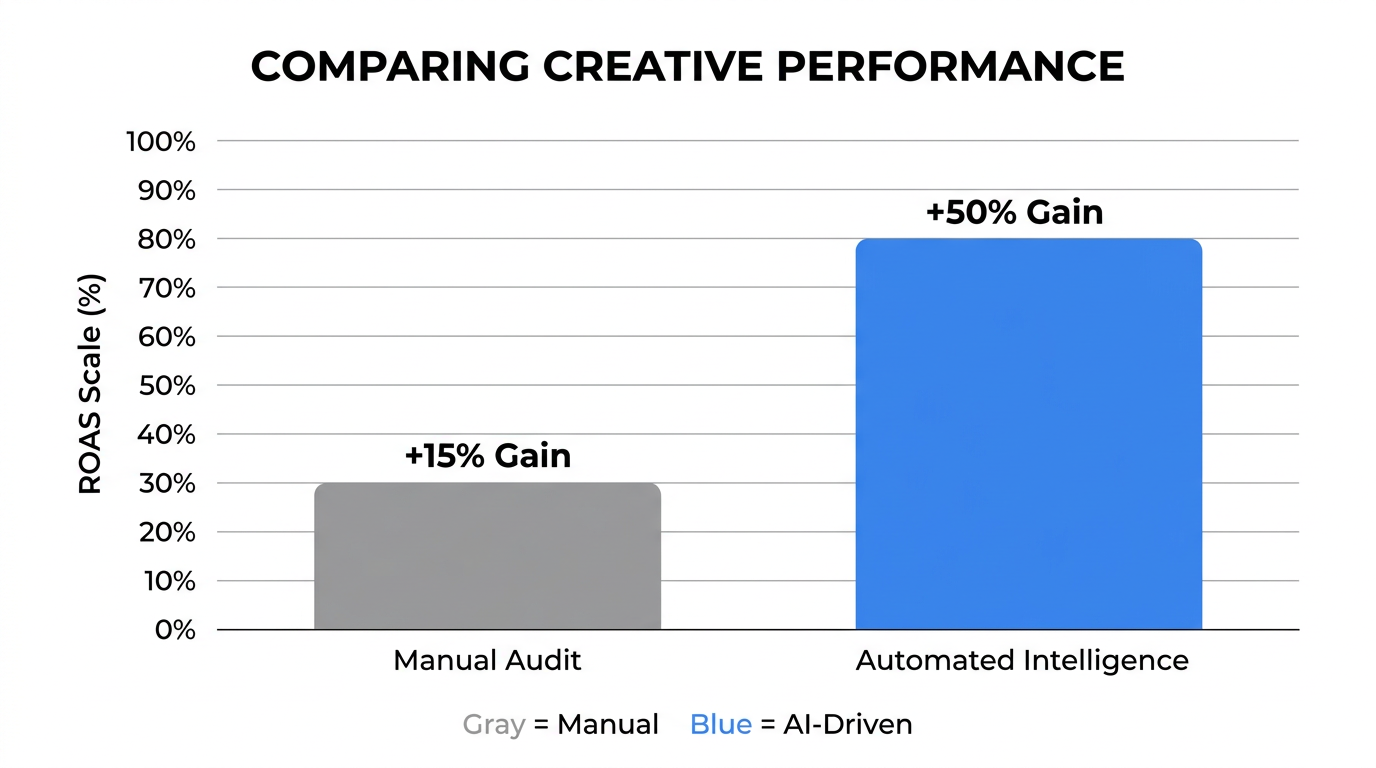
For growth leaders, the stakes have never been higher. Statistics from recent McKinsey research show that brands leveraging AI for creative optimization are seeing a staggering 31% to 50% increase in ROAS (Return on Ad Spend) compared to those relying on manual, gut-feeling reviews. This guide outlines the exact 2026 playbook for building a systematic performance marketing strategy that uses AI to turn creative data into a predictable revenue driver. Many top-tier brands are now pairing these audits with platforms like Stormy AI to ensure they have a constant pipeline of high-quality influencer-generated content to feed their testing cycles.
The Shift to Automated Creative Intelligence in 2026
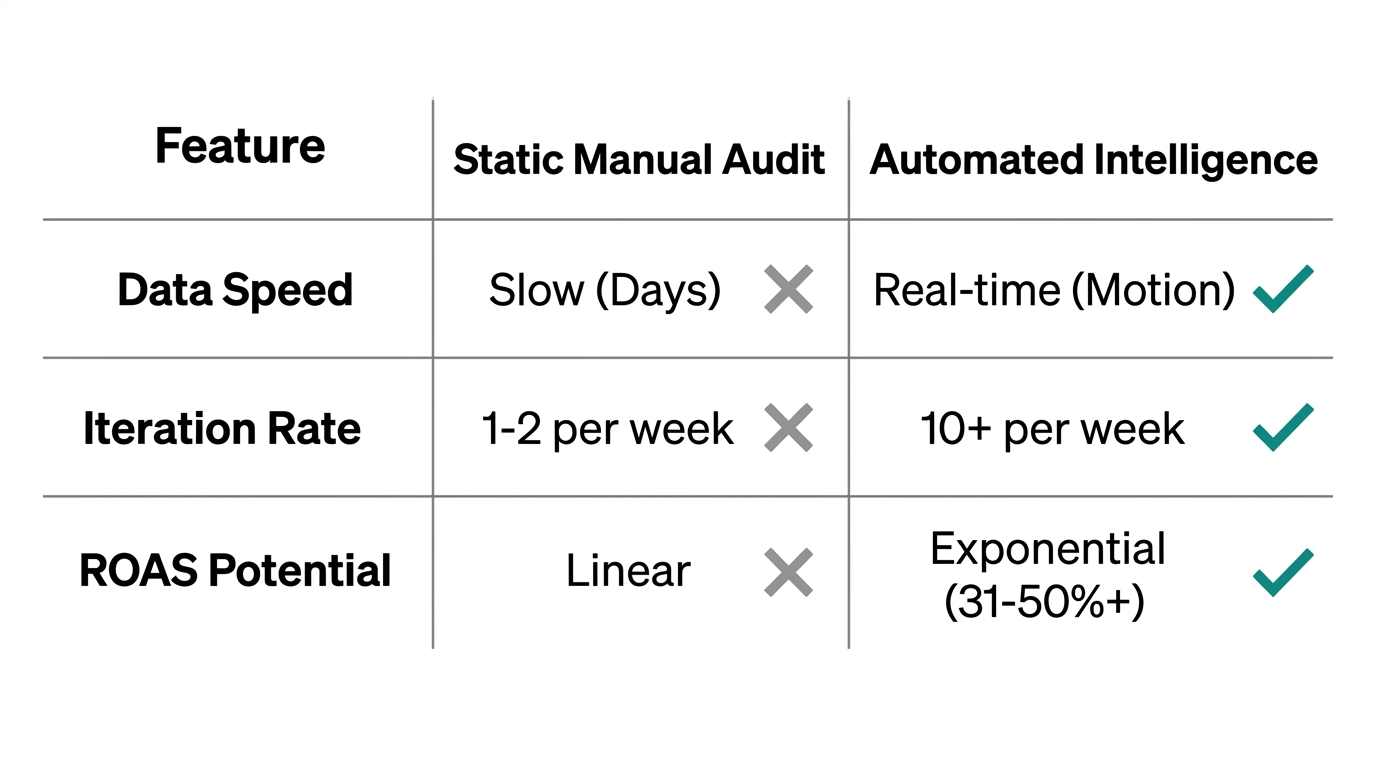
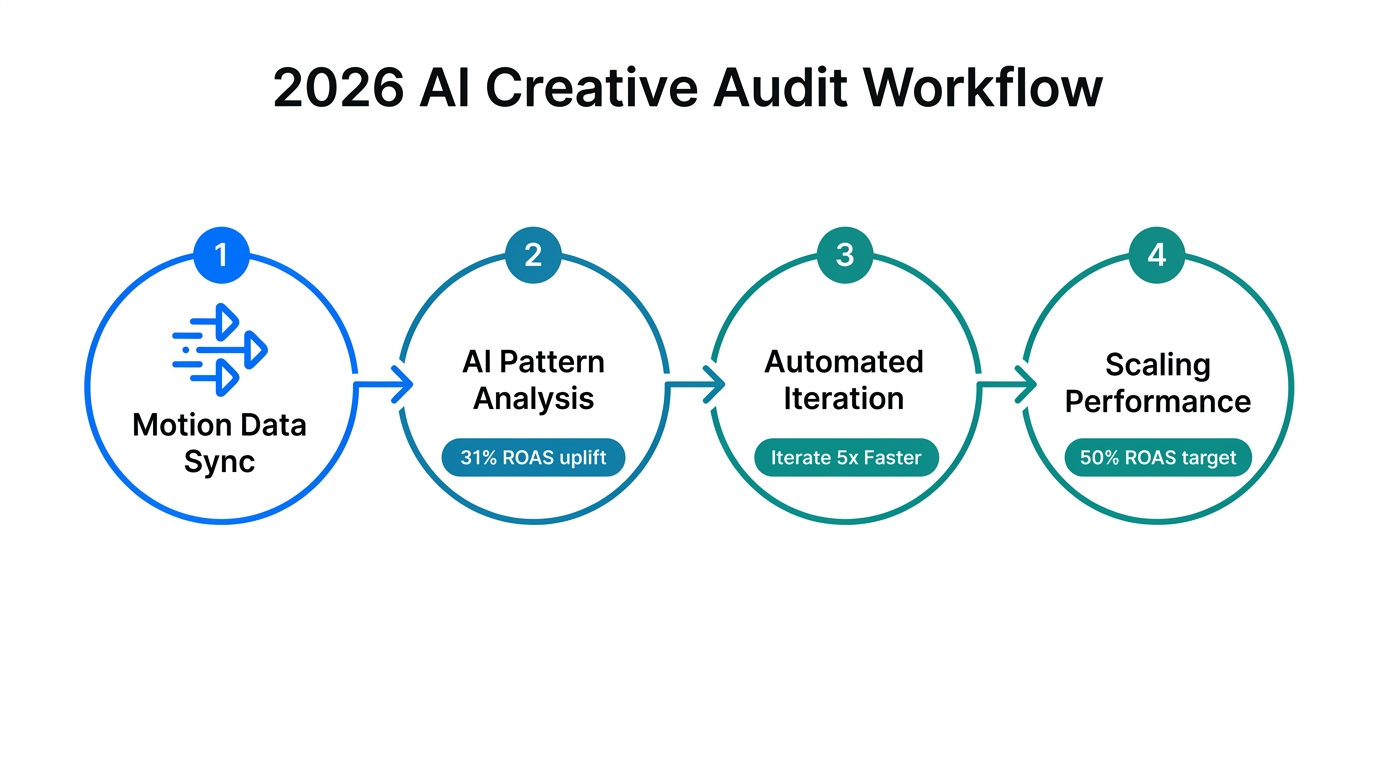
The manual process of analyzing TikTok or Instagram reels frame-by-frame is a relic of the past. In 2026, leading brands use Motion and similar creative analytics tools to visualize performance data directly alongside visual assets. However, the "Audit" stage is where the magic happens. By using an AI-powered creative audit, marketers can instantly identify which visual hooks, color palettes, and CTA placements are resonating with their specific e-commerce audience. This shift from "what happened" to "why it worked" is the cornerstone of scaling in a crowded Google Analytics-driven ecosystem.