2026 E-commerce CRO Playbook: Scaling Revenue with Claude Code A/B Testing
Master e-commerce conversion rate optimization 2026 with our playbook on Claude Code A/B testing. Scale from 3 tests to 30+ autonomous variants for massive ROI.
In 2026, the "wait and see" approach to e-commerce is dead. The era of manual A/B testing—where a growth lead spends weeks debating button colors with a designer—has been replaced by high-velocity agentic experimentation. As the AI-enabled e-commerce market soars to $8.65 billion this year, according to Statista and HelloRep, the competitive gap is widening between brands that guess and brands that automate.
The secret weapon for 2026? Claude Code. By leveraging Anthropic’s agentic CLI, e-commerce growth teams are moving from launching 2-3 manual tests per month to 30+ autonomous "variant clusters." This shift isn't just about speed; it's about scaling revenue through high-velocity experimentation strategy that outpaces the competition by an order of magnitude.
The Shift to Agentic Experimentation in 2026
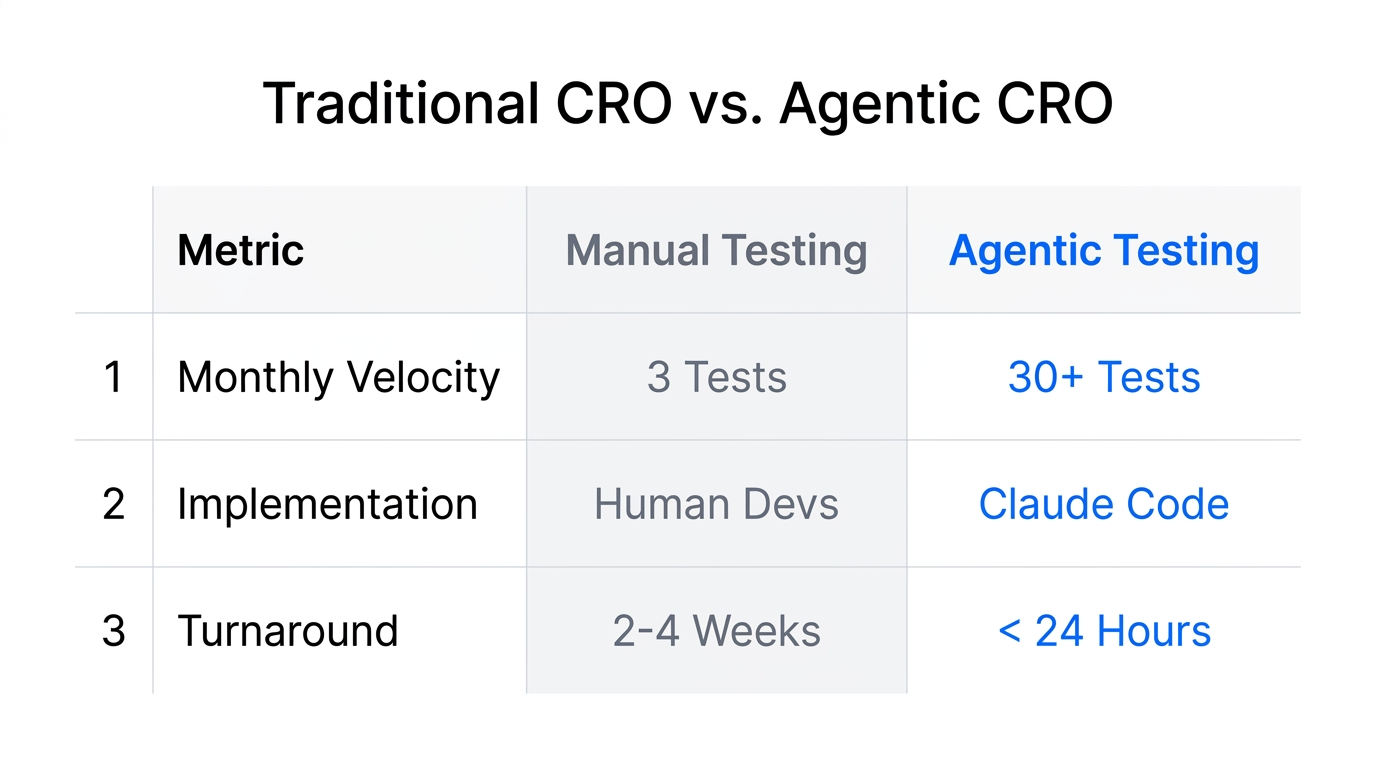
Traditional CRO has always been plagued by a bottleneck: human bandwidth. Even with robust tools like Optimizely, the process of generating a hypothesis, coding the variant, and monitoring the results was a multi-week affair. In 2026, Market Better reports that brands using Claude Code to generate variant clusters are reaching statistical significance 10x faster than those using manual workflows.
"The transition from manual testing to autonomous agent-to-agent experimentation is the single biggest ROI driver in e-commerce history, shifting the focus from 'what to test' to 'how fast can we learn.'"
We are no longer just testing "Button A vs. Button B." Instead, platforms like Contentsquare now use AI agents to identify friction points in real-time and coordinate with testing suites to launch experiments without human intervention. This e-commerce growth marketing automation is how 8-figure brands are maintaining their lead in an increasingly crowded market.
The Playbook: Integrating Claude Code with Shopify and VWO
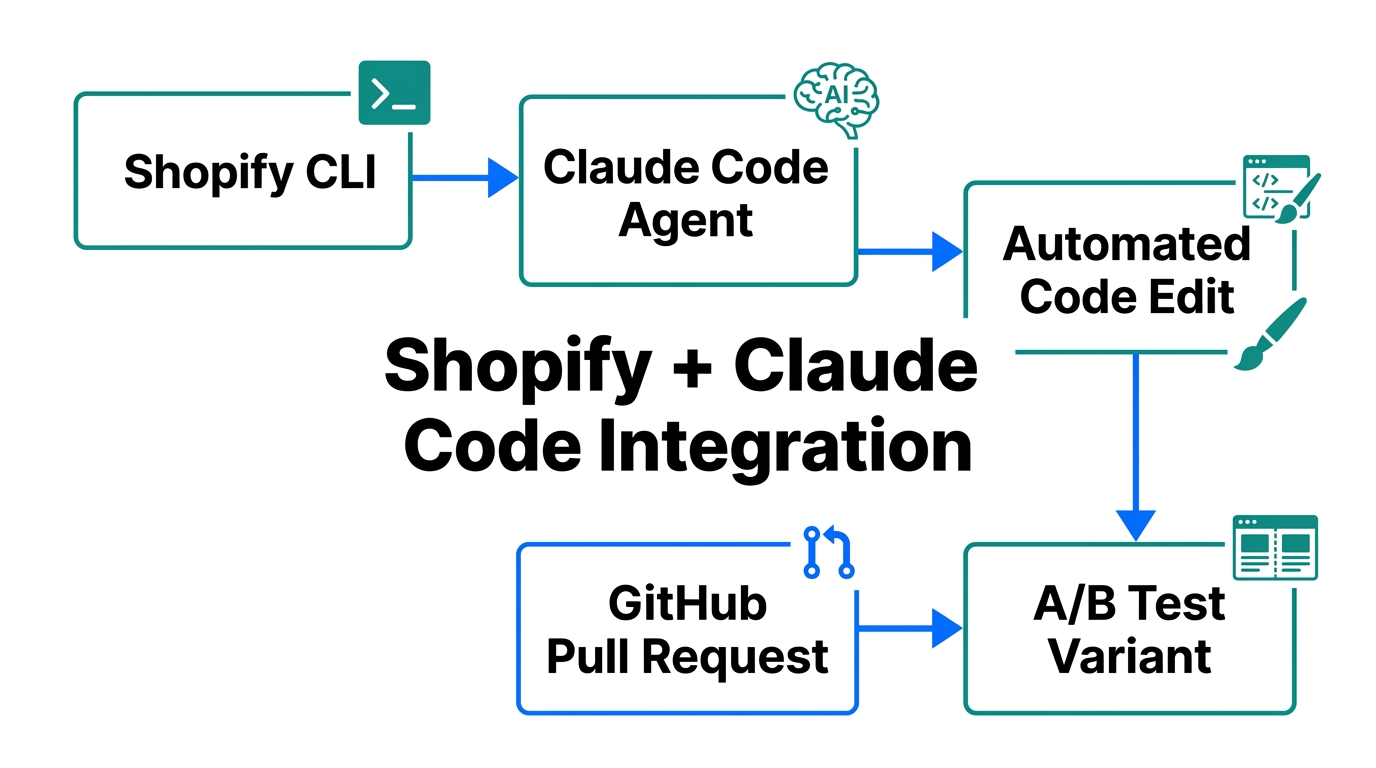
To implement AI-driven CRO for Shopify, you cannot treat Claude as a simple chatbot. It must be integrated as a technical development partner within your repository. Here is the 2026 playbook for setting up an autonomous testing engine.
Step 1: The CLAUDE.md Configuration
Your first task is creating a CLAUDE.md file in your root directory. This file acts as the "brain" for the agent, defining your tech stack, coding standards, and primary KPIs. For most high-growth brands, this means instructing Claude on how to interact with Shopify Liquid files and VWO integration scripts. Without this context, the AI will produce generic code that fails your site's specific linting rules.
Step 2: Hypothesis Locking
One of the biggest mistakes in CRO is testing without a data-driven foundation. By using the "A/B Test Setup" skill from the MCP Market, you can enforce a "Hypothesis Lock." This ensures that Claude cannot generate a single line of CSS or JavaScript until it has validated the test against your historical data. It forces the AI to answer: What behavioral psychology principle is being triggered?
Step 3: Rapid Variant Generation
Once the hypothesis is locked, use Claude Code to generate up to 30 variants. For example, if you are testing a mobile checkout experience, Claude can simultaneously generate variants for "Sticky Add-to-Cart" buttons, progress bar animations, and one-click upsell triggers. Research from Brillmark shows that mobile-first sticky elements alone can drive an 18–32% conversion lift.
| Testing Metric | Manual Testing (Old School) | Claude Code Agentic Testing (2026) |
|---|---|---|
| Velocity | 2-3 tests / month | 30+ variants / week |
| Validation | Human intuition | Synthetic Persona Testing (Ditto) |
| Implementation | Days of dev time | Seconds via CLI |
| Significance | Weeks to conclude | Real-time AI analysis |
Case Study: 8-Figure Revenue Lifts
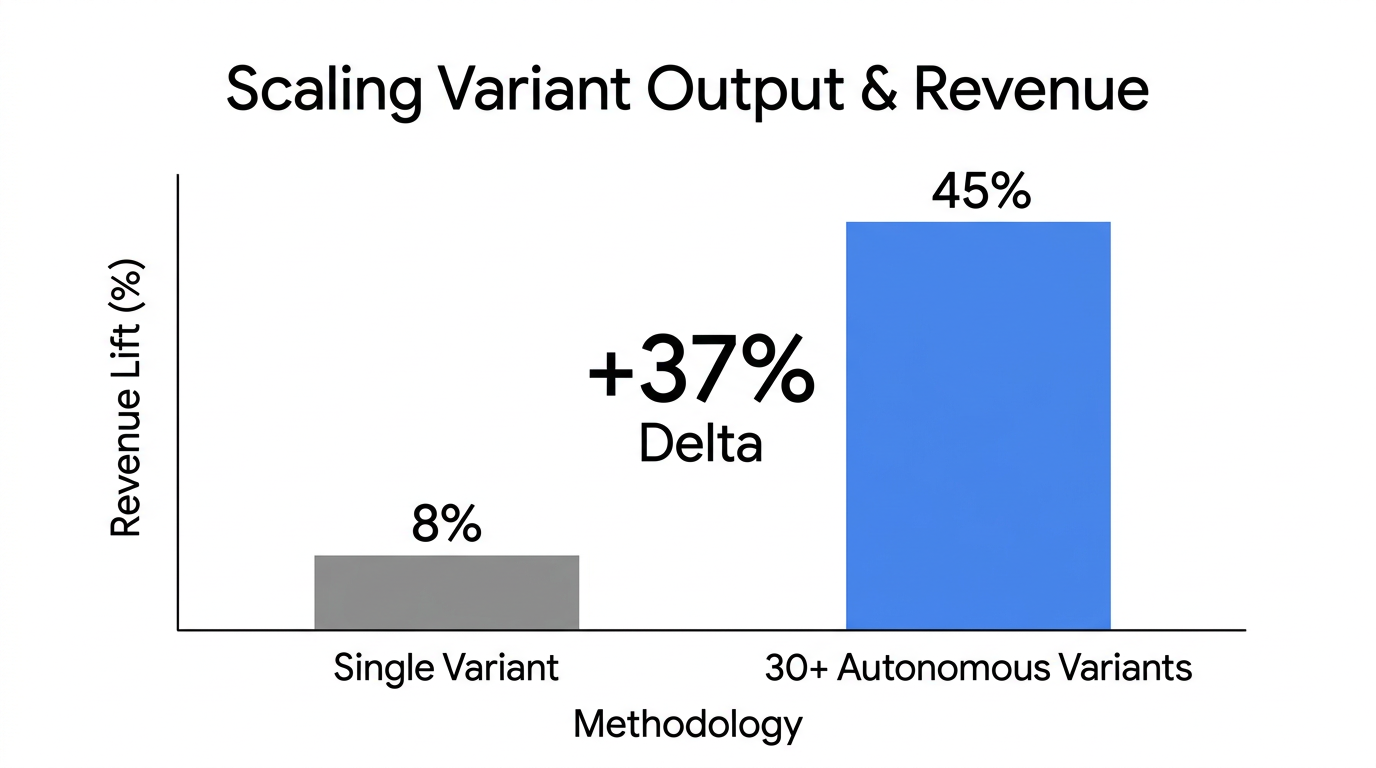
In early 2026, an 8-figure e-commerce brand utilized specialized Claude agents—specifically the Orion and Kairos models—to manage their entire testing roadmap. By automating the research-to-implementation cycle, they identified an "elasticity cliff" in their pricing strategy that human analysts had missed for years. This AI-driven insight, similar to the pricing research conducted by Ditto for ESPN, led to a 12% revenue increase in a single quarter [source: McKinsey].
Furthermore, these brands are using Claude to write comprehensive test suites. Instead of manually checking if a new checkout variant breaks on Safari, they use Claude to generate 500+ automated tests using Cypress, catching bugs before they ever reach a customer.
"The brands winning in 2026 are those that treat every customer interaction as a data point for their AI agents to refine the user experience in real-time."
Once your on-site conversion is optimized through these rigorous AI-driven loops, the focus shifts to feeding the funnel. To maximize the ROI of your new high-converting pages, growth leads often turn to Stormy AI to discover and outreach to the high-quality UGC creators who will drive the initial traffic to these tested variants.
Avoiding the 'Statistical Sin' of Peeking
Despite the speed of Claude Code A/B testing, the laws of mathematics still apply. A common pitfall in 2026 is "peeking"—stopping a test the moment a variant looks like a winner. This leads to false positives and long-term revenue erosion.
Instead of looking at raw percentages, use Claude’s /compact command to summarize confidence intervals. You should instruct the agent to only declare a winner when the power analysis meets a 95% threshold. This discipline ensures that your e-commerce conversion rate optimization 2026 strategy is built on stable ground, not statistical noise.
Conclusion: The Future is Autonomous
The transition to high-velocity experimentation strategy is no longer optional for e-commerce brands that want to survive 2026. By moving from manual, sporadic testing to an autonomous loop powered by Claude Code, you can unlock conversion lifts that were previously impossible.
Start by setting up your CLAUDE.md, locking your hypotheses with data-driven AI personas, and never stopping a test until the math says so. When your site is finally a conversion machine, scale your reach by finding the perfect creators via Stormy AI to ensure your optimized funnel is always full of high-intent traffic.