In the hyper-competitive landscape of 2026, the era of "set it and forget it" retail is officially over. For e-commerce founders and growth leads, the ability to pivot pricing in real-time is no longer a luxury—it is the baseline for survival. Data from the current market indicates that a properly executed AI dynamic pricing strategy can increase total revenue by a staggering 20% to 25%. As global inflation remains volatile and consumer behavior shifts toward AI-assisted shopping, the brands that win are those that treat their price tags as living, breathing data points.
The 2026 E-commerce Landscape: Why AI Pricing is a Retail Necessity
As we navigate 2026, the global AI in retail market has exploded, on track to reach $85.3 billion by 2032. Retailers are no longer just competing with other brands; they are competing with algorithms. In fact, roughly 55% of European retailers have already moved beyond pilot phases to full-scale GenAI pricing approaches. This shift is driven by the need for retail price optimization that goes deeper than simple competitor matching.
Beyond simple revenue, average margin improvements of 5% to 15% are being reported by brands that integrate their pricing engines with their supply chain data. This allows for "Inventory-Linked Pricing," where the AI automatically lowers prices for slow-moving stock to free up warehouse space or raises prices as stock depletes to prevent "out-of-stock" signals that hurt SEO rankings on marketplaces like Amazon and Walmart.
"The companies with these pricing strategies in place will be the ones who navigate inflationary environments most effectively in 2026."
Establishing Price Guardrails: Protecting Brand Equity and Margins
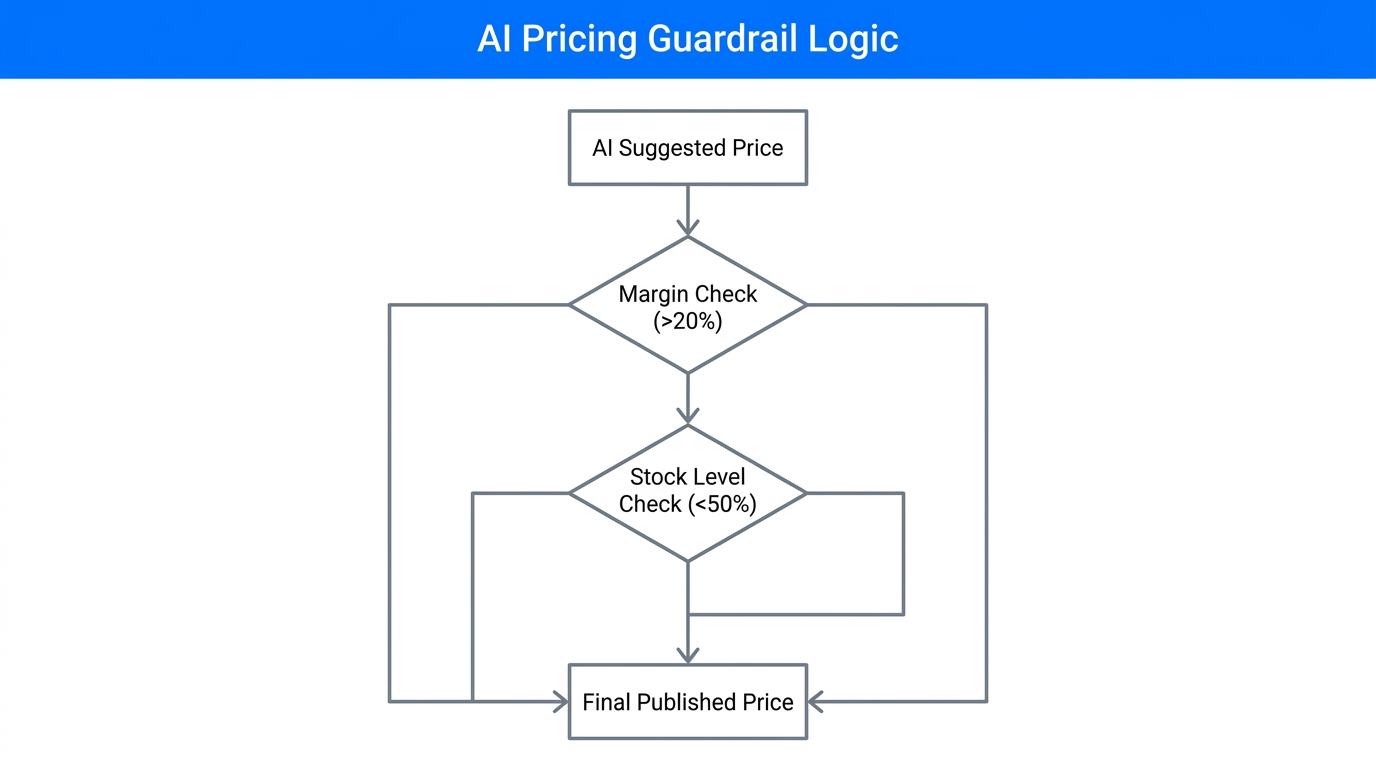
One of the biggest fears for e-commerce founders is the "race to the bottom." If your AI is left unchecked, it might engage in a price war that erodes your brand's perceived value and destroys your margins. This is where price guardrails become essential. You must define hard "floors" (the absolute minimum profit margin you will accept) and "ceilings" (the maximum price the market will bear before you look like a gouger).
Setting these limits ensures that your AI dynamic pricing implementation respects your brand's positioning. For example, a luxury brand may set a ceiling that prevents the AI from exceeding 15% above MSRP, while a discount retailer might prioritize a floor that stays 2% above COGS (Cost of Goods Sold). Without these boundaries, you risk alienating your most loyal customers through perceived price gouging, which pricing expert Per Sjöfors warns can be a disaster for long-term Customer Lifetime Value (CLV).
Step-by-Step Segmentation: Identifying Price Elasticity
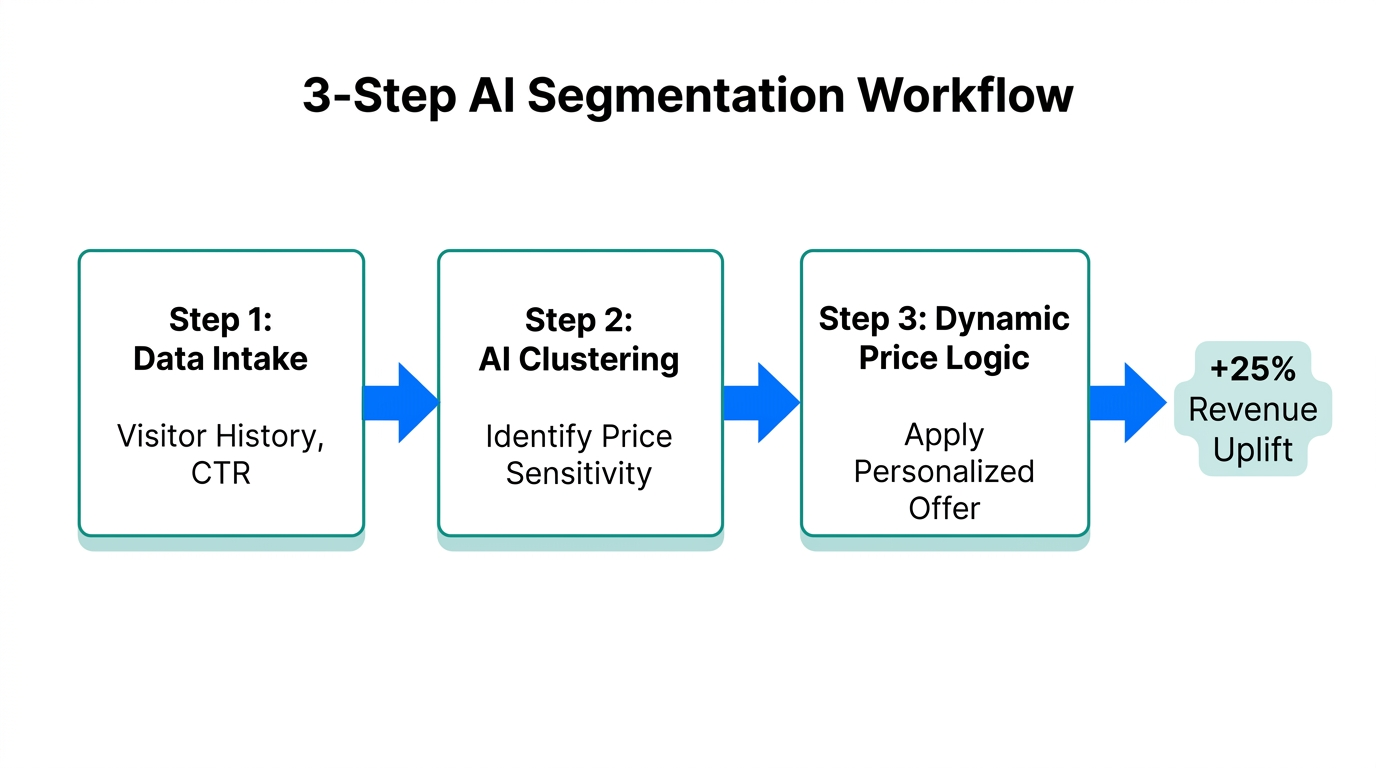
Not all products react to price changes the same way. In 2026, sophisticated growth leads use AI analytics to segment their catalog based on price elasticity. This involves identifying which items are "price sensitive" (where a $1 drop leads to a massive volume spike) and which are "inelastic" (where customers will pay a premium regardless of small fluctuations).
| Product Category | Elasticity Level | AI Strategy |
|---|---|---|
| Essentials/Commodities | High | Aggressive competitor matching; high-frequency updates. |
| Niche/Proprietary | Low | Value-based pricing; focus on high margins. |
| Seasonal/Trend-based | Medium | Contextual triggers (weather, social trends). |
| Clearance/Slow-movers | Extreme | Inventory-linked liquidation pricing. |
For brands leveraging influencer marketing, this segmentation is critical. If a product is currently trending on TikTok—which you can track using tools like Stormy AI to monitor creator mentions—the AI should recognize the temporary surge in "inelasticity" and hold prices higher to maximize profit while demand is peaking.
"Price is no longer just market-based; it is customer-based. AI now analyzes predicted CLV to offer individualized discounts that maximize long-term profit."
Multi-Channel Synchronization: Amazon, Walmart, and DTC
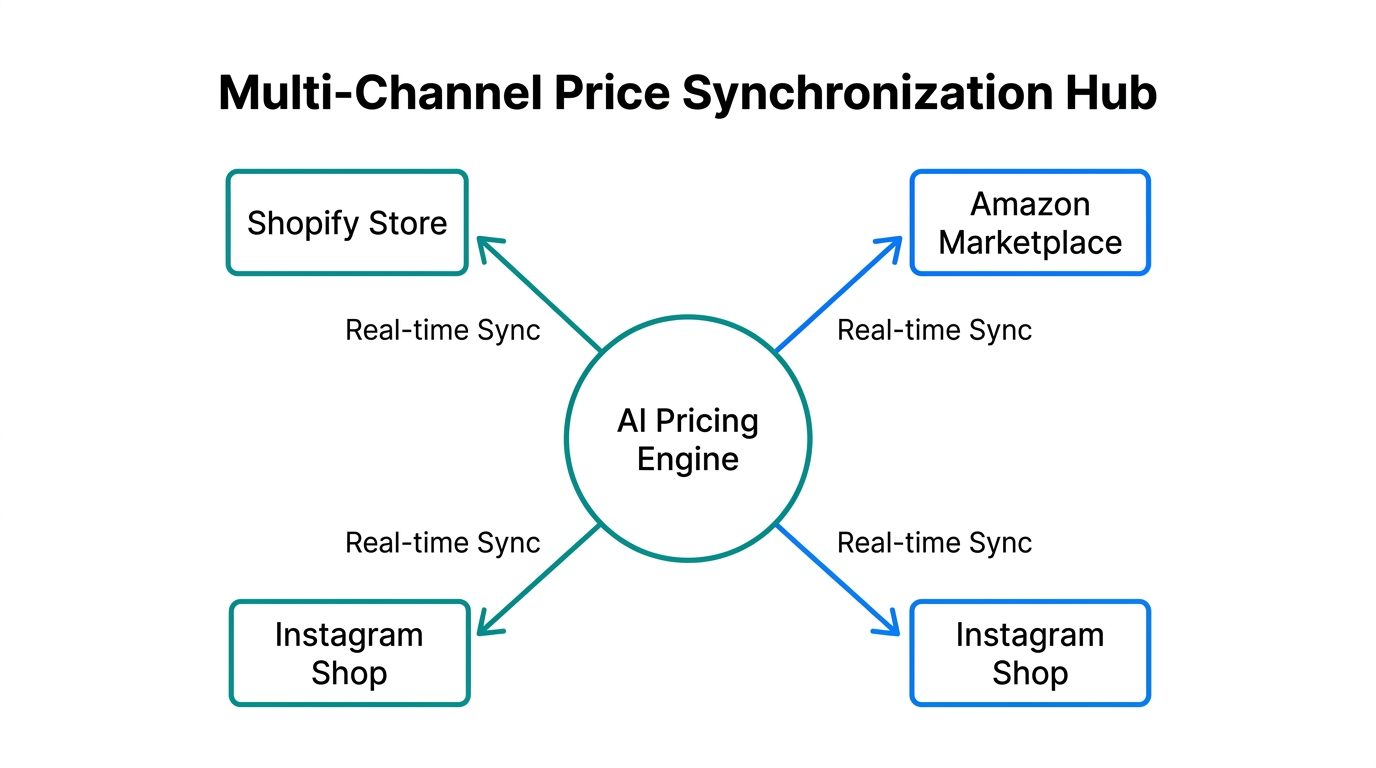
A major pitfall in ecommerce revenue growth 2026 is price fragmentation. If your Shopify store lists a product at $49, but your Amazon listing is $39 due to an aggressive repricer, you risk "buy-box" penalties and customer confusion. Multi-channel synchronization is the only way to maintain a cohesive brand presence.
Consider the case of brands using competitor monitoring engines to fight price undercutting. By regaining their "Buy Box" positions through synchronized adjustments, many retailers have seen a significant uplift in sales volume. The AI doesn't just lower the price; it finds the optimal parity across all platforms to satisfy marketplace algorithms while protecting DTC margins.
The Shift from Cost-Based to Value-Based Pricing
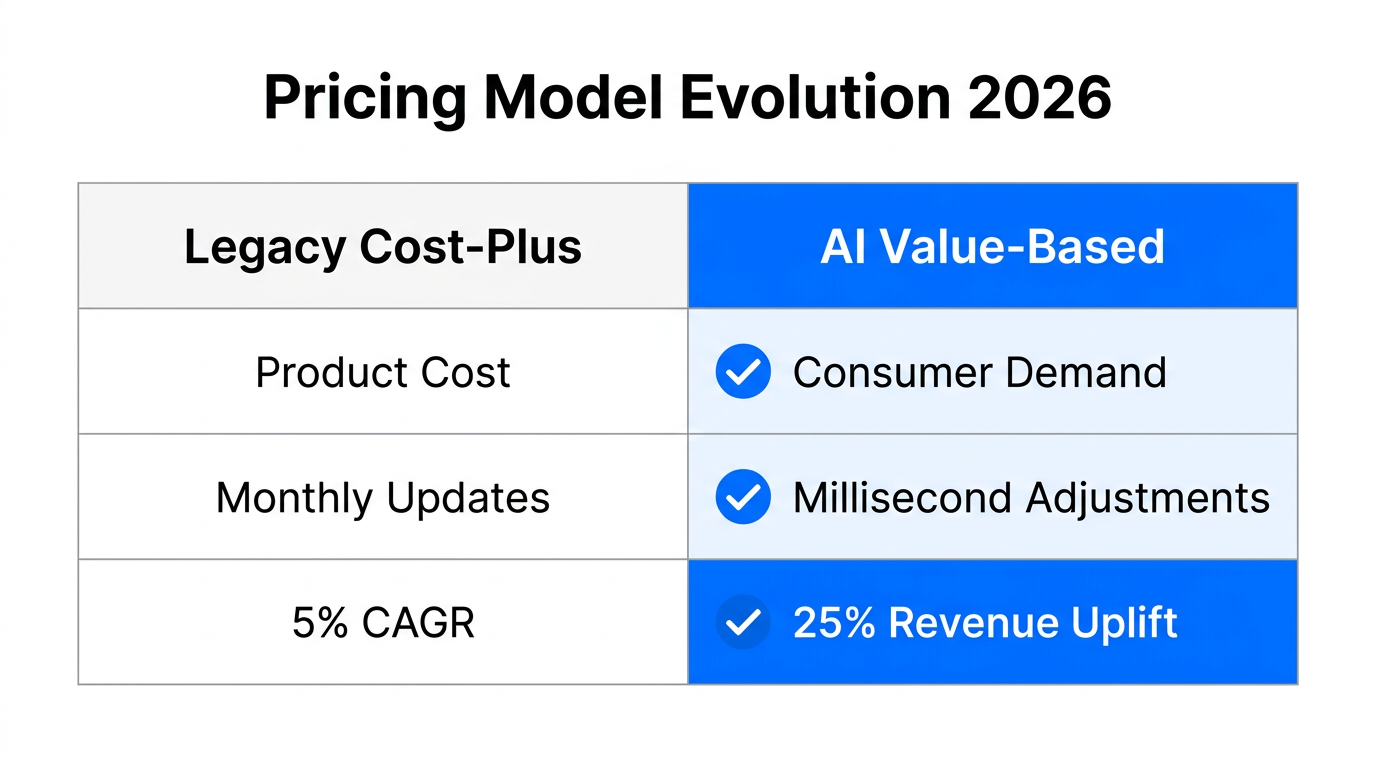
Traditionally, e-commerce brands used "cost-plus" pricing: COGS + Margin = Price. In the high-inflation environment of 2026, this is a recipe for stagnation. Industry leaders are shifting to Value-Based Pricing. This model uses AI to determine what the product is worth to the customer in a specific context. For instance, fashion retailers use real-time demand signals and social trends to adjust prices daily, capturing the "hype value" of fast-fashion cycles.
Preparing for Agentic Commerce
Perhaps the most radical shift in 2026 is the rise of Agentic Commerce. We are no longer just selling to humans; we are selling to AI shopping agents. These bots (powered by LLMs like ChatGPT or Claude) are programmed to find the best value for their users. Your dynamic pricing implementation guide must account for these machine-to-machine transactions. If your price isn't optimized for discovery by an AI agent, you could lose the sale before a human even sees your product.
"The rise of AI shopping agents is forcing retailers to optimize prices for machine-to-machine transactions, where speed and data accuracy are the only things that matter."
The 2026 AI Pricing Tech Stack
To implement these strategies, you need the right tooling. While legacy brands might stick to manual spreadsheets, modern growth teams are adopting platforms that offer real-time analytics and automation.
| Tool | Best For | Key Strength |
|---|---|---|
| Informed.co | Marketplace Sellers | Amazon Buy Box dominance. |
| Competera | Enterprise Retail | Large-scale price management. |
| Quicklizard | DTC Brands | Advanced omnichannel analytics. |
| Prisync | SMBs | Ease of use and competitor tracking. |
| Stormy AI | UGC & Influencer Brands | Connecting pricing to influencer-driven demand. |
Common Mistakes: Don't Break Your Brand
While the rewards are high, the risks of improper AI pricing are real. To maintain customer trust, avoid these four common pitfalls:
- Excessive Volatility: Changing prices every hour for low-turnover items confuses customers. Limit changes to once daily for most consumer goods.
- Garbage In, Garbage Out (GIGO): Relying on inaccurate competitor data leads to counterproductive decisions.
- Discount Addiction: Don't use AI solely to be the cheapest. This erodes brand value and triggers race-to-the-bottom price wars.
- Lack of Transparency: If prices fluctuate, frame it correctly (e.g., "Seasonal Demand Pricing") to maintain customer loyalty and trust.
Final Thoughts: The Path to 25% Growth
Implementing an AI dynamic pricing strategy is not a one-time project; it is a fundamental shift in how your e-commerce business operates. By establishing guardrails, segmenting your catalog by elasticity, and synchronizing across channels, you can capture the 20-25% revenue uplift that 2026 technology makes possible. Remember to pair your pricing engine with strong demand-gen strategies—whether that's through Google Ads or finding creators to spark trends via Stormy AI. The future of retail is dynamic; make sure your pricing is too.