In 2026, we’ve officially entered the era where content volume is a commodity. Generative AI can produce infinite videos, blogs, and images in seconds. But as the digital landscape becomes flooded with high-quality noise, a new hierarchy is emerging in the creator economy. Previously, the moat was capital or engineering talent—who could raise the most money to hire the best team. Today, that’s no longer the hard part. The real challenge is appealing to human emotion. When someone visits your profile, they need to feel that there is something special here. They need to be drawn to your unique perspective. In this landscape, identity is the product, and your most valuable asset is something AI lacks: Taste.
The New Moat: Defining Taste in 2026
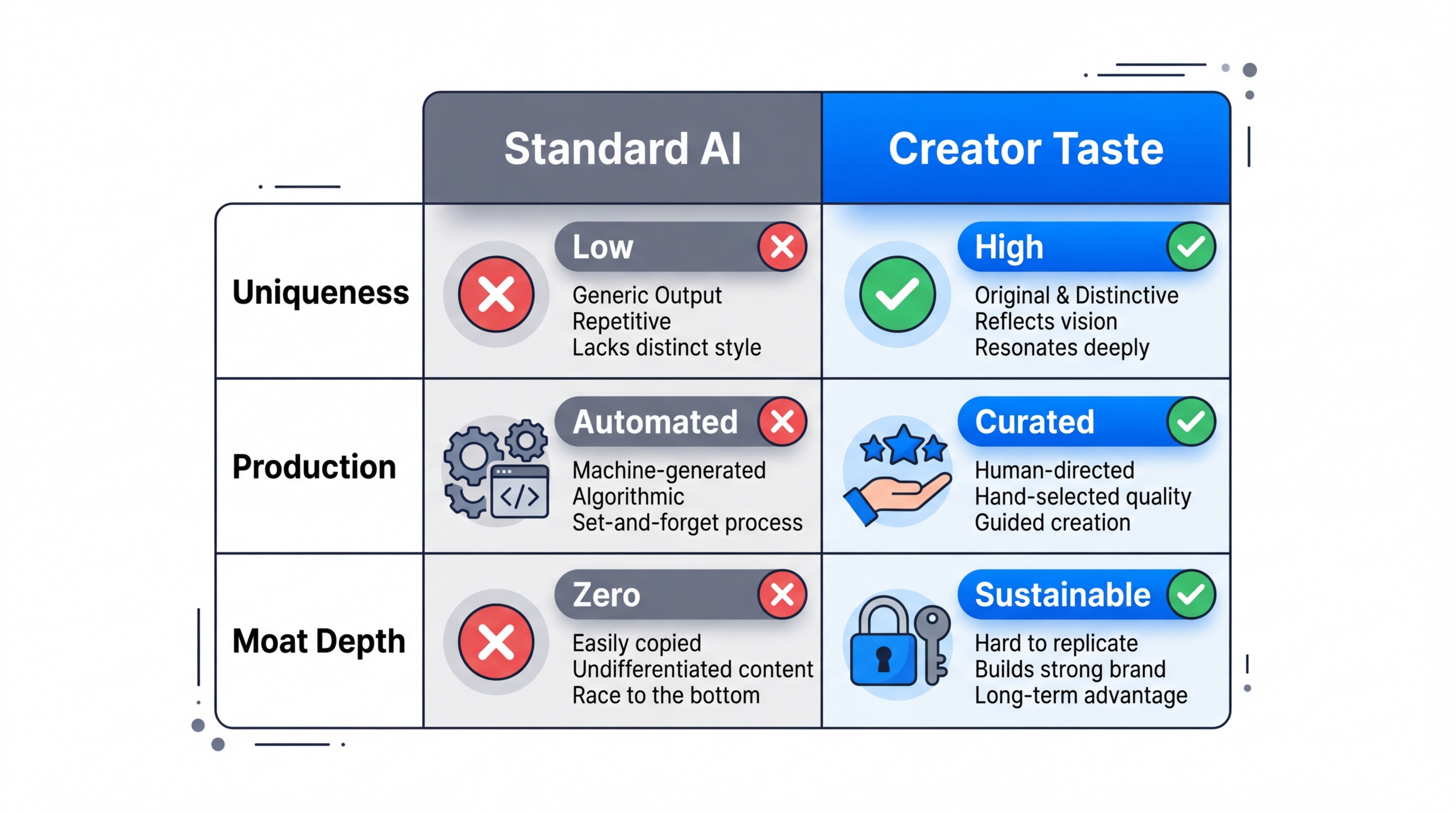
Taste isn't a vague, magical quality you're born with; it is a skill that can be developed. To understand its power in a personal branding for influencers context, we look to David Marks, author of Status and Culture. Marks defines good taste through two requirements: proposing an identity that matters within a community, and using lifestyle choices to authentically communicate that identity. Essentially, good taste is deciding what you want to say and learning the language to say it effectively.
"Taste is the ability to determine what you want to say, choosing the right language to say it, and then speaking that language with absolute clarity and congruence."
For creators on Instagram, this means moving beyond the generic 'aesthetic' and toward a deeply curated personal brand. Whether you are building a niche in fashion, tech, or lifestyle, your curation is what prevents you from being replaced by an algorithm. When a follower thinks, "I want to see what they think about this," you've won. You've built a moat that AI cannot cross because AI has no identity to defend.
The Copy-to-Mastery Phase: Why Mimicry is the First Step
 6:43
6:43The biggest mistake new creators make is trying to be 'original' too early. Originality is often just the final stage of deep, obsessive mimicry. Think of it like learning an instrument. A teacher doesn't hand you a guitar and tell you to write a hit song; they tell you to play "Jingle Bells." You copy the notes to learn the texture of the instrument. The same applies to content curation skills.
This process is known as Copy Work. Historically, writers like David Ogilvy would spend months hand-copying famous advertisements word-for-word to internalize the rhythm of great persuasion. In 2026, you can apply this to your Instagram marketing strategy by literally recreating the content structures of your idols. If you love a specific filmmaker's color grading or a designer's layout on Figma, copy it pixel-for-pixel as a practice exercise. This isn't for publishing—it’s for muscle memory.
Curating Your Feed for Growth: How to Manipulate the Algorithm
Your Instagram feed is either a distraction or a training ground. If you want to develop elite taste, you must intentionally manipulate your algorithm to feed your vision. About two years ago, I realized I didn't like how I looked or how I was presenting my brand. I went through a radical curation process that any creator can follow today:
- The Great Unfollow: Unfollow every account that doesn't inspire the specific identity you want to build.
- The Bookmark Method: Save 30-40 accounts that represent the "vibe" you aspire to. Don't worry about why yet; just follow the gut feeling.
- Algorithmic Immersion: Engage deeply with these accounts. Instagram's AI will begin surfacing similar creators, flooding your digital environment with high-level references.
By immersing yourself in greatness, you begin to recognize patterns. You start to see why certain fonts work, why specific lighting feels premium, and how certain personalities command attention. This is how you move from passive consumption to active curation.
The Playbook: The 4-Step Process to Developing Good Taste
0:30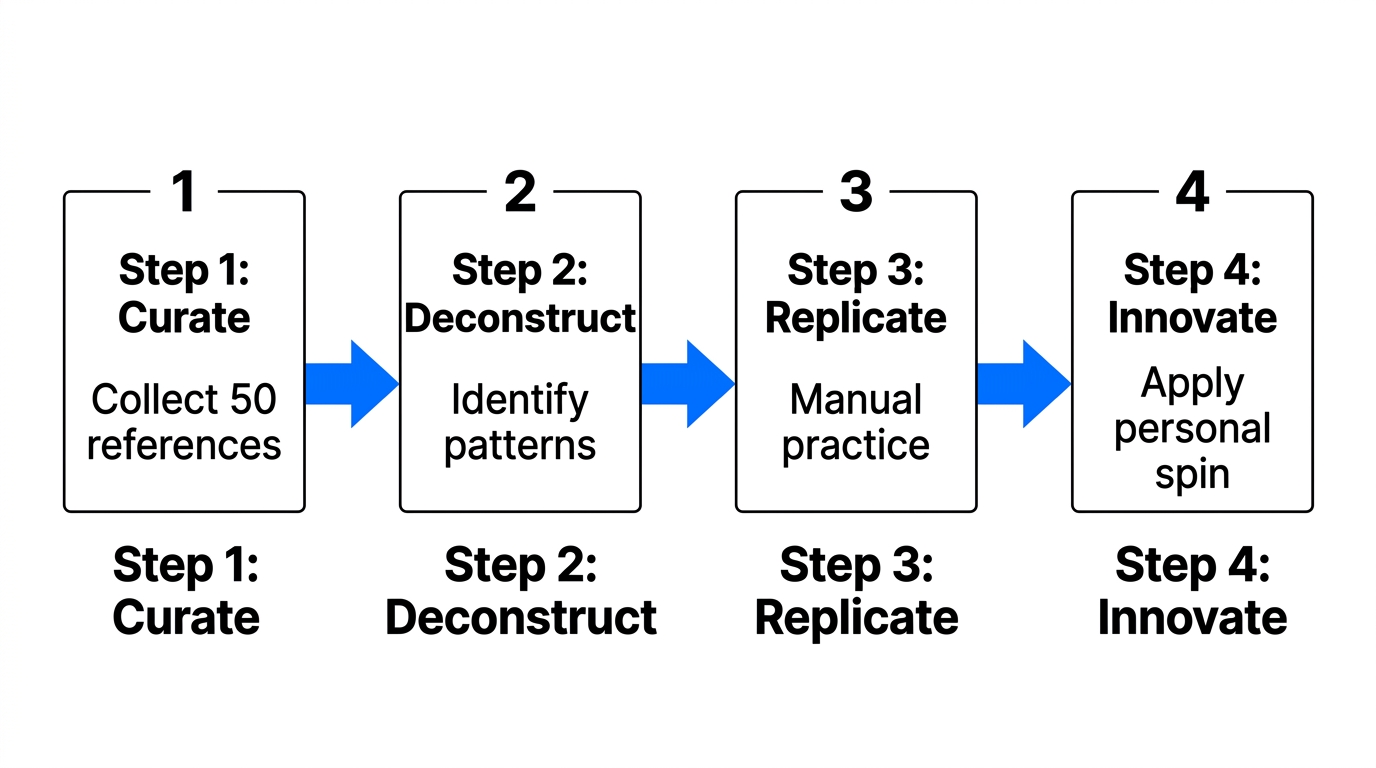
Developing taste is a systematic journey. Whether you are designing a website or building an influencer persona, follow this sequence:
- Decide what you want to say: What is your core value? Are you a frontiersman, a minimalist, or a rebel?
- Blindly copy: Find the winners who already speak that language and recreate their work for practice.
- Learn the rules: Study the 'why.' Read the textbooks. If you’re in design, learn the Rule of Thirds or the history of the Bauhaus school.
- Study the history: Look back decades. Great taste is often just deep archiving.
Consider the Braun T3 radio invented in 1953 by Dieter Rams. It was a masterpiece of minimalism created in a post-war Germany that was sick of Victorian ornamentation. Decades later, Steve Jobs and Jony Ive studied that history and used it as the direct inspiration for the iPod. They didn't just have "luck"; they had historical context.
"Good taste is using tradition to create a framework. Great taste is knowing that framework so well that you can strategically break it."
Identity-Driven Content: The Fashion Metaphor
In the world of influencer marketing growth, fashion provides the best blueprint for niche identity. Styles like Ivy Style, Military-influenced workwear, or Western/Cowboy aesthetics aren't just about clothes; they are about values.
For example, Ivy Style projects a sense of tradition and academic aspiration. Workwear (denim, chinos, boots) projects a blue-collar, stoic, "shut up and work" Midwestern value. When you align your content with these historical archetypes, your audience recognizes the identity immediately. This is why creators who understand the history of their niche—like the editors behind the book Black Ivy, which explored how 1960s activists used prep style as defiance—stand out. They aren't just posting; they are communicating a lineage.
| Content Type | The Moat | 2026 Viability |
|---|---|---|
| AI-Generated Content | Volume/Speed | Low (Commodity) |
| Good Taste Content | Curation/Rules | High (Premium) |
| Great Taste Content | Breaking Rules/Identity | Dominant (The Goal) |
Moving from Good Taste to Great Taste
If good taste is following the rules perfectly, great taste is breaking them. Take the evolution of music. Motown took gospel and slave song traditions to create mainstream hits. George Clinton (Parliament) mastered the Motown studio musician rules but then broke them by adding psychedelic, funky elements. Later, Dr. Dre took those Clinton samples and combined them with the grit of NWA to create "G-Funk."
Each step required a master who knew the history but had something unique in their soul to say. In 2026, the creator economy trends 2026 point toward "The Great Archivist." The creators who win are the ones who can reach back into the 1970s or 1990s, find what was beautiful, and remix it for a modern audience. This is the ultimate skill AI can't replace because AI doesn't have a "soul" to feel which rules are worth breaking.
The 2026 Distribution Strategy: Curation Over Volume
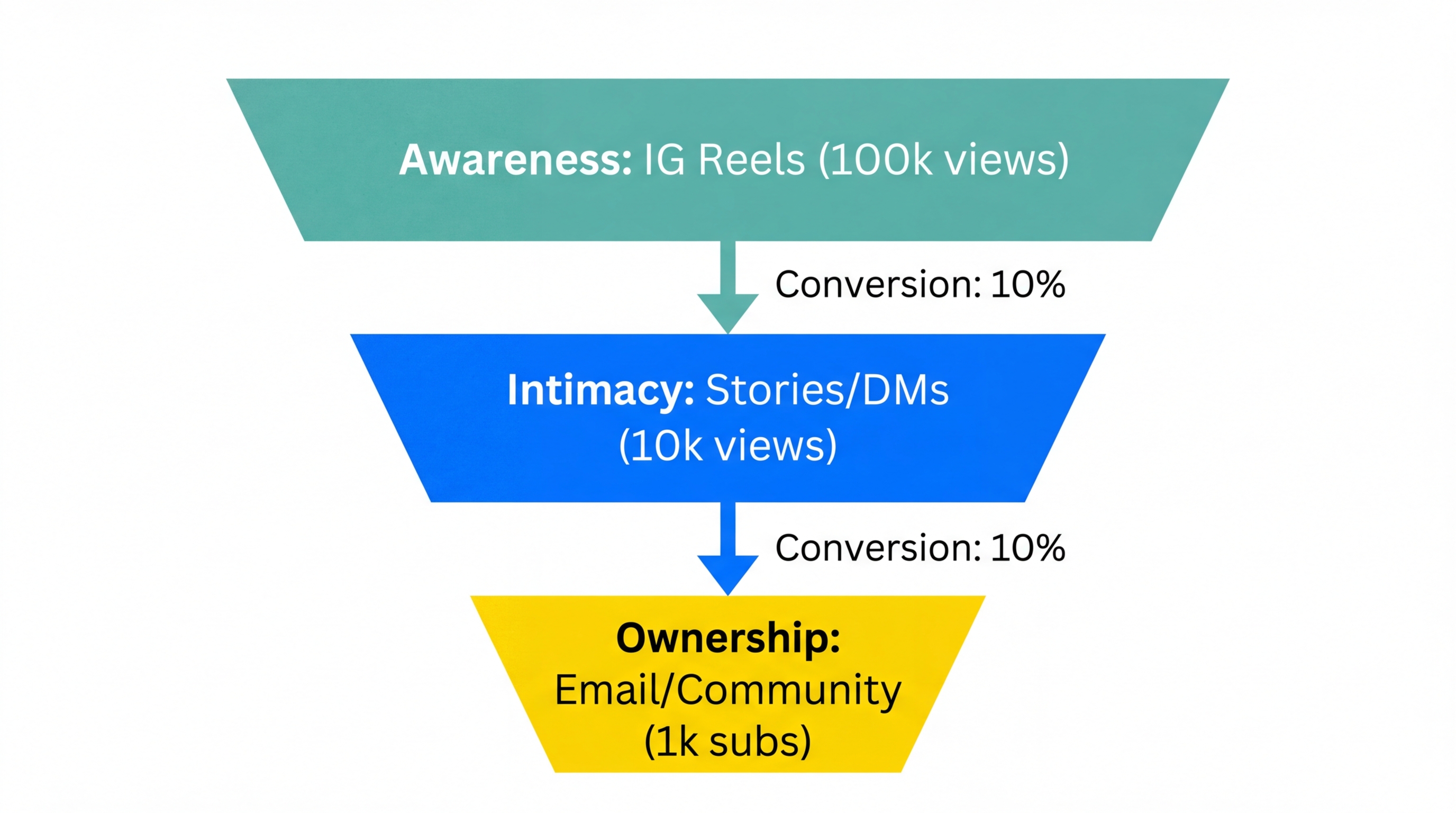
Your strategy this year should not be to post more, but to curate better. As brands look for creators to represent them on platforms like Shopify, they aren't looking for the person with the most followers; they are looking for the person with the most distinct point of view.
If you are a brand or agency, sourcing these high-taste creators is the challenge. Tools like Stormy AI allow you to discover influencers who fit these hyper-specific aesthetic niches—like "Ivy-style creators in London" or "minimalist tech reviewers"—instantly. For creators, this means your "taste" is now discoverable and searchable.
Conclusion: Taste Makes You Richer (and Happier)
19:40Developing taste isn't just a business strategy; it's a way to feel richer in the soul. Surrounding yourself with beauty and understanding the history of your craft makes the work more meaningful. But from a purely economic standpoint, taste is your insurance policy against AI. While the machines handle the automation, humans will always pay a premium for identity, connection, and style.
Start today. Unfollow the noise. Study the history of your niche. Copy the masters until you find your own voice. In a world of infinite AI content, the most radical thing you can be is a human with Great Taste.