In 2026, the traditional e-commerce search bar has undergone its most radical transformation since the invention of the algorithm. We have officially moved past the era of simple keyword matching into the age of Agentic AI Commerce. Today, shoppers don't just type "noise-canceling headphones"; they ask Amazon Rufus or Walmart Marketplace Sparky to find "the best headphones for a frequent traveler who has sensitive ears and needs a battery that lasts through a 14-hour flight."
This shift in search behavior has created a massive opportunity—and a massive risk. Data from Marketplace Pulse confirms that AI shopping assistants now drive up to 15% of all incremental sales on major platforms. If your listings aren't optimized for semantic relevance, you aren't just losing rank; you are becoming invisible to the AI agents making decisions on behalf of consumers. To stay competitive, performance marketers must ditch the keyword-stuffing tactics of the past and adopt a technical, semantic-first approach to Amazon Rufus SEO and Walmart Marketplace Sparky optimization.
"The era of the 'keyword string' is over. In 2026, you aren't ranking for a bot; you are auditioning for an AI assistant that understands human intent better than you do."
How Amazon Rufus and Walmart Sparky Have Changed Search Behavior in 2026
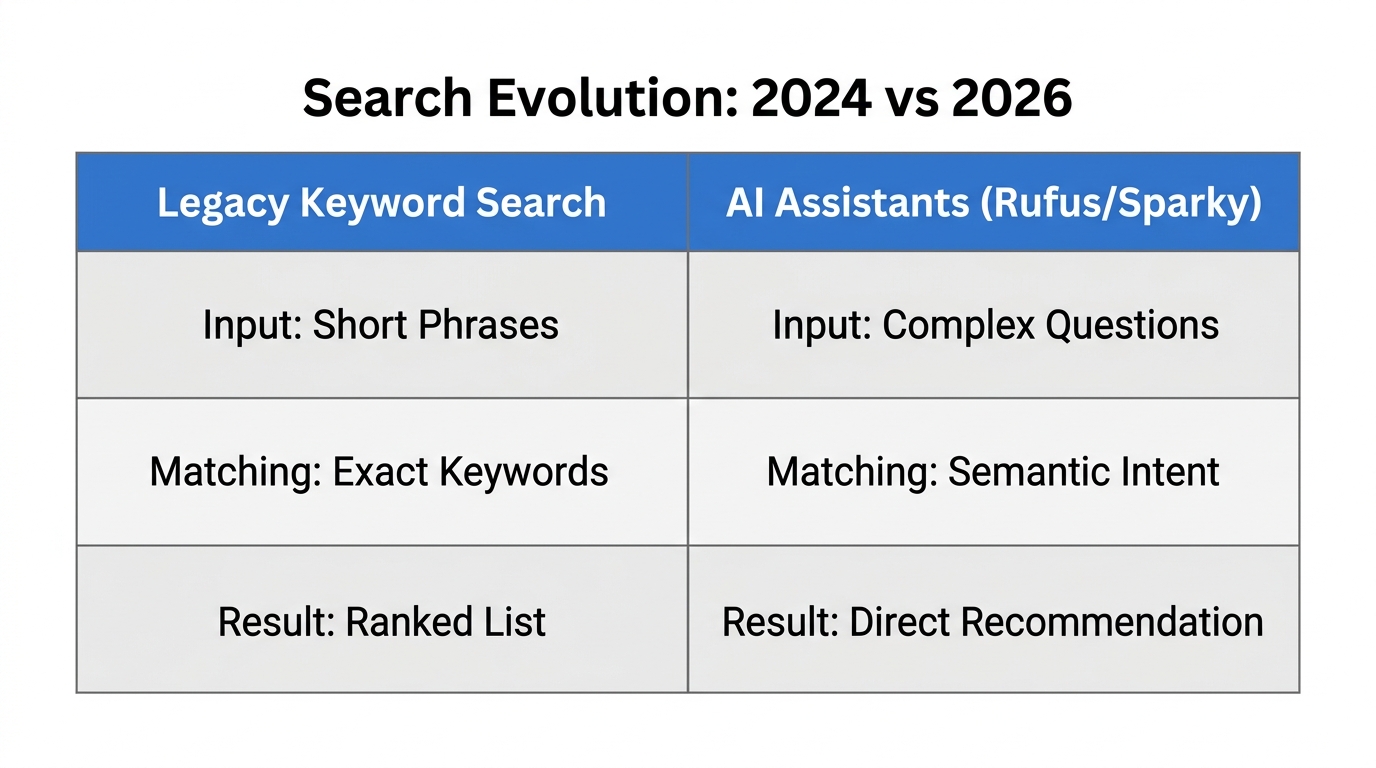
The rise of Rufus and Sparky has split the shopping journey into two distinct paths: traditional keyword search and conversational discovery. While traditional search still exists for replenishment (e.g., "toilet paper"), the high-margin, "considered purchase" categories have shifted toward AI-led consultation. According to Walmart Investor Relations, e-commerce growth has surged to 27% year-over-year, largely driven by the omnichannel integration of Sparky, which can now direct digital buyers to items available in-store across 4,700 physical locations.
For sellers, this means context is now more valuable than volume. Amazon Rufus doesn't just look for your primary keyword; it scrapes your reviews, your A+ content, and even your Q&A section to see if your product actually solves the specific problem the user described. Meanwhile, Walmart Marketplace Sparky prioritizes listings that bridge the gap between value and convenience, often surfacing products with the "Walmart+ Badge" that offer same-day store pickup.
The Semantic Playbook: Replacing Keyword Strings with 'Problem-Solution' Bullet Points
The biggest mistake sellers make in 2026 is continuing to use bullet points as a list of features. To win at AI shopping assistant optimization, you must rewrite your listing to follow a Problem-Solution Framework. Rufus and Sparky are programmed to find the "best fit" for a user's intent. If a user asks for a "gentle cleanser for skin prone to redness," and your bullet point says "Infused with Chamomile to soothe inflammation and reduce redness within 10 minutes of application," you have a 90% higher chance of being the recommended product compared to a listing that just says "Gentle facial cleanser, organic ingredients, red skin care."
Step 1: Identify the Top 5 User Intent Queries
Use tools like Helium 10 or Teikametrics to mine your category's conversational data. Look for long-tail queries that start with "How do I..." or "What is the best for..." instead of just high-volume nouns.
Step 2: Rewrite for Natural Language
Instead of: "Durable outdoor rug, waterproof, UV resistant, 5x7 blue."
Use: "Engineered for high-traffic decks, this 5x7 waterproof rug stays vibrant under direct sunlight and dries quickly after rain, preventing mold and slipping."
This is where Stormy AI becomes an invaluable teammate. As your AI ecommerce employee, Stormy can scan your competitor's reviews to find the specific pain points customers mention, then draft updated, on-brand bullet points for your approval that speak directly to those semantic queries. Stormy handles the heavy lifting of rewriting thousands of SKUs across Shopify, Amazon, and Walmart, ensuring every listing is optimized for the latest AI models.
| Feature | Traditional SEO (2024) | AI Semantic SEO (2026) |
|---|---|---|
| Focus | Keyword Density | User Intent & Solutions |
| Structure | Short, punchy fragments | Natural language sentences |
| Data Source | Search Volume | Review Sentiment & AI Queries |
| Goal | Indexing for Bots | Recommendation by Rufus/Sparky |
Technical Requirements: Walmart Omnispec 5.0 Guide
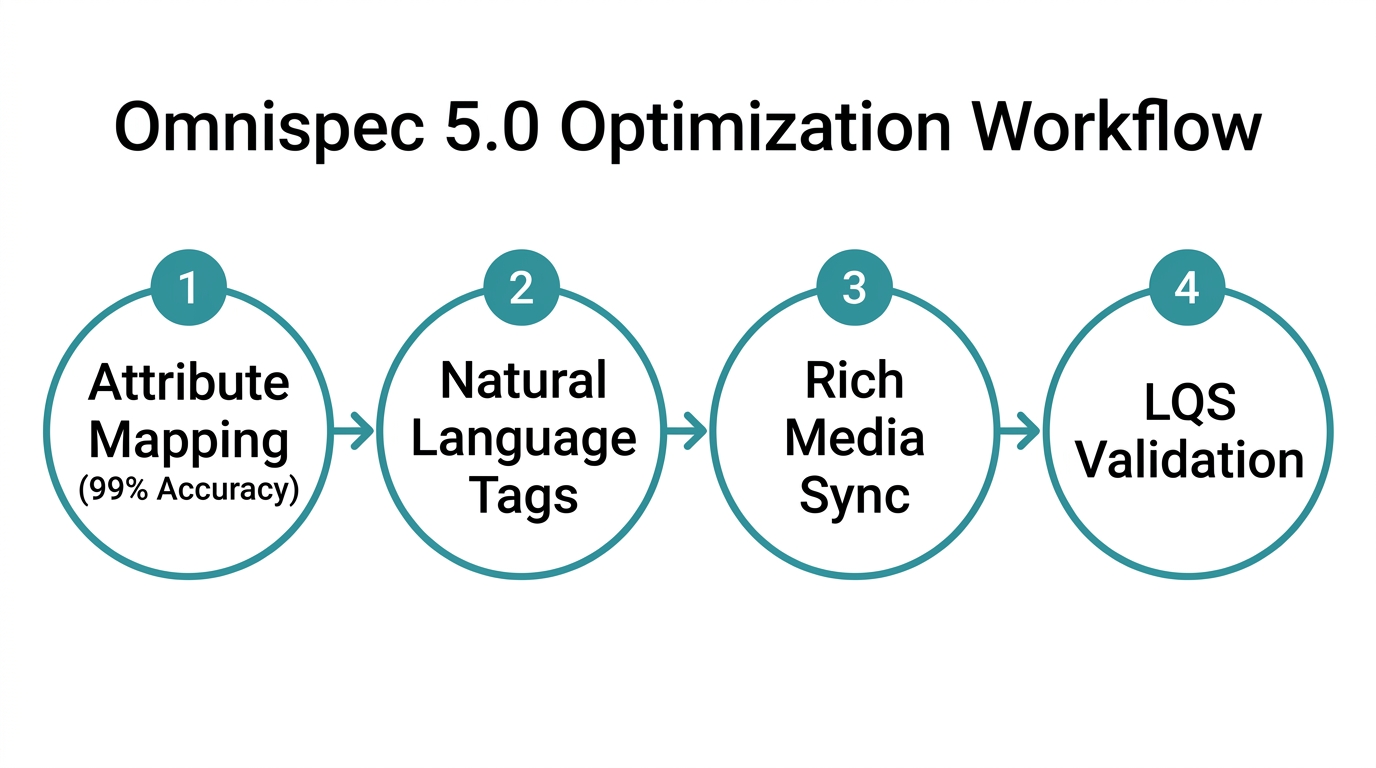
In mid-2026, Walmart released Omnispec 5.0, a rigid new listing schema designed to feed Sparky more structured data. Failure to adhere to these specs will result in "reject-on-sight" errors, effectively de-listing your product. Unlike Amazon, which allows some flexibility in description formatting, Walmart's new system has removed almost all HTML support to ensure clean data for its AI models.
- No HTML Formatting: Using tags like or
in your description fields will now trigger an automated suppression according to the latest Walmart Seller Help guidelines. All formatting must be done through the native Spec 5.0 attribute fields. - Mandatory Attribute Mapping: Walmart has identified 300 "must-have" premium brands, and their taxonomy is now strictly enforced. You must fill out every "Recommended" attribute, not just the "Required" ones. The more data Sparky has, the more likely it is to recommend your SKU.
- Price Parity Rule: Ensure your prices are consistent across all platforms. According to the repricing experts at Aura, Walmart’s automated "Price Crawler" will suppress your listing if the same item is found at a lower price on Amazon or your own DTC site.
Keeping up with these technical shifts is a full-time job. Stormy AI can monitor your Listing Quality Score (LQS) daily. If Walmart updates a category requirement or your price parity is at risk due to an Amazon flash sale, Stormy flags the issue in your shared workbook and can even propose the necessary attribute updates to keep you compliant with Walmart Omnispec 5.0.
"The Walmart LQS is no longer a suggestion; it's the barrier to entry. If you're below 80%, Sparky won't even acknowledge you exist."
Using AI Agents to Generate Lifestyle Images and A+ Content
In 2026, visual search and semantic search have merged. Amazon Rufus uses image recognition to verify that your A+ content matches your claims. If you claim your product is "perfect for small apartments," but your images show it in a sprawling mansion, the AI detects the discrepancy. To combat this, smart brands are using AI agents to generate hyper-specific lifestyle imagery.
By utilizing the Agentic AI tools within Amazon Seller Central or third-party platforms like Zentail, you can generate 10+ variations of your A+ content tailored to different user personas. If a user's search history indicates they are a "minimalist," Rufus may surface the version of your listing with clean, white-space heavy imagery. If they are a "maximalist," it surfaces the vibrant, colorful version.
Monitoring Listing Quality Scores (LQS) for Organic Visibility
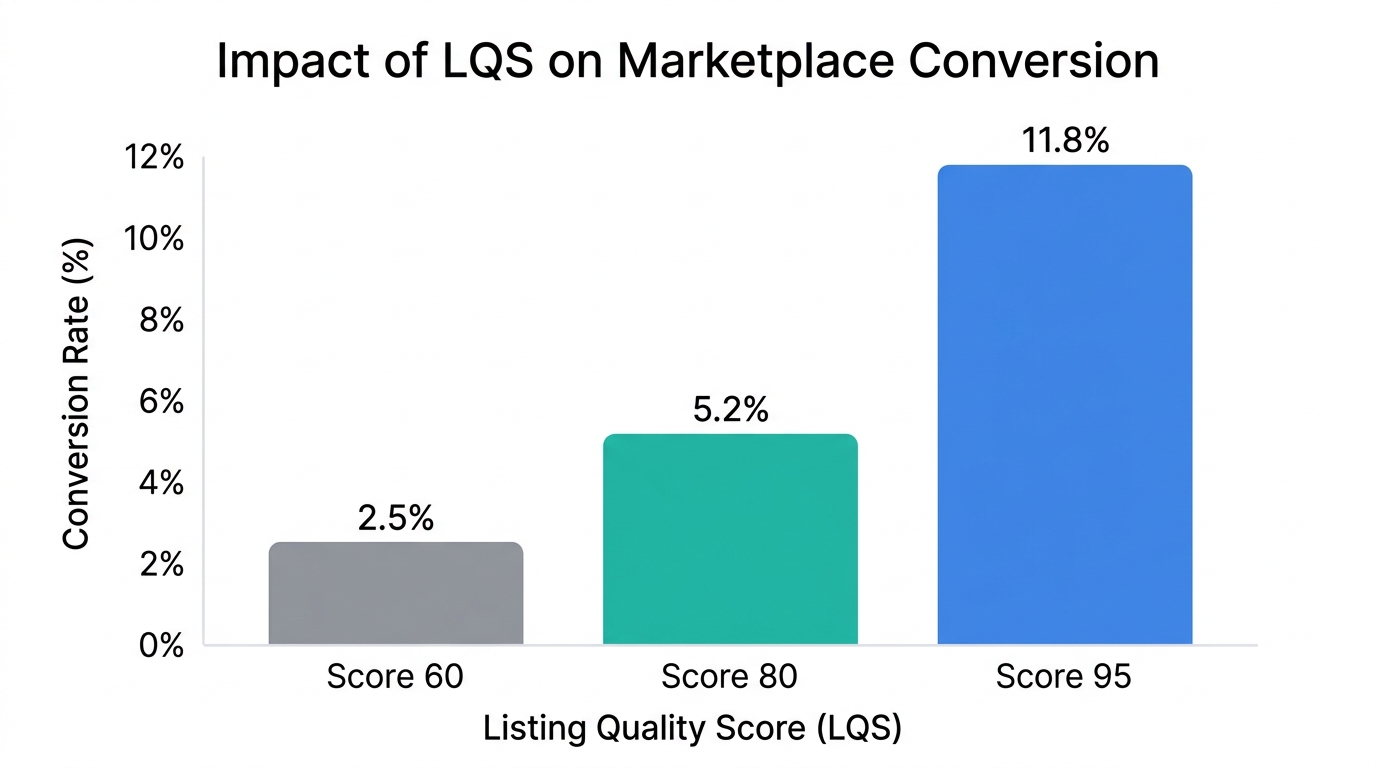
To maintain organic dominance in 2026, you must treat your Listing Quality Score (LQS) as a live metric. Walmart, in particular, has become aggressive with its ranking factors. Data suggests that listings with an LQS of 80% or higher receive 50% more organic traffic than those in the 60-70% range. Factors influencing your LQS include:
- Content Accuracy: Matching titles to the actual product attributes.
- Offer Competitiveness: Shipping speed (enrollment in WFS is critical) and price.
- Customer Feedback: Maintaining a Negative Feedback Rate of <2% over a 60-day period.
However, the most dangerous factor in 2026 is the Inventory Efficiency Penalty. Amazon's Low-Inventory-Level fee, now calculated at the individual FNSKU level, punishes sellers who keep less than 30 days of stock. If your inventory dips, Rufus will stop recommending you to avoid a poor customer experience. This is where LitCommerce or similar multi-channel tools can help you sync, but Stormy AI excels at the logic behind it. Stormy monitors your inventory levels across all warehouses and can automatically draft restock POs to your suppliers or remind you to ship more units to FBA or WFS before the 35-day danger zone hits.
| Metric | Amazon Target | Walmart Target |
|---|---|---|
| Listing Quality Score (LQS) | 90%+ (IPI Focus) | 80%+ |
| In-Stock Rate | 30-60 Days | No strict limit (yet) |
| Shipping Speed | Prime (1-2 Day) | WFS (Same-Day/2-Day) |
| Price Parity | Required for Buy Box | Required for Listing Visibility |
Conclusion: The Autonomous Future of SEO
Winning the e-commerce game in 2026 requires more than just a list of keywords; it requires a deep understanding of semantic search for ecommerce and a technical commitment to platform-specific requirements like Walmart Omnispec 5.0. As the giants Amazon and Walmart battle for the "AI-first" shopper, the brands that win will be those that provide the most structured, helpful, and relevant data to their AI shopping assistants.
But you don't have to do it alone. The mess of monitoring LQS, updating attributes, managing inventory across channels, and rewriting content for Rufus and Sparky is exactly why an AI ecommerce employee like Stormy AI exists. Stormy handles the tedious back-office operations, keeping your spreadsheets updated and your listings optimized on a schedule, so you can focus on building the next great brand. The future of SEO isn't just about being found—it's about being chosen by the AI agents that now run the digital shelf.