In the rapidly evolving landscape of social media, the distance between a viral hit and total obscurity is shrinking. For brands and app developers, the old method of manual growth—hiring dozens of creators, managing them in messy chat groups, and hoping for a single hit—is no longer sustainable. As we enter 2025, a new paradigm has emerged. By leveraging physical hardware, sophisticated machine learning, and a rigorous creative framework, brands are now generating 4.7 million views across multiple accounts in under four weeks. This isn't just luck; it is a calculated AI video marketing strategy designed to remove the friction of human inconsistency and replace it with TikTok content automation that scales at the push of a button.
The Failure of the Traditional Creator Model

For years, the standard playbook for short-form video was simple: find 20 to 30 college-age creators, pay them $500 to $1,000 a month, and ask them to post daily on TikTok. On paper, this provides organic reach. In reality, it is a management nightmare. These creators often lack professional accountability; they might miss posting days, ignore creative guidelines, or produce low-quality content that fails to convert. Instead of manual vetting, brands can use Stormy AI to analyze creator quality and detect fake followers in seconds, ensuring that every creator in the campaign is authentic. Managing this volume of human labor requires a full-time employee just to handle Slack communications and content approvals.
Furthermore, the ROI on manual creator management is frequently negative when you factor in the overhead. You are paying for their time, not necessarily their performance. This traditional model relies on the hope that one video might go viral, but it lacks the systematic feedback loop needed to automate TikTok growth 2025. When brands try to scale this to 15 or 25 accounts, the system collapses. This is where AI-driven workflows take over, replacing the unpredictability of human creators with the precision of automated systems that don't get burnt out or miss deadlines.
The 95/5 Rule: Efficiency Meets Human Edge
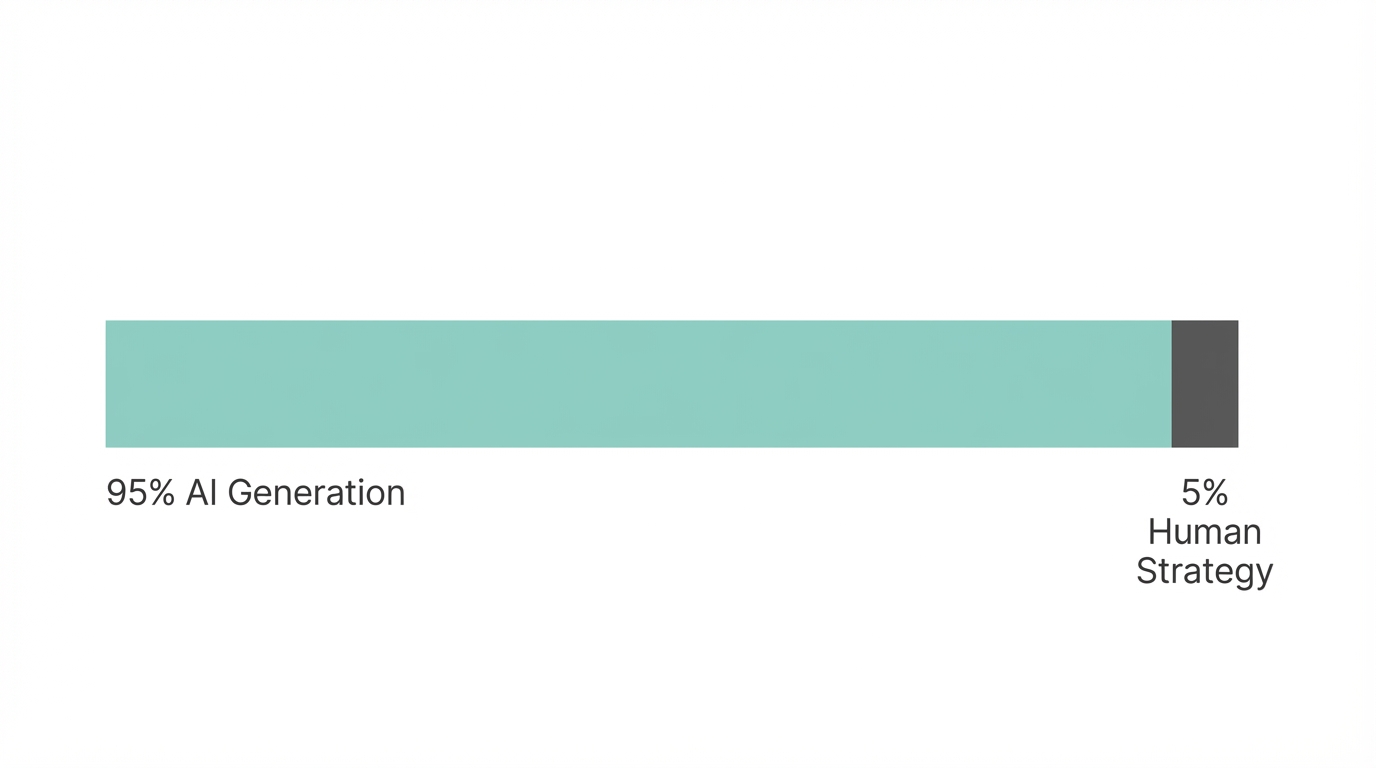
The core philosophy of a successful AI video marketing strategy is the "95/5 Rule." To achieve massive scale, you must use AI to handle 95% of the heavy lifting—including script generation, image creation, and voiceovers—while reserving 5% for human oversight. Platforms like Stormy AI, an all-in-one AI-powered platform for creator discovery, understand this balance, recognizing that while AI can find creators and generate data, the final creative touch remains a human domain. Purely AI-generated content can sometimes feel sterile; the 5% human touch involves the final "vibe check," ensuring the narrative flows and the call-to-action feels authentic.
This approach allows a single marketing manager to do the work of a 25-person creator agency. Furthermore, by using Stormy AI, you can set up an autonomous AI agent to handle creator outreach and follow-ups on a schedule, further reducing the manual workload. By using tools like Figma to template designs and LLMs to iterate on hooks, brands can maintain a high volume of viral TikTok AI content without sacrificing the "soul" of the brand. The human acts as the director, while the AI serves as the entire production crew, camera team, and editor.
The Infrastructure: Why Virtual Machines are Dead
One of the biggest hurdles in TikTok content automation is the platform's sophisticated security. In 2023, many marketers used Android emulators like BlueStacks to post content from their computers. Today, that is a fast track to a shadowban. TikTok uses device fingerprinting to detect non-human behavior. If the platform sees a surge of content coming from a virtual machine or a suspicious VPN, it will immediately suppress the reach of those accounts.
The 2025 solution is the physical phone farm. This involves using real, physical devices controlled by custom software to mimic natural human actions—swiping, liking, and commenting—to "warm up" accounts. By instrumenting human actions on real devices, brands can run dozens of AI-managed accounts that look identical to genuine creators. This hardware layer is essential for scaling short form video with AI because it ensures your content actually reaches the For You Page (FYP) instead of being flagged as spam by Meta Ads Manager style detection algorithms on rival platforms.
The Playbook: Building High-Converting AI Slideshows
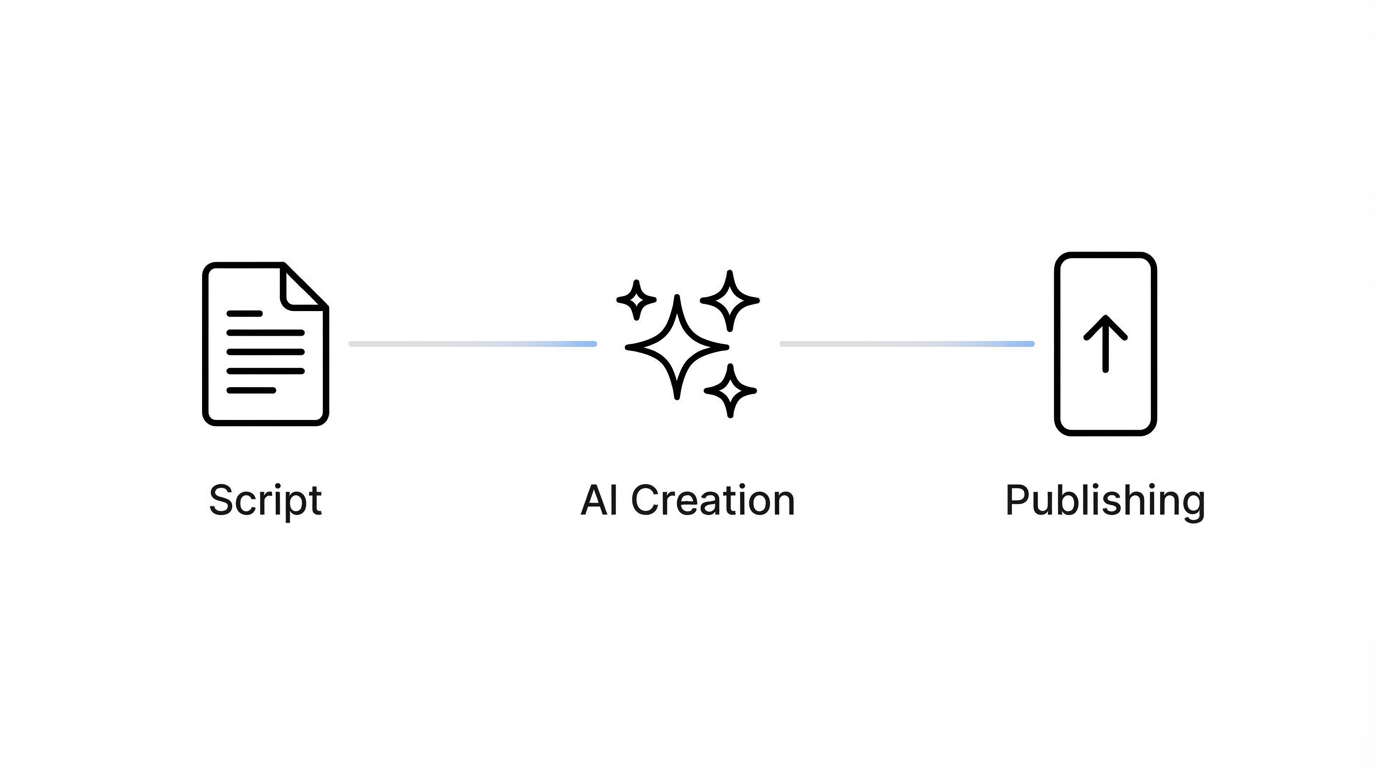
Slideshows are currently one of the highest-performing formats on TikTok because they force user engagement (swiping) and have high retention rates. Here is the step-by-step playbook to automate this format:
Step 1: Identify a Proven Hook
Don't reinvent the wheel. Use Cosmos or Pinterest to find visual trends that are already capturing attention. A winning hook often identifies a specific pain point. For example: "I used to struggle with tracking my calories..."
Step 2: Generate Consistent AI Visuals
Use Midjourney to create a consistent persona or "AI Influencer." By training a LoRA (Low-Rank Adaptation) on a specific face, you can generate hundreds of images of the same character in different settings. This builds brand familiarity across your viral TikTok AI content.
Step 3: Structure the Narrative Arc
A high-converting slideshow follows a specific psychological path: Hook -> Problem Clarification -> High-Effort Solutions -> Your Solution. You present the viewer with the "hard way" of doing things (e.g., weighing every gram of food manually) before offering your app or product as the seamless alternative.
Step 4: Automate the Voiceover and Copy
Use 11 Labs to generate high-quality, emotive narration. Match the voice to the persona you created in Step 2. The copy on each slide should be concise and designed to lead the viewer to the final slide—the Call to Action (CTA).
Attention Intelligence: The Viral Feedback Loop
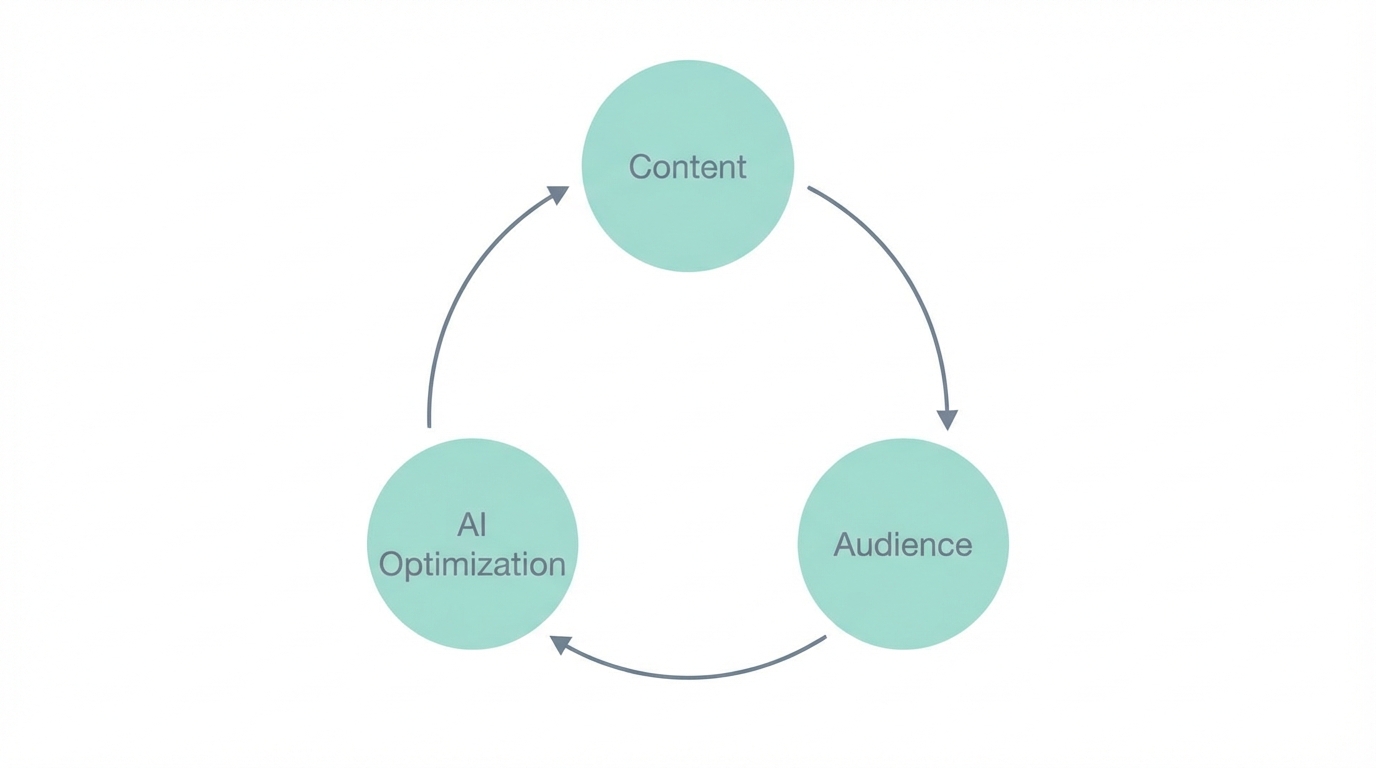
The true power of TikTok content automation isn't just in the posting; it's in the data. This is what experts call "Attention Intelligence." When you own the entire stack—from content generation to deployment on physical devices—you gain access to a feedback loop that manual creators can't match. Every like, share, and "save" is fed back into the AI to refine future prompts.
If a specific hook about "saving time" outperforms a hook about "saving money," the AI automatically pivots the next batch of 100 videos to focus on time-saving narratives. This AI video marketing strategy ensures that your content gets smarter and more viral over time. If you're looking to identify which specific creators or niches are currently trending to feed this intelligence, using an AI platform like Stormy AI for creator CRM and post tracking allows you to monitor likes, shares, and saves in real-time across all your automated accounts.
This system allows for mass AB testing. You can run 15 different accounts, each with a slightly different persona or niche (e.g., one focused on "Self-Care," another on "Productivity"), and let the data decide where to double down. This level of granularity is impossible with manual management but is the standard for anyone looking to automate TikTok growth 2025.
Case Study: 15 Accounts, 4.7 Million Views
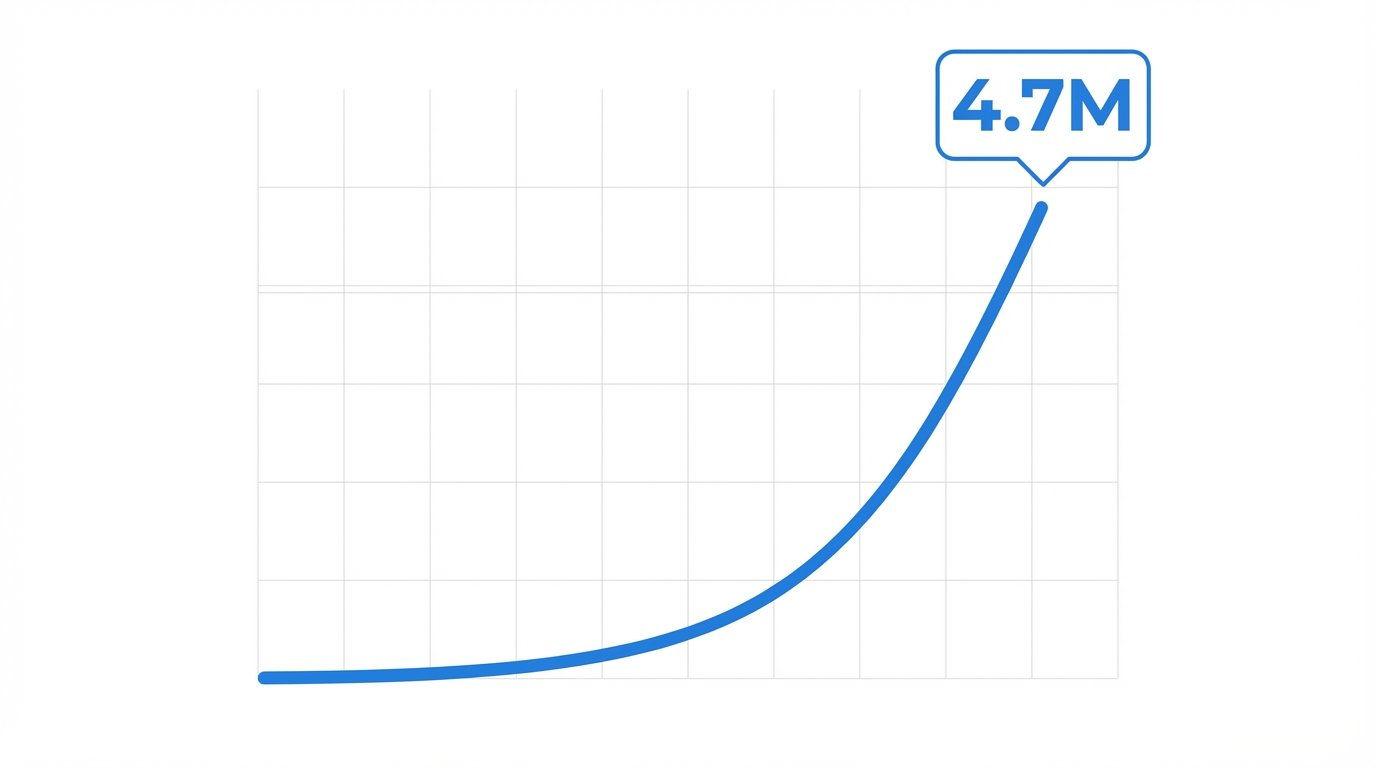
In a recent validation of this model, a brand deployed 15 AI-managed accounts on physical devices. Within four weeks, these accounts generated a staggering 4.7 million views. The content wasn't complex; it primarily consisted of highly optimized AI slideshows and "hook and demo" videos. By using a mix-and-match approach—pairing viral hooks with screen recordings of their app—the brand was able to create hundreds of variants without a single film shoot.
This strategy resulted in over $100,000 in revenue in a single month on the TikTok Shop. The success was driven by narrative storytelling: identifying a user's pain point and positioning their product as the hero of the story. Because the content was automated, the cost per view was a fraction of what a traditional Google Ads or Apple Search Ads campaign would require.
The Future: Scaling Short-Form Video with AI
As we look toward the future of digital marketing, the barrier to entry for content creation is disappearing, but the barrier to effective distribution is rising. Simply having an AI tool that generates a video is not enough. Success requires an integrated approach that combines AI-powered discovery, physical hardware to bypass platform restrictions, and a rigorous feedback loop that treats attention as a science.
For brands and app developers, the message is clear: the era of the "manual creator" is being disrupted by the AI-driven operation. By adopting the 95/5 Rule and investing in Attention Intelligence, you can scale your reach to millions of viewers while maintaining the creative edge that drives sales. Whether you are building a new consumer app or scaling an e-commerce brand, the 2025 playbook is powered by automation. To begin your journey in finding the right creators to model your AI after, start by exploring Stormy AI and identifying the winning formats that will define your next viral campaign.