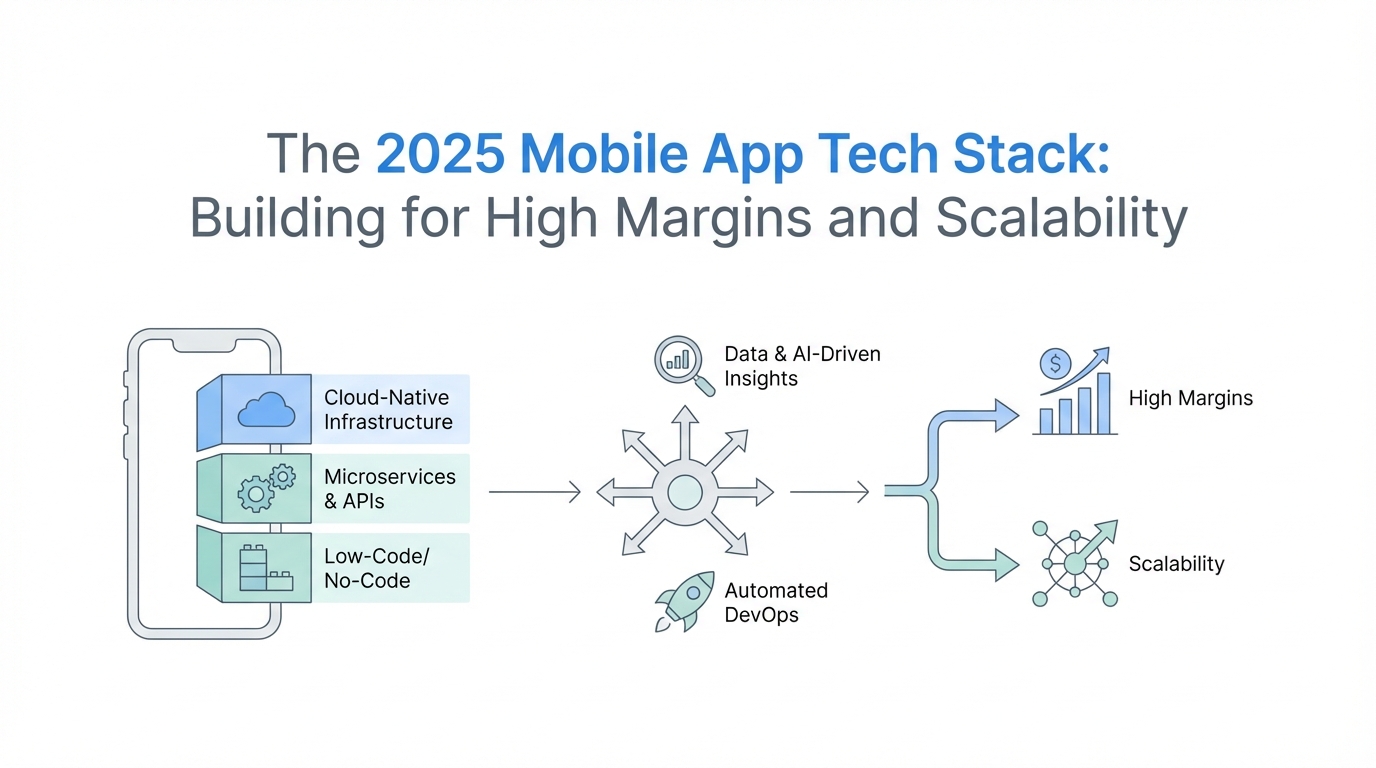
In the high-stakes world of mobile development, founders often fall into the trap of over-optimizing for marketing before their core product can actually retain a single user. This was the exact reality for Eyal and Yali, two college students who initially saw a flurry of interest with their sports betting analytics app, PropGPT. Despite averaging 20 downloads a day early on, their business was hitting a wall at $2,000 MRR. The problem wasn't their ability to get users; it was their ability to keep them. In a world where lean app development is the difference between a failing startup and a profitable mobile app business model, their story serves as a masterclass in why product-market fit must precede distribution. After a grueling four-month rebuild, they pivoted their strategy and skyrocketed to $30,000 MRR in just ten weeks. This article breaks down the exact mobile app tech stack 2025 and the business logic they used to achieve these high-margin results.
The Philosophy of Humble Product Design
The first step in building a high-margin app isn't technical—it’s psychological. As Eyal and Yali discovered, the most important trait for a founder is to have an extremely humble attitude toward their own creation. If your retention is low, it’s not the market’s fault; it’s the product’s. By using sophisticated analytics platforms like PostHog, the duo realized that while people loved the idea of their app, the actual user experience was failing to meet expectations. They were seeing a 45% conversion to trial rate, but only 13% of those users stayed after the trial ended.
What this means is that your users think this is a great idea, they think that this could add a lot of value to their life, but when it actually comes to using the app, it's not the experience they were hoping for.To fix this, you must become a student of human behavior. You have to identify patterns in the data that don't align with how the app is designed. Beyond product analytics, founders can use Stormy AI to vet creators and analyze audience quality before launching influencer campaigns, ensuring that the traffic coming in actually matches the product's intended user base. Using tools like Starter Story to study successful pivots can provide the necessary context to understand when to scrap everything and go back into "the cave." For PropGPT, this meant shutting down all marketing and spending four months rebuilding from scratch to ensure the value proposition matched the user interface.
The Lean App Tech Stack 2025
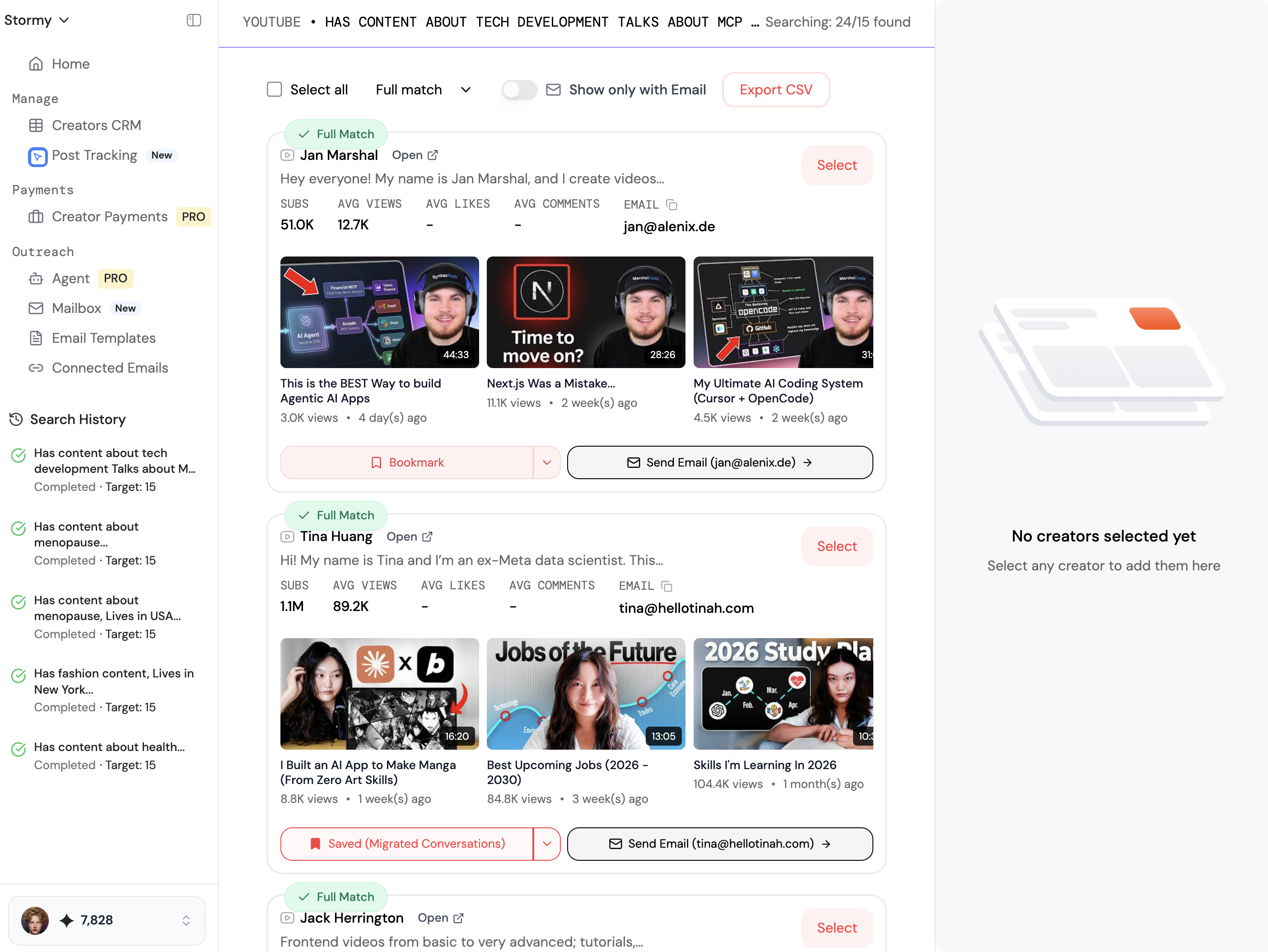
Choosing the right mobile app tech stack 2025 is about balancing speed, cost, and cross-platform compatibility. For startups, the goal is to reach the maximum number of users with the minimum amount of duplicated code. Eyal and Yali utilized React Native for startups as their primary framework, allowing them to manage a single codebase for both iOS and Android platforms. This approach is essential for lean teams that cannot afford separate developers for different operating systems.
Complementing React Native, they employed TypeScript for its robust type-safety, which reduces the frequency of runtime errors—a critical factor when you are shipping updates weekly. For the backend and the intelligence layer of the app, Python was the language of choice. Python is particularly effective for machine learning algorithms and automated fetching of complex datasets. In an era where AI is a core differentiator, having a backend that can seamlessly integrate with LLM calls is vital. Platforms like Stormy AI, an AI search engine across TikTok, YouTube, and Instagram, are increasingly used by developers to identify how these technical choices impact marketing success by finding influencers using natural-language prompts.
Efficient Data Management with Neon
Data management is often where mobile apps incur the most hidden costs. To maintain 50% profit margins, you need a database that scales linearly without massive upfront investment. PropGPT utilized Neon, a serverless Postgres database that allows for massive bandwidth for API calls while remaining incredibly cost-efficient. During their growth phase, they were only spending $10 a month on their database infrastructure, despite handling thousands of users and real-time data fetching.
Automated fetching is another pillar of their technical blueprint. By automating the retrieval of real-time sports data, they minimized manual intervention and ensured their machine learning models always had the latest information to process. This technical efficiency directly translates into business scalability. When your infrastructure costs are negligible, more capital can be diverted into user acquisition via Google Ads or organic social strategies.
The App Development Costs Breakdown

Understanding your unit economics is the difference between a hobby and a business. A true app development costs breakdown should look at the granular level of every user interaction. For a lean startup making $30,000 MRR, the monthly expenses are surprisingly manageable if the right tools are selected:
- Revenue and Paywalls: Using SuperWall for paywalling costs approximately 20 cents per conversion. This tool is invaluable for A/B testing which pricing screens lead to higher conversion rates.
- Subscription Management: RevenueCat typically takes 1% of revenue, providing a robust revenue dashboard that tracks lifetime value (LTV) and churn.
- Data APIs: Real-time data access costs roughly $100 a month.
- AI/LLM Costs: Leveraging large language models for insights costs around $20 a month, with costs trending downward as technology matures.
- Infrastructure: Database costs (Neon) stay around $10 a month.
- Marketing: A significant $10,000 monthly spend on growth.
By keeping technical overhead low, founders can maintain 50% profit margins even while scaling aggressively. This allows for a sustainable reinvestment cycle where every $3.30 made per download can be funneled back into discovery tools like Stormy AI to find the next batch of high-converting UGC creators through hyper-personalized AI outreach.
Scaling Through UGC and Influencer Marketing
Once the product is refined and the tech stack is stable, the challenge shifts to distribution. In 2025, traditional paid acquisition on platforms like Meta Ads Manager or Apple Search Ads is often too expensive for early-stage startups. The real leverage lies in influencer marketing and organic social media.
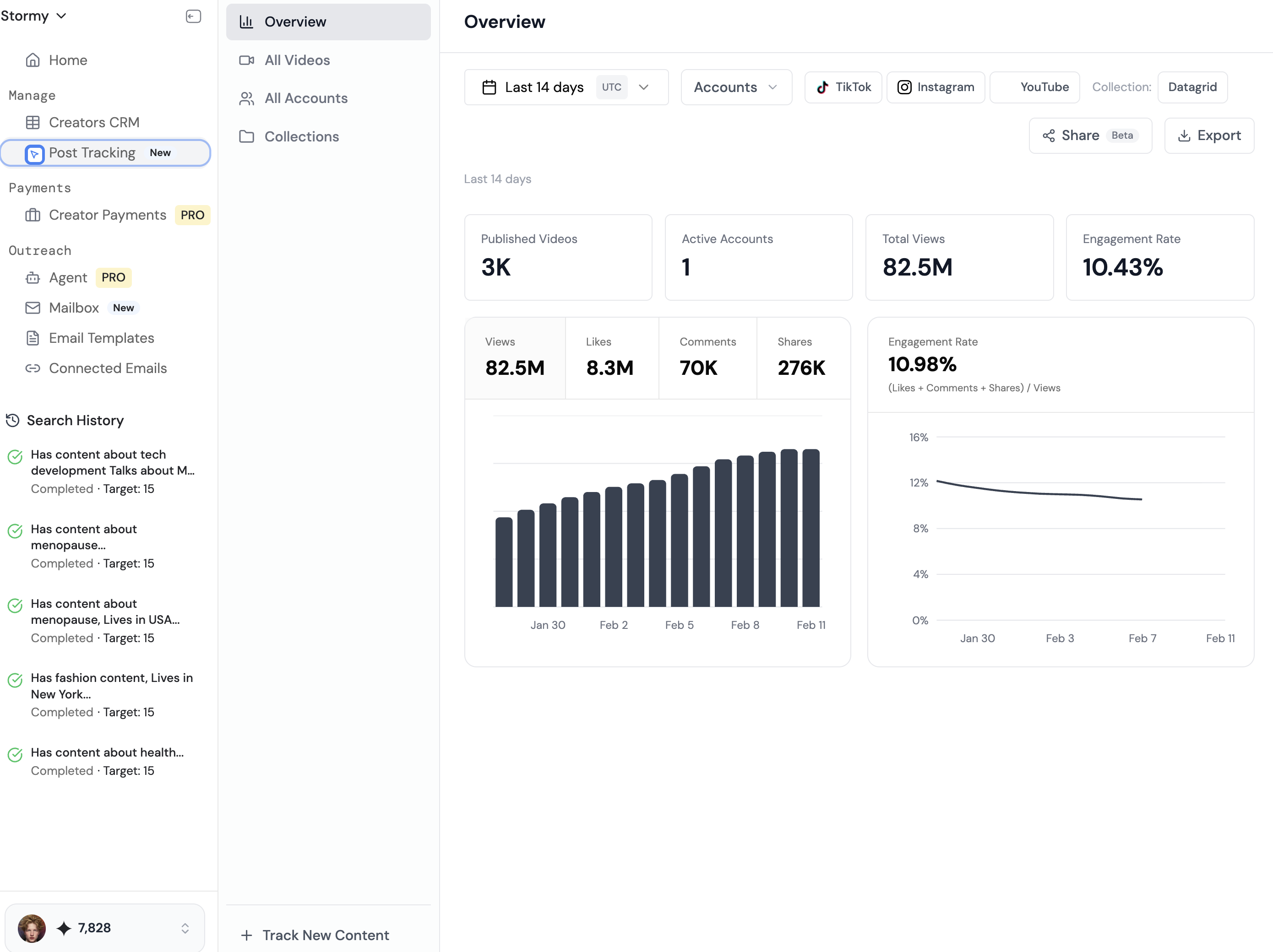
Eyal and Yali found that influencers have followers who engage deeply and convert faster because they trust the creator's recommendation. One viral video on their 70th attempt hit 600,000 views, which spiked their ARR from $8,000 to $38,000 in just three days. This is the power of the "viral lottery." To consistently hit these numbers, many modern brands use Stormy AI to manage their entire creator CRM and track individual video performance across platforms. Finding the right creator who aligns with your niche—whether it's sports betting or productivity—can reduce your customer acquisition cost (CAC) significantly compared to blind ad spend.
The Human Element: Co-founder Dynamics and Scientific Honesty
Building a profitable mobile app business model is as much about the founders' mindset as it is about the code. Eyal and Yali emphasize the importance of scientific honesty. You must be willing to look at your data and admit when an idea is failing. If the data shows users are falling off during onboarding, you cannot ignore it and hope more marketing will fix the problem. You have to be a "good product manager" and identify which screens are failing to sell your app's value.
As an entrepreneur, be honest with yourself and scientific about whether what you're working on has enough demand.Having a co-founder to lean on during these "scientific" audits is crucial. The struggle of rebuilding for four months is an order of magnitude easier when you have a partner to share the burden. This partnership allows you to stay focused on the long-term goal of $30k/month while managing the daily stressors of lean app development.
The 2025 Playbook for Profitable Apps

To replicate the success of PropGPT, founders should follow this clear, step-by-step playbook:
Step 1: Define the Pain Point
Don't build features; solve problems. Really understand who you are building for and what their specific frustrations are before writing a single line of React Native code.
Step 2: Obsess Over Analytics
Integrate PostHog early. If you know exactly where users are falling off, you know exactly what to fix. Track every feature click to identify your most compelling value proposition.
Step 3: Build Lean and Scale Smart
Use Neon for your database and RevenueCat for your subscriptions. Keep your fixed costs under $200 a month to protect your margins. Once you have a 48% conversion to trial rate, you are ready to scale.
Step 4: Leverage Influencers and UGC
Don't rely solely on paid ads. Use organic social and influencer partnerships to find your audience. A single viral video can change your entire business trajectory overnight.
By combining a robust mobile app tech stack 2025 with a ruthless commitment to product quality, you can build a high-margin business that doesn't just get downloads, but keeps them. Whether you are using an autonomous AI agent to discovery and outreach to creators on Stormy AI or perfecting your backend in Python, the goal remains the same: create value that users are happy to pay for.