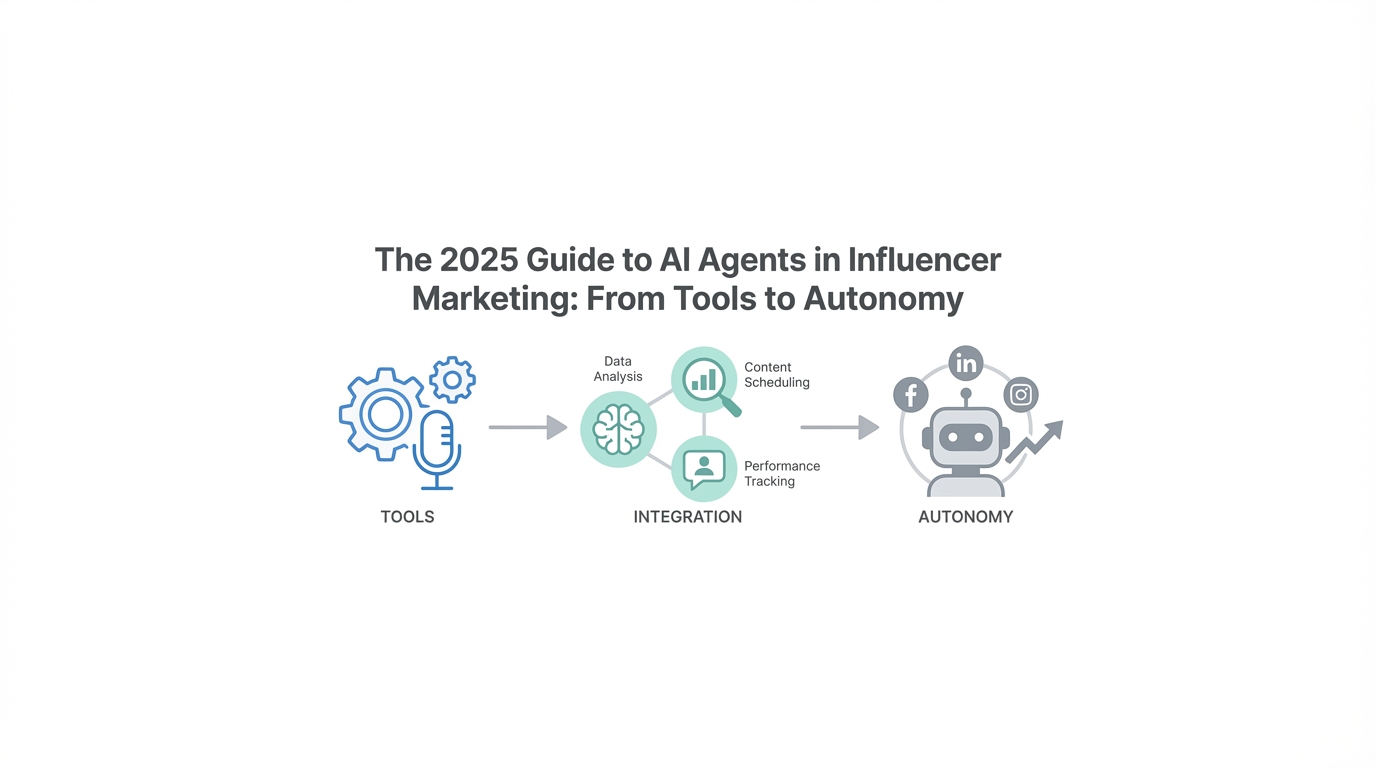
The landscape of social commerce is undergoing a radical metamorphosis. We have officially moved beyond the era of manual spreadsheets and rudimentary keyword searches. In 2025, the conversation has shifted from simple automation to the emergence of fully autonomous systems. This evolution is not merely about doing things faster; it is about fundamentally changing how brands, particularly mobile app developers and e-commerce giants, engage with the creator economy. As the global influencer marketing industry climbs toward a staggering $32.55 billion valuation, the integration of influencer marketing AI is no longer a luxury—it is the engine of growth for brands seeking to maintain a competitive edge in an increasingly crowded digital marketplace.
Analyzing the $32.55 Billion Market: The AI Catalyst
The numbers behind the current shift are nothing short of extraordinary. The global influencer marketing industry, which sat at approximately $24 billion in 2024, is on a trajectory to reach $32.55 billion by the end of 2025. This represents a 33.11% CAGR, a growth rate largely fueled by the rapid adoption of artificial intelligence. It is no surprise that 69.1% of marketers have already integrated some form of AI into their operations, but the real story lies in the 63% of professionals who are specifically planning to deploy dedicated AI strategies for influencer management this year.
Why is this happening now? The sheer volume of data is overwhelming human teams. With over 350 million creators globally, manual vetting is impossible. Data from Redcube Digital suggests that brands utilizing AI-driven discovery see 2.3x higher conversion rates and a massive 60-70% reduction in the time spent on manual coordination. For lean marketing teams, this efficiency is the difference between running a handful of campaigns and managing a global network of hundreds of micro-influencers. The AI influencer market specifically is expected to hit $6.95 billion as specialized tools become the backbone of modern campaign infrastructure.
The Strategic Shift: From Passive Tools to Active AI Agents

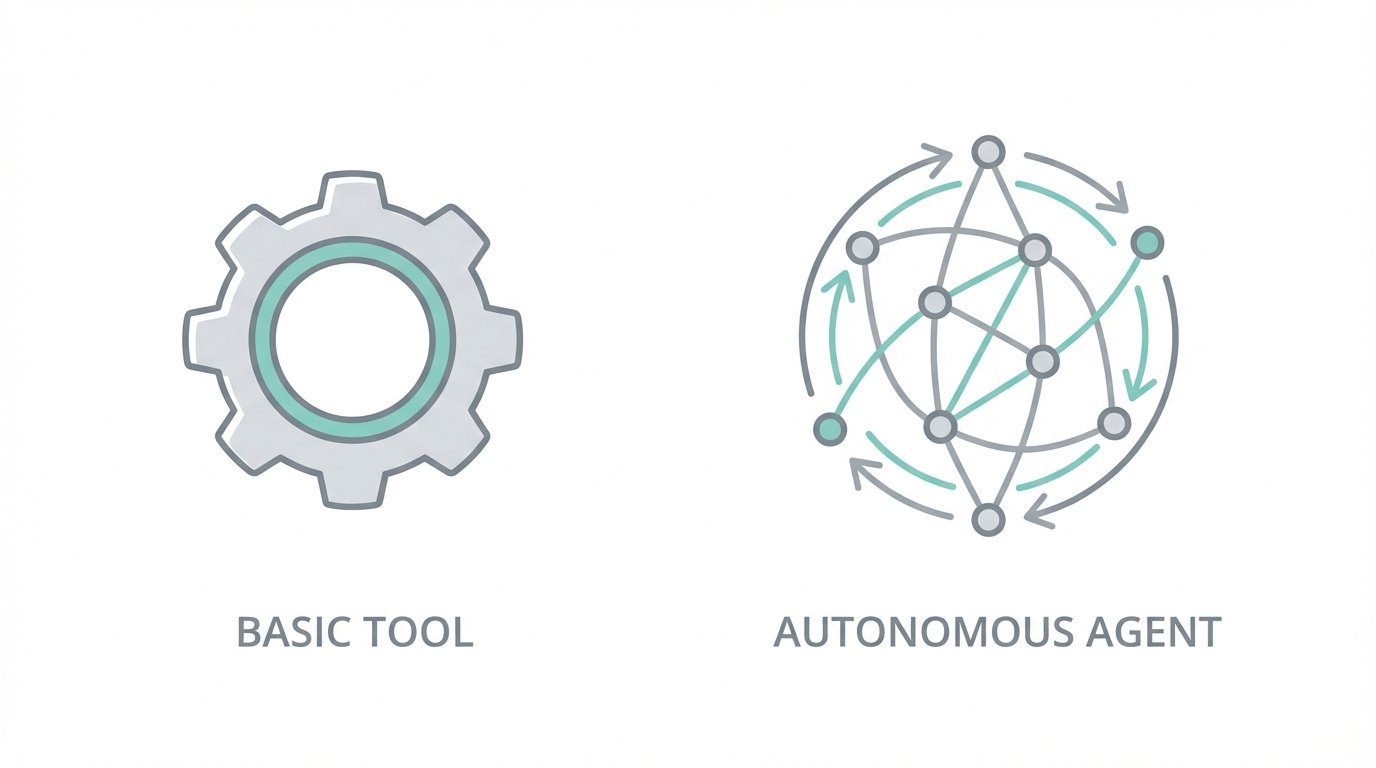
To understand the current state of influencer marketing trends 2025, one must distinguish between "AI tools" and "AI agents." In previous years, marketers used AI tools as passive assistants—platforms where you provided a prompt, and the software generated a list of names or a caption. Today, we are seeing the rise of ai agents for marketing: autonomous systems capable of executing entire workflows. These agents don't just find creators; they vet them against brand safety standards, initiate outreach, negotiate rates based on historical data, and even manage the contract lifecycle. Stormy AI is an all-in-one AI-powered platform for creator discovery, especially for mobile app marketing and UGC campaigns, that embodies this move toward agentic workflows.
As we enter 2025, platforms like Stormy AI are leading the charge in this transition, allowing brands to move beyond simple search filters. Modern agents analyze psychographics—the deep interests and behavioral patterns of an audience—rather than just surface-level demographics. This allows for "lookalike" influencer matching, where an agent identifies creators who mirror the performance characteristics of your most successful historical partners. By automating the initial 3-4 follow-ups—a task that Janney AI notes is where most manual labor is wasted—marketers can focus on the high-level creative strategy that truly moves the needle.
Predictive ROI Influencer Marketing: The Power of Neural Networks
One of the most significant breakthroughs in 2025 is the ability to forecast success before a single dollar is spent. Predictive ROI influencer marketing utilizes advanced neural networks to analyze thousands of data points, including a creator's historical engagement consistency, audience sentiment, and platform-specific algorithmic trends. This shift moves influencer marketing from a "hope-based" strategy to a data-backed performance channel.
Using these predictive models, brands can now see a projected sales impact or app install volume before signing a contract. This is particularly vital for mobile app marketing, where UGC (user-generated content) is the primary driver of low-cost acquisitions. By leveraging AI-driven matching, companies like L’Oréal Paris have been able to identify creators whose audience alignment guarantees a significant lift in customer engagement. This level of precision was previously reserved for enterprise brands with massive data science teams, but it is now being democratized for brands of all sizes.
Virtual Influencers and the Metaverse Frontier
The concept of the "influencer" is no longer strictly human. Virtual Influencers (VIs)—AI-generated avatars with curated personalities—are becoming a mainstream staple of brand strategy. The VI market is growing at 26% annually, according to Influencer Hero, offering brands a level of control and scalability that human creators cannot match.
Consider the success of Prada’s collaboration with Lil Miquela. By bridging high fashion with the digital metaverse, Prada reached millions without the logistical hurdles of a physical shoot. Similarly, Samsung utilized the virtual influencer Rae to launch new mobile devices in Southeast Asia, successfully capturing the attention of tech-savvy Gen Z audiences who increasingly view virtual personas as authentic extensions of digital culture. Even legacy brands are getting involved; Heinz used generative AI via DALL-E to prove that even an algorithm associates ketchup with their brand, resulting in 800 million earned impressions as documented by Metricool.
Navigating the Authenticity Paradox
Despite the technological leaps, a significant tension remains: the authenticity paradox. While 44% of Gen Z consumers report being comfortable with AI-generated content, nearly 43.8% of marketing professionals worry that over-automation will lead to a loss of consumer trust. This is the central challenge of 2025. If an influencer brief sounds like it was written by a machine, the resulting content will likely feel "soulless," leading to what Sondhelm Partners describes as a failure to convert.
To maintain trust, brands must use AI as a "super virtual assistant" or co-pilot. This means using AI for the heavy lifting of data analysis and logistics, but keeping human hands on the creative tiller. Authenticity in 2025 is defined by transparency. As Stormy AI points out, failing to disclose when a virtual influencer or AI-altered image is used can lead to severe reputational and legal risks. The goal is to use AI to find the right humans, not to turn humans into robots.
The 2025 AI Agent Playbook: A Step-by-Step Implementation
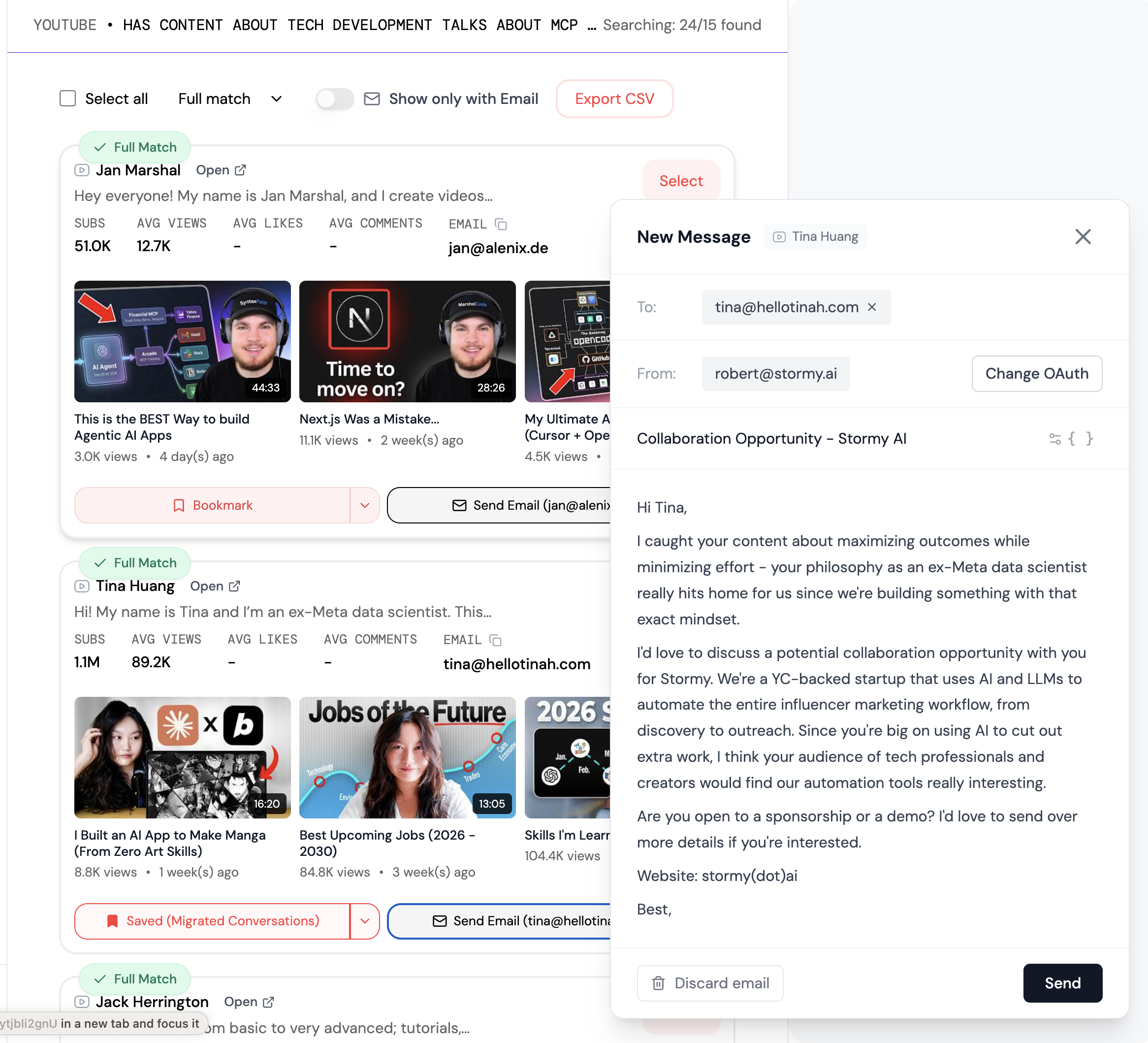
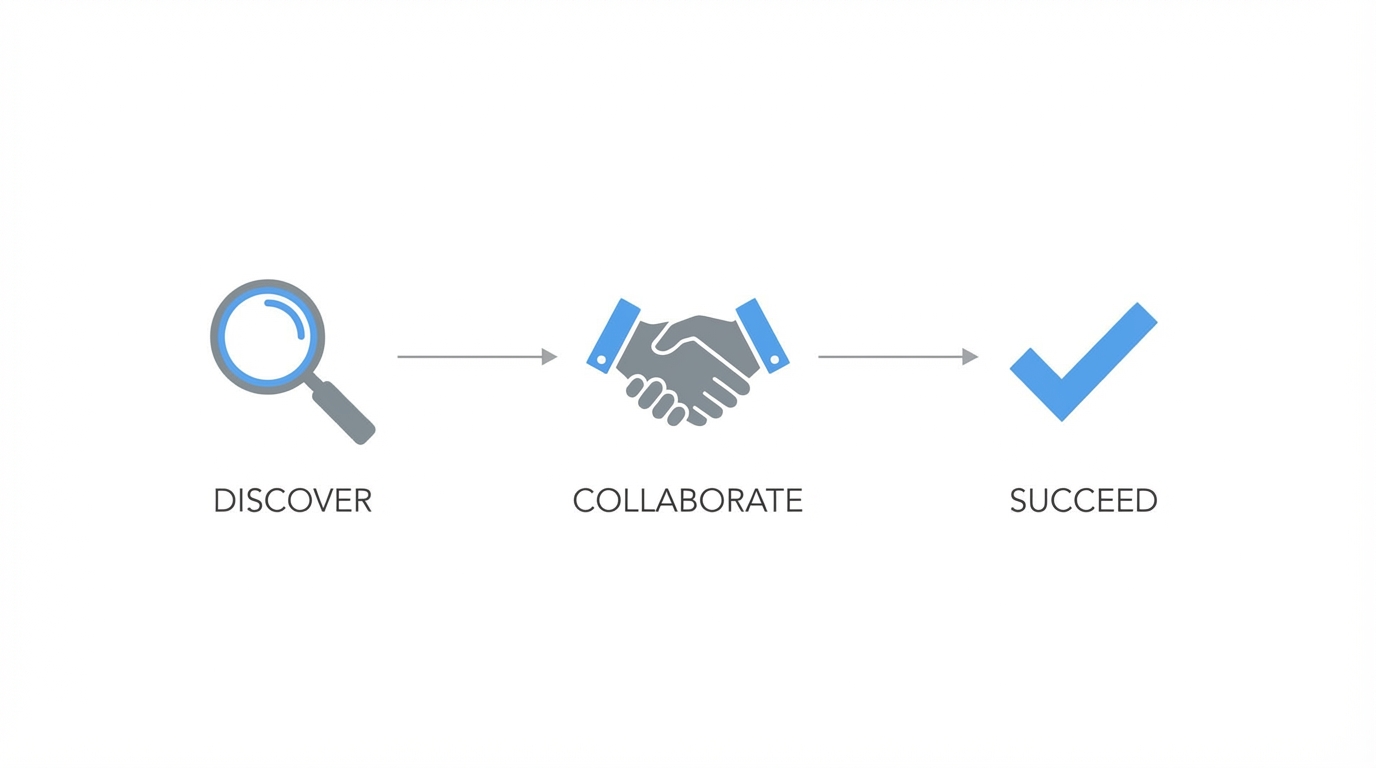
For brands looking to scale their creator programs, following a structured playbook is essential. Here is how to implement an autonomous AI strategy in 2025.
Step 1: Automated Vetting and Fraud Detection
Before reaching out to a creator, use AI agents to perform deep-dive fraud detection. This goes beyond checking for fake followers; agents can now analyze audience overlap to ensure you aren't paying twice to reach the same group of people. Platforms like Stormy AI provide best-in-class fraud detection and automated vetting, ensuring your budget isn't wasted on bot traffic.
Step 2: Deploying Autonomous Outreach
The most time-consuming part of influencer marketing is the back-and-forth. Deploy agents to handle the initial outreach and follow-ups. These agents can be programmed with your brand's voice to ensure the first touchpoint feels personal while still being executed at scale. This allows your team to only step in when a creator expresses genuine interest and is ready to discuss creative specifics.
Step 3: AI-Powered Sentiment Analysis
Don't just look at likes; look at the "vibe." Use AI to scan thousands of comments on a creator's past posts to determine the community sentiment. Humans cannot do this at scale, but an AI agent can quickly identify if a creator’s audience is genuinely engaged or if the comments are filled with spam or negativity. This ensures the influencer marketing ai strategy aligns with your brand values.
Step 4: Content Repurposing for Ads
Once the influencer-generated content (IGC) is live, use AI to automatically format and optimize that content for various social ad platforms. Whether it's turning a TikTok into a Meta Reel or an YouTube Short, AI tools can ensure the content is algorithm-ready. This is where Stormy AI becomes invaluable for app developers, helping them find the specific UGC creators whose content styles are most likely to convert in paid social campaigns.
The 2025 Toolset: Evaluating the AI Landscape
Selecting the right partner is critical. For brands focused on full-cycle automation—from outreach to negotiation—platforms like Janney AI offer robust CRM capabilities. If your priority is the sheer size of the creator pool, Stormy AI provides access to over 350 million creators with deep discovery features across all major platforms. For those in the e-commerce space, Stormy AI offers a built-in creator CRM and payment system, allowing for direct tracking of influencer-driven sales and deal stages.
Furthermore, platforms like Favikon are introducing AI Authenticity Scores and competitor tracking, allowing brands to see how they stack up against their rivals in real-time. For enterprise-level workflow and product seeding at a massive scale, legacy platforms like Aspire are being replaced by modern AI-native solutions. The key is to choose a tool that doesn't just provide data, but provides actionable intelligence.
Common Pitfalls to Avoid in the AI Era
As you scale, beware of chasing vanity metrics. AI often reveals that micro-influencers (those with 10k-50k followers) actually boast 60% higher engagement than mega-celebrities. Don't let your AI agent optimize only for reach; ensure it is optimizing for conversion and resonance. Additionally, avoid a platform-agnostic approach. An AI agent should be used to customize content specifically for each platform’s unique algorithm—what works on TikTok will rarely perform the same way on Instagram or YouTube.
Finally, never underestimate the power of human oversight. While AI can manage the process, humans must manage the relationship. The best influencer campaigns of 2025 will be those that use AI to handle the mundane, freeing up human creators and marketers to do what they do best: tell compelling, authentic stories that build lasting brand loyalty.
Conclusion: The Future of Autonomous Marketing
The shift toward influencer marketing AI agents is an inevitable response to the complexity of the modern digital economy. By 2025, the brands that win will be those that successfully bridge the gap between autonomous efficiency and human-centric authenticity. Whether you are a lean startup using AI co-pilots to manage a micro-influencer army or a global brand leveraging predictive ROI to secure million-dollar partnerships, the message is clear: the age of manual influencer marketing is over. Start by automating your vetting, then your outreach, and finally your ROI modeling. The tools are here; the only question is how quickly you will evolve.