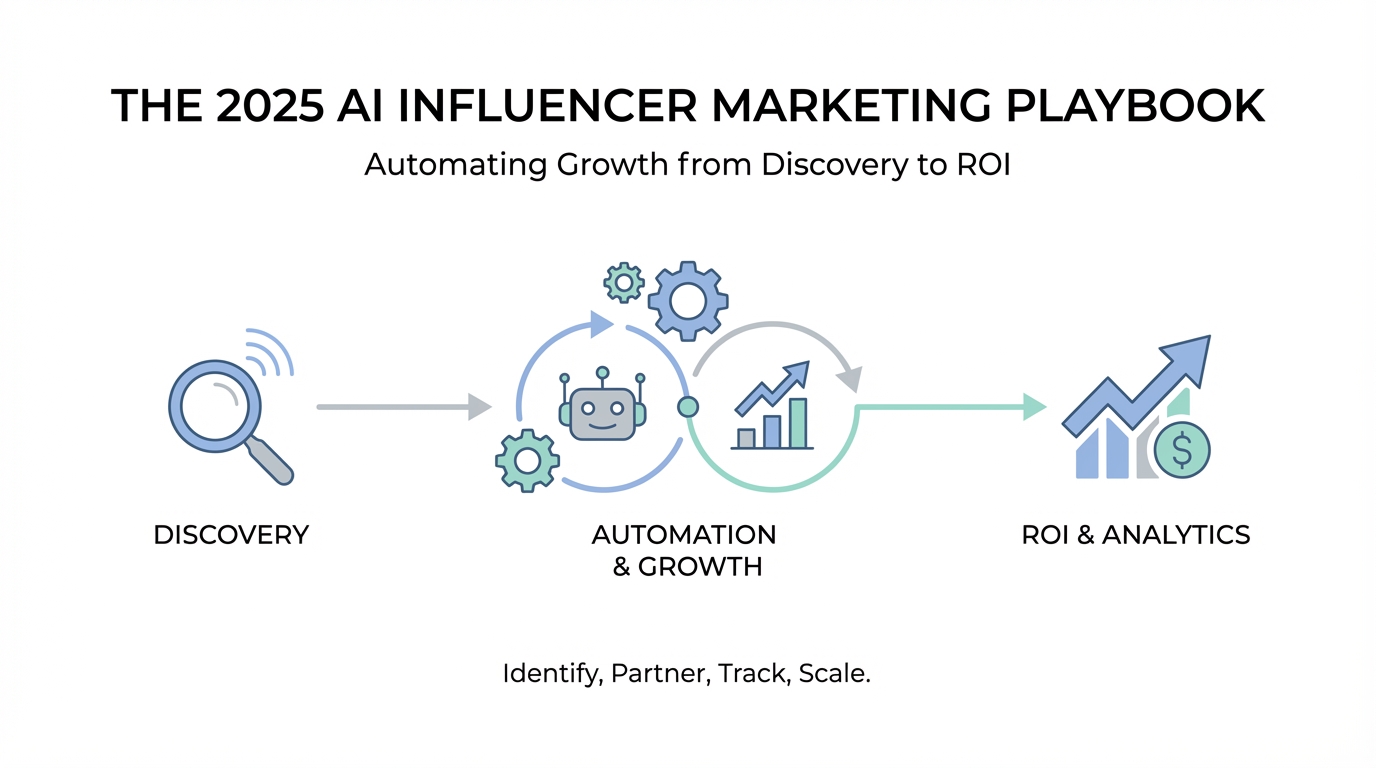
In the rapidly evolving landscape of digital advertising, we have moved past the era where influencer partnerships were a manual, high-friction endeavor. By 2025, the integration of Artificial Intelligence (AI) into the creator economy has transitioned from a experimental luxury to a mission-critical operational standard. Marketers are no longer just looking for "influencers"; they are building autonomous systems that handle the entire lifecycle of a campaign. With the AI-powered influencer marketing industry projected to reach a staggering $108 billion by 2028, according to data from Statista, the choice for brands is clear: automate or be left behind. This playbook provides the definitive roadmap for marketing managers to transition from manual spreadsheets to a high-performance influencer marketing strategy driven by agentic intelligence.
Section 1: The Shift to Agentic Discovery
Traditional ai influencer discovery used to rely on rigid filters—follower counts, location tags, and basic keyword matching. In 2025, that model is obsolete. We have entered the era of "Agentic Discovery," where AI agents understand the nuance of brand voice, aesthetic alignment, and audience sentiment. Instead of searching for "fitness creators in London," modern marketers are using natural-language prompts to find specific cultural fits.
Imagine prompting an AI tool with: "Find me creators who prioritize sustainable packaging, have a conversion-heavy Gen Z audience, and a visual style that matches our minimalist brand identity." This level of depth allows for a much higher precision in matching. Research indicates that 60.2% of marketers are already using AI for identification, and those who do report 37% higher engagement rates compared to traditional methods, as noted by digitalagencynetwork.com.
By leveraging advanced discovery tools, brands can identify "micro-clusters" of influence that were previously invisible. This is particularly effective for mobile app marketing and UGC-focused campaigns where the goal is rapid app installs. When you find creators whose audience is already primed for your niche, the marketing roi increases exponentially.
"AI won't replace humans, but humans with AI will replace humans without AI." — Karim Lakhani, Harvard Business School
Section 2: Implementing Autonomous Negotiation and Performance-Based Pricing
One of the biggest bottlenecks in influencer marketing automation has historically been the back-and-forth of contract negotiations. In 2025, AI agents are now capable of handling outreach and initial negotiations autonomously. These agents use real-time market data to propose fair rates based on historical performance, engagement quality, and expected sales-lift.
The Playbook for Autonomous Outreach
- Set Your Parameters: Define your budget ceilings, required usage rights, and preferred payment models (e.g., flat fee vs. commission).
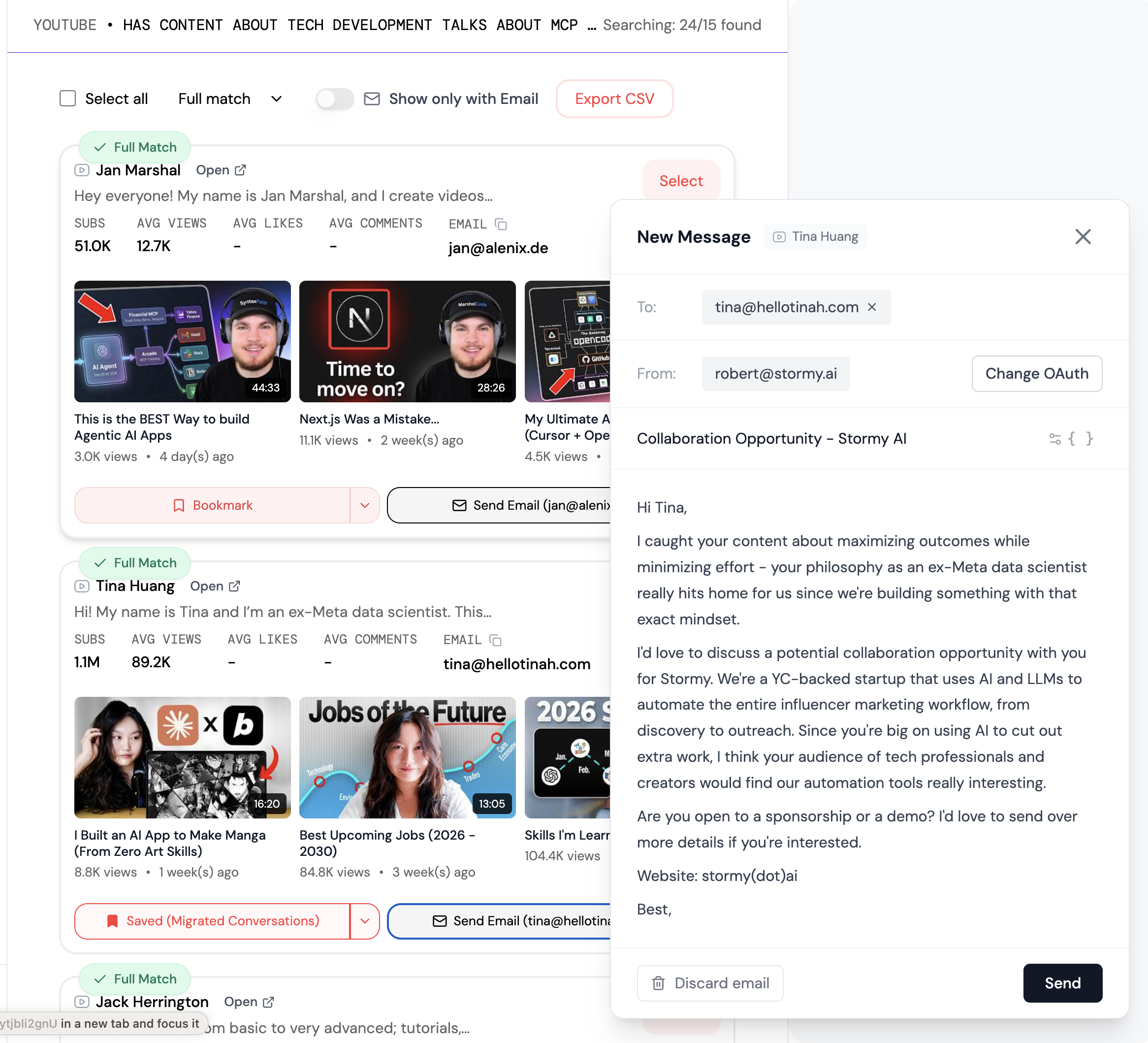
- Deploy the Agent: Use tools that automatically reach out to your discovered shortlist with hyper-personalized emails that reference the creator's specific recent content.
- Dynamic Rate Adjustment: The AI can negotiate in real-time. If a creator’s engagement rate is 20% higher than the industry average, the AI can automatically offer a performance bonus.
The financial impact of this shift is significant. Top-tier AI users are achieving an ROI of up to $18 for every $1 spent, a massive leap from the average return of $5.78, according to reports on influencer marketing benchmarks. This efficiency is driven by the move toward sales-lift models. Instead of paying for a single post, brands are using AI-driven attribution to pay for tangible results like app downloads or e-commerce conversions.
For brands looking to scale this process, modern platforms like Stormy AI provide an integrated AI email inbox and automated follow-up sequences. This allows a single marketing manager to manage hundreds of relationships simultaneously without losing the personal touch that creators expect.
Section 3: Scaling Content via Multi-Modal AI Tools
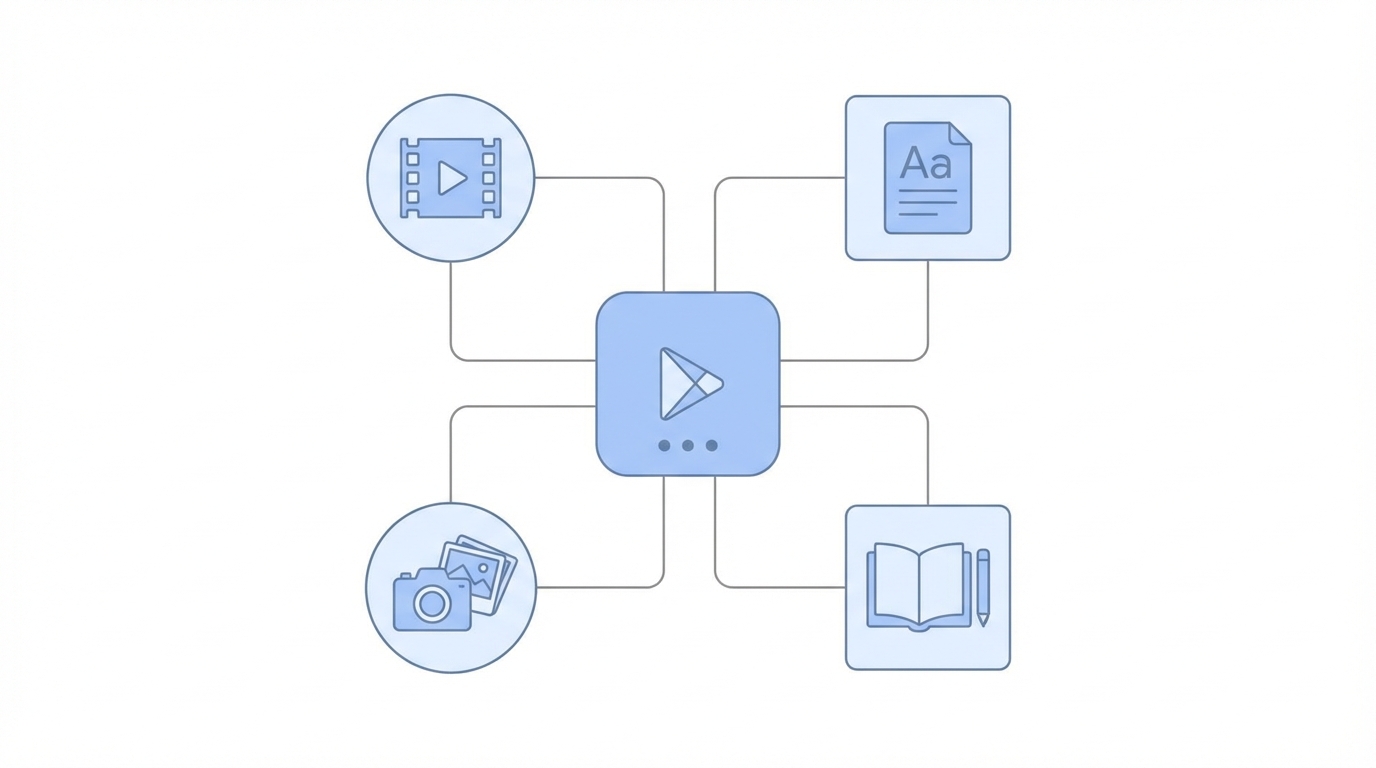
In 2025, a single high-performing TikTok is no longer just one asset—it is the seed for an entire multi-platform ecosystem. Influencer marketing strategy now involves "multi-modal scaling," where AI tools automatically reformat, translate, and optimize a single piece of creator content for every major social channel.
Using AI-powered video editors like Descript or Runway, a brand can take a successful UGC video and instantly generate:
- An Instagram Reel with trending audio overlays.
- A YouTube Short with optimized captions.
- A Pinterest Idea Pin that focuses on the product aesthetic.
- Localized versions with AI lip-syncing in multiple languages for global reach.
Consider the case of Nike’s "Never Done Evolving" campaign. By using machine learning to create a virtual match between different eras of Serena Williams, they generated 1.7 million YouTube views and a staggering 1082% increase in organic reach. You can read more about this data-driven creative approach at wpp.com.
"The future of AI isn’t human vs. AI—it’s human with AI. The creative spark remains human, but the execution is purely algorithmic."
Section 4: Maintaining the Human-AI Balance
As influencer marketing automation becomes more prevalent, brands face the "Authenticity Paradox." If every caption is AI-generated and every creator is vetted by an algorithm, does the content lose its soul? The most successful marketers in 2025 are those who use AI to handle the mechanics of marketing while leaving the storytelling to humans.
Transparency is no longer optional; it is a legal and ethical requirement. As of 2025, failing to disclose AI-generated influencers or heavily altered content can lead to significant penalties and a loss of consumer trust. Virtual influencers like Lil Miquela have shown that audiences are willing to engage with digital characters—provided the brand is honest about it. BMW’s partnership with Lil Miquela reached over 8.2 million followers by leaning into the digital nature of the collaboration, as detailed by monks.com.
To avoid the authenticity trap, follow these guidelines:
- AI for Vetting, Humans for Creative: Use AI to analyze audience quality scores (AQS) and detect fraud, but let the creator maintain their unique voice.
- Historical Audits: Use AI to scan a creator's entire historical feed for brand safety risks before signing, a practice encouraged by industry experts at digitalmarketinginstitute.com.
- Edit, Don't Just Generate: Never publish raw AI-generated captions without human oversight. AI is a co-pilot, not the captain.
Section 5: Analyzing the Shift to Sales-Lift Models
The ultimate goal of any ai influencer marketing campaign is a positive marketing roi. The days of relying on "vanity metrics" like likes and impressions are over. Modern AI attribution models allow brands to track the exact path from a creator's post to a final purchase or app install.
Sephora’s implementation of TikTok’s Smart+ AI solution is a prime example of this performance-first mindset. By automating audience targeting and creative optimization, they saw a 53% increase in ROAS and a 14% rise in conversion rates, according to tiktok.com. This shift is made possible by AI tools that can process millions of data points to identify which specific creative elements (e.g., the first 3 seconds of a video, the color of the text overlay) are driving the most sales.
When managing these high-performance campaigns, having a robust Creator CRM is essential. Tools like Stormy AI allow you to track every interaction, negotiation, and payment in one central hub, giving you a clear view of which creators are your true "MVPs" based on actual sales data rather than just follower counts.
"25% of influencers have purchased fake followers. Relying on vanity metrics is the fastest way to waste your marketing budget in 2025." — CNBC Report
Conclusion: Your Path to Automated Growth
The 2025 influencer marketing landscape is defined by the move from manual toil to influencer marketing automation. By adopting agentic discovery, autonomous negotiations, and multi-modal scaling, brands can achieve levels of efficiency and marketing roi that were previously impossible. However, the most successful strategies will always be those that remember the "human" in influencer marketing.
As you build your 2025 playbook, focus on these three core pillars:
- Precision: Use ai influencer discovery to find perfect-match creators beyond simple keywords.
- Performance: Shift your pricing to sales-lift models that reward actual results on platforms like Shopify or Amazon.
- Protection: Use deep vetting and historical audits to ensure brand safety and authenticity.
The brands that win in this new era will be those that view AI as a force multiplier for human creativity. Start small by automating your discovery and outreach, and then scale into full-cycle autonomous campaigns as your data matures. The future of influence is here—it's time to let AI do the heavy lifting while you focus on the big picture.