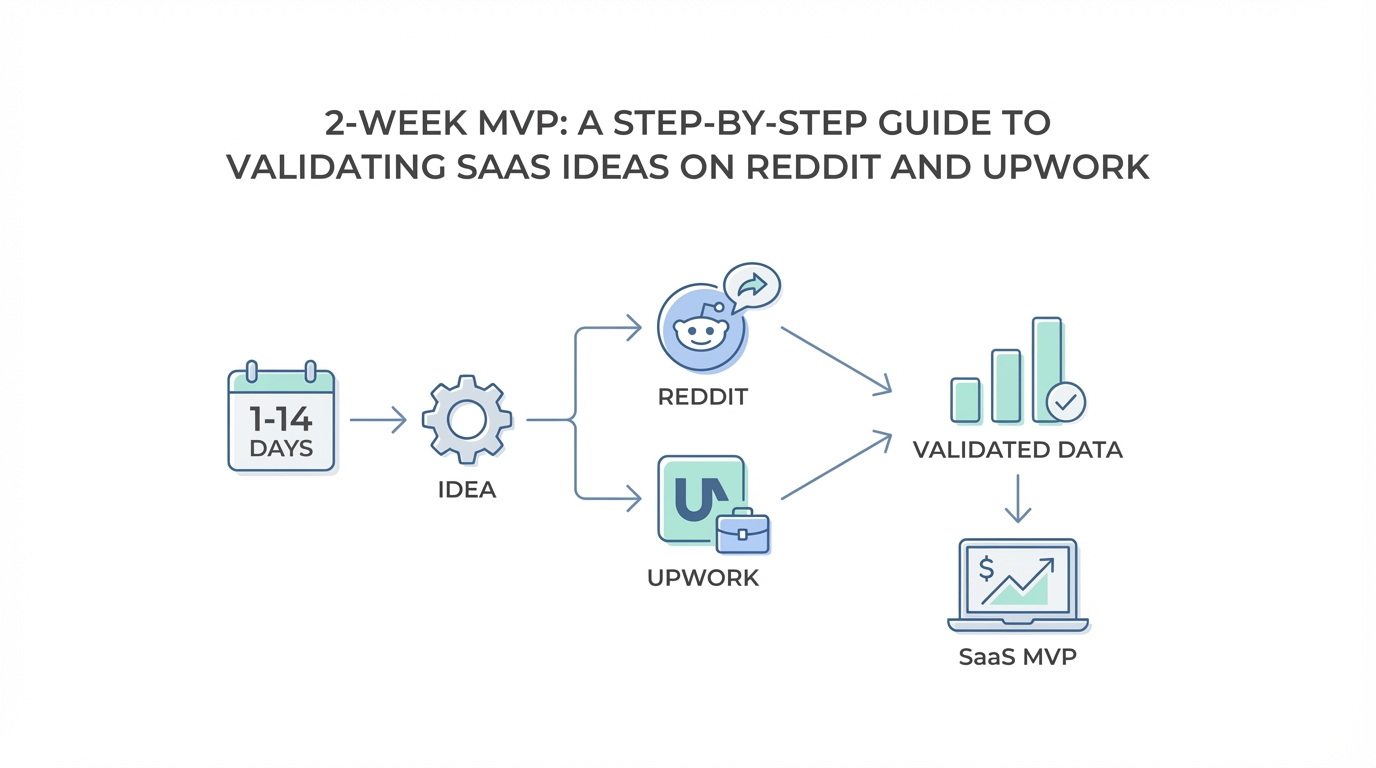
Building a successful software-as-a-service (SaaS) business doesn't require a million-dollar seed round or a six-month development cycle. In fact, many of the most profitable micro-SaaS products on the market today started as simple solutions to singular problems, built in a matter of weeks. Take Leandro, the founder of SyncToSheets, who built a tool that does just one thing—syncing Notion databases to Google Sheets—and now generates $9,000 per month in revenue. The secret isn't in the complexity of the code, but in the precision of the validation. By using a lean startup methodology and hunting for real-world demand signals, you can move from a vague concept to a paying customer base in exactly 14 days. This guide will walk you through the tactical steps to find app ideas and execute a rapid mvp development sprint.
Mining Subreddits: Turning Complaints into Features


The first step to validate a business idea is to stop guessing what people want and start listening to what they are already complaining about. Subreddits are essentially massive, categorized focus groups where users vent about the limitations of their current software. Leandro used the Notion subreddit to find his breakthrough. By searching for keywords like "Google Sheets," "Excel," and "CSV," he discovered a recurring pain point: users were struggling to move data out of Notion for analysis.
To automate this process, you should use a tool like F5Bot. This free service allows you to set up keyword alerts across Reddit and Hacker News. When someone posts a comment containing phrases like "is there an app for," "how do I sync," or "I hate [competitor]," you receive an immediate email notification. This allows you to jump into the conversation early, ask clarifying questions about their workflow, and confirm that the pain point is severe enough to warrant a solution.
Once you have identified a recurring problem on social platforms, you need to understand the competitive landscape. When you find app ideas through social listening, check if an existing solution is already serving that niche. Is it an enterprise-grade tool that is too expensive for small businesses? Is it a legacy platform with a clunky UI? If you can find an angle of differentiation—whether through price, simplicity, or a specific integration—you have a viable path forward. To speed up your research on who is already influencing these spaces, Stormy’s AI search can help you identify key creators and voices in specific sub-niches, giving you a map of the market's current authority figures.
The Upwork Arbitrage: Spotting Recurring Custom Requests
While Reddit is great for uncovering general frustrations, Upwork is a goldmine for identifying high-intent demand. This strategy, often called "Upwork Arbitrage," involves searching the freelance marketplace for custom development jobs that keep appearing. If ten different companies are willing to pay a freelancer $500 each to build a custom script that connects their CRM to a specific dashboard, there is a clear opportunity to turn that script into a standardized SaaS product for $29 a month.
When using this method for saas marketing for beginners, look for job postings that specify "API integration," "data automation," or "custom plugin." These are indicators that existing tools like Zapier or Make.com might be too complex or expensive for the user's specific needs. Leandro suggests that if you can consolidate a messy workflow—like moving QuickBooks data to Google Sheets—into a single, reliable piece of software, you are solving a massive headache for small business owners.
As you gather these requirements from Upwork job posts, you can begin to map out your mvp development roadmap. You aren't just building what you think is cool; you are building what companies are already trying to hire people to create. If you're looking to scale this research or find influencers who talk about these specific technical workflows, you can use Stormy AI for influencer vetting and audience analysis to identify creators who are already teaching these workarounds to their audiences.
The 14-Day Build Sprint: Data Over UI

The biggest trap in mvp development is over-engineering. Your goal for the first 14 days is not to build a beautiful, feature-rich platform; it is to build a functional bridge between a problem and a solution. Leandro’s SyncToSheets MVP focused exclusively on the ability to transfer data from one place to another. He ignored formatting, styling, and advanced settings until he knew the core engine worked.
For your technical stack, stick to what you know or use high-leverage tools. Leandro used VS Code and Google Apps Script to build directly within the Google Workspace ecosystem. This allowed him to launch on the Google Workspace Marketplace, which provides built-in distribution. Here is a suggested timeline for your 14-day sprint:
- Days 1-3: Finalize the problem statement and choose the single most important feature (The "One Thing").
- Days 4-10: Build the core functionality. If it's an integration, ensure data moves accurately. If it's a tool, ensure the primary output is generated.
- Days 11-12: Basic UI and error handling. It doesn't have to be pretty, but it shouldn't crash.
- Days 13-14: Deployment and the start of outreach.
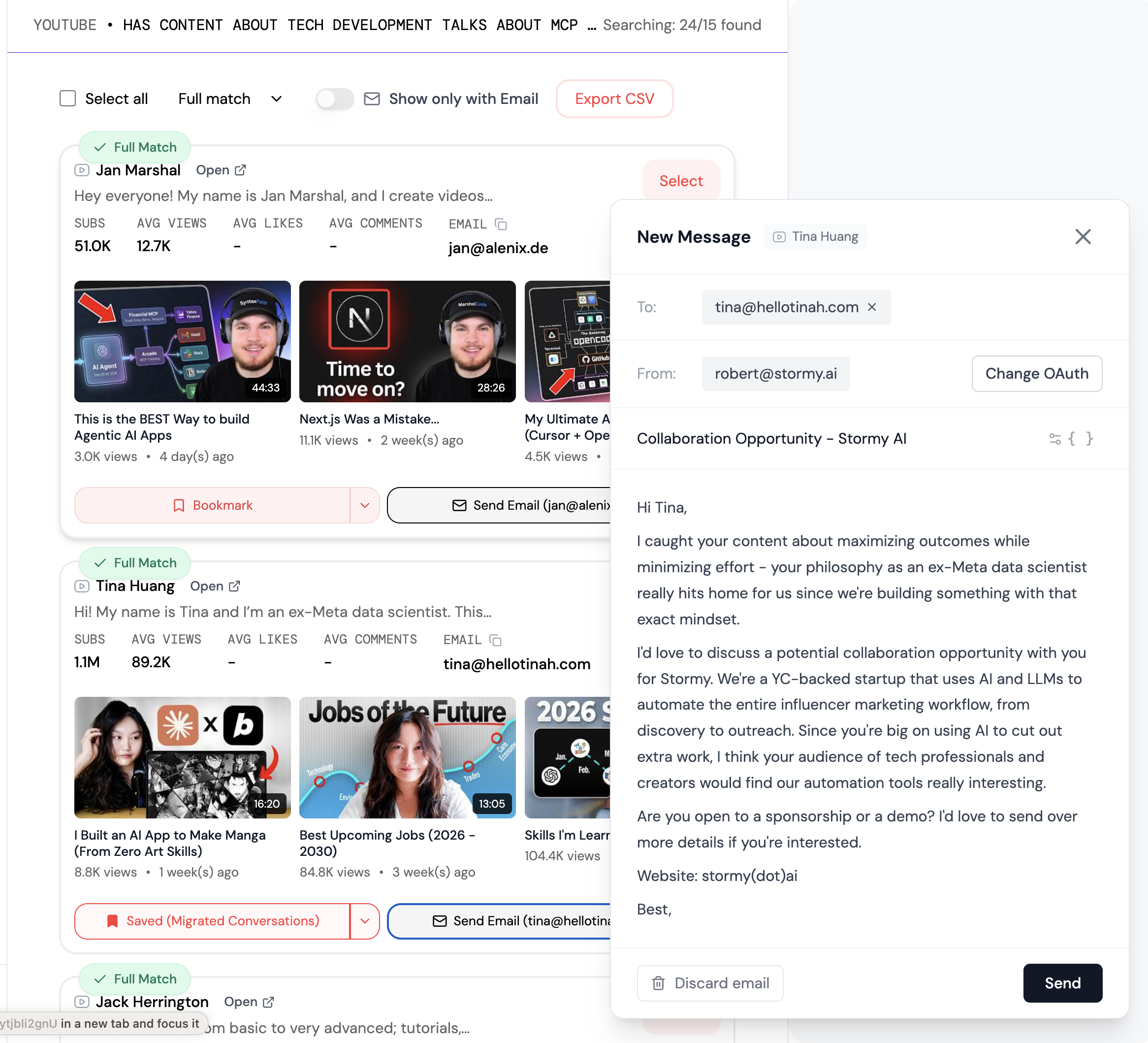
Remember, a lean startup methodology dictates that if you aren't embarrassed by the first version of your product, you shipped too late. Focus on the data flow first, then the user experience. Once you have a working prototype, you'll need to start the outreach process. This is where Stormy’s AI outreach becomes a force multiplier, allowing you to reach out to potential beta testers and creators with hyper-personalized emails that don't feel like spam.
Getting Your First 5 Paying Users: The Ultimate Validation

There is a massive difference between a user saying they like your app and a user entering their credit card details. To truly validate a business idea, you must charge from day one. Free users will often give you "polite feedback" that leads you in the wrong direction. Paying customers will give you the brutal truth because they have a financial stake in the tool working.
Leandro initially offered a free plan but eventually removed it, which saw his revenue jump from $5,000 to $8,000 in just two months. This proved that his users valued the tool enough to pay for it. To find these first five users, return to the subreddits and forums where you did your initial research. Send personalized DMs (carefully avoiding spam filters) and offer a "founder's discount" in exchange for honest feedback.
You can also leverage platforms like Product Hunt and Hacker News to drive initial traffic spikes. While these platforms might not always yield long-term subscribers, the visibility and backlinks are invaluable for your SEO. During this phase, managing your relationships with early adopters is crucial. Using a system like Stormy’s creator CRM can help you keep track of every conversation, negotiation, and piece of feedback from the people who are helping you shape the product.
Feedback Loops: Refining Based on Real Behavior
Once your MVP is live and you have a few users, your job shifts from building to observing. You need to know exactly how users are interacting with your tool. Leandro uses Mixpanel to track user behavior and Tidio for live chat support. Live chat is particularly effective for saas marketing for beginners because it allows you to have real-time conversations with people while they are actually using the app. They can tell you exactly where they got stuck or what feature they expected to find.
Use these insights to prioritize your next build phase. If users are consistently asking for a specific export format, that becomes your next task. If they are dropping off at the onboarding screen, that's where you focus your UI improvements. This iterative process ensures that you aren't wasting time on features nobody wants. For founders who want to see how their product is being discussed across social media as they grow, Stormy’s post tracking provides a streamlined way to monitor mentions and engagement across platforms like TikTok and Instagram.
Managing the financial side is also a priority. If you are operating internationally like Leandro, who is based in Argentina, you might need a flexible payment processor like Paddle to handle global taxes and compliance. Keep your overhead low—aim for a 90% profit margin by focusing on high-leverage cloud infrastructure like Firebase and minimizing unnecessary subscriptions.
Scaling Beyond the MVP: The Path to $9k MRR
The journey from a 2-week MVP to a $9,000 per month business is one of consistent, incremental growth. Once the core product is validated, you can begin to explore marketplaces like monday.com or the Shopify App Store, where built-in demand is already waiting. Marketplaces are an excellent way for solo developers to scale without needing a massive marketing budget, as the platform handles the discovery phase for you.
In summary, the 14-day MVP framework consists of:
- Listening for pain points on Reddit via F5Bot.
- Analyzing recurring job requests on Upwork to find high-intent needs.
- Building a data-focused solution in a tight 2-week window.
- Validating through immediate payment and direct user feedback.
- Iterating using analytics and live support tools.
Success in SaaS doesn't come from the most complex idea, but from the most efficient execution. By focusing on "one thing" and doing it exceptionally well, you can build a business that provides both financial freedom and the flexibility to work on your own terms. For more insights on how to build and launch your next project, platforms like Starter Story offer a wealth of founder interviews and tactical playbooks to keep you inspired and informed.