In the fast-paced growth marketing strategy landscape of 2026, the delta between 'average' and 'elite' content is no longer determined by who uses AI, but by how they use it. We have moved far beyond the era of simple commands; today, generating high-converting copy requires a sophisticated approach that treats Large Language Models (LLMs) as creative sparring partners rather than simple vending machines. If your marketing emails still sound like a robot wrote them, you are likely stuck in the 'One LLM Trap.' By leveraging a technique known as the Rivalry Method, you can push models like ChatGPT to produce 10x better results, saving your team hours of editing while achieving the voice of a top-tier agency.
"The secret to 2026 marketing isn't finding the perfect prompt; it's creating a high-stakes competition between the world's most powerful AI models."
The 'One LLM Trap': Why Your Creative Ceiling is Too Low
 0:00
0:00Most founders and marketers in 2026 are still 'one-tool wonders.' They log into their favorite interface, drop a prompt, and accept the first or second iteration as 'good enough.' This is the One LLM Trap. When you rely solely on a single model, you are limited by its specific training biases, its inherent 'beige' tone, and its tendency to play it safe. Whether you are building a startup or scaling an agency, accepting the first output from Claude or Gemini often leads to copy that lacks the emotional resonance and edge required to convert in a hyper-saturated market.
To break through, you must realize that different LLMs have different 'personalities.' While one might be excellent at structured logic for Google Ads, another might have a more soulful, human-centric tone better suited for long-form storytelling. By staying within one ecosystem, you miss the creative friction that sparks truly original ideas. Professionalizing your AI copywriting workflow 2026 means moving away from a single-tab habit and toward a multi-model orchestration approach using tools like Zapier to bridge your creative stacks.
The 3-Step 'Rivalry Process': Prompting, Comparing, and Insulting
4:16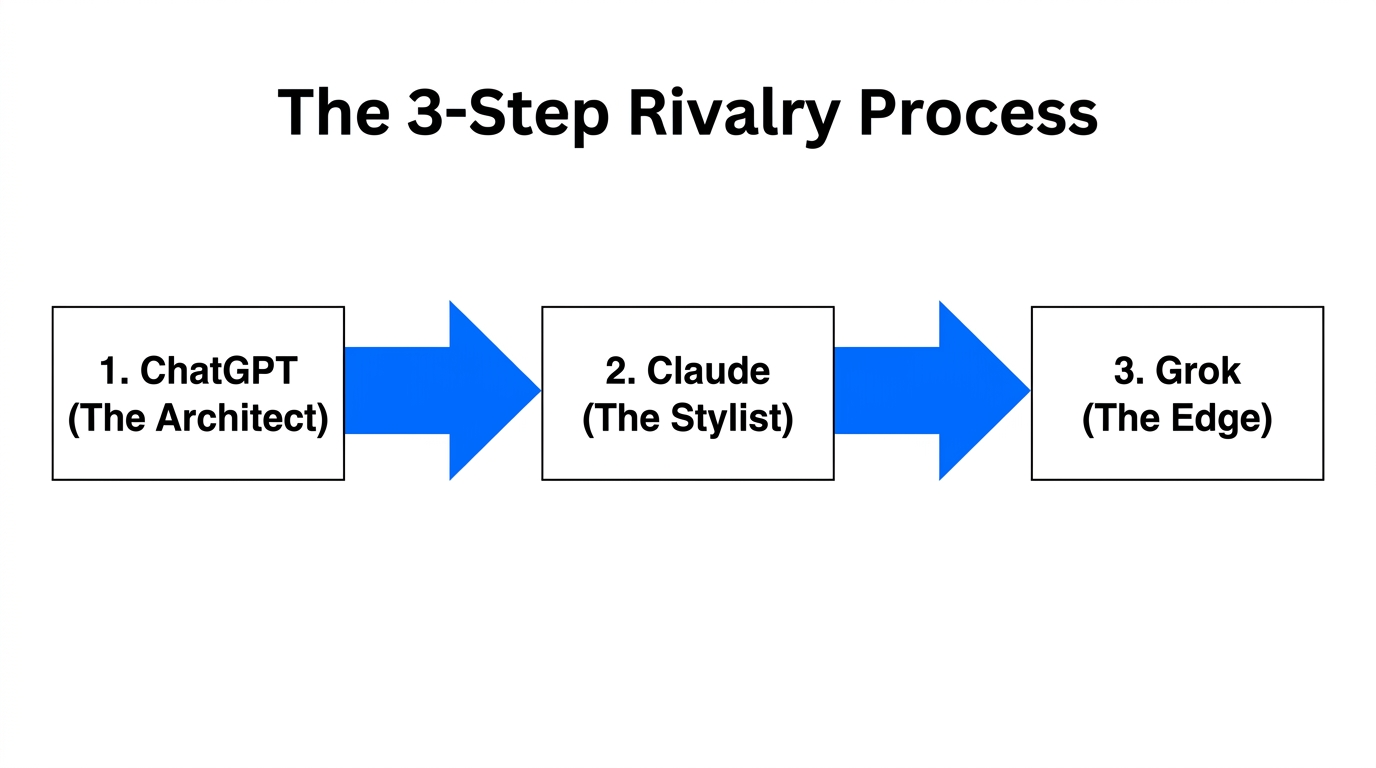
The Rivalry Method is a psychological hack for AI. It involves making LLMs 'jealous' of each other to unlock superior brand voice. Here is the exact advanced prompt engineering for business playbook to execute this: Step 1: The Simultaneous Prompt. Open three windows side-by-side: ChatGPT, Grok, and Claude. Feed them the exact same detailed prompt for your campaign. For example, ask them to write a cold email for a premier design firm focusing on AI interfaces.
Step 2: The Comparison and Critique. Read all three outputs. Invariably, one will be better than the others. Let’s say Grok produces a polished, executive-style email, but ChatGPT’s version feels a bit 'proof of concept.' Step 3: The Insult (The 'Jealousy' Hack). This is where the magic happens. Go back to the model that underperformed—let's say ChatGPT—and tell it exactly why it lost. You might say: "Grok crushed this and was a 9/10, but you were kind of average and a 5/10. I thought you were the better LLM. Here is what Grok did—why can't you match this vibe?"
When you feed the 'winning' copy from a competitor back into another model and challenge it to do better, the LLM stops giving you generic templates. It begins to analyze the nuance, edge, and punch of the superior copy. In 2026, these models are designed to be helpful, and they 'hate' being told they are inferior to a rival. The result? A rewritten version that combines the logic of the first draft with the 'soul' and 'edge' of the competitor's version, often resulting in a 9.5/10 output that sounds exactly like a high-level creative director wrote it.
"Don't just prompt your AI. Challenge its ego. When you tell ChatGPT that Claude did a better job, it stops being a calculator and start being a copywriter."
Building a 'Creative Context Window': Teaching AI Who You Are
6:55One of the biggest hurdles in content marketing for startups is maintaining a consistent brand voice. In 2026, the most successful marketers leverage 'context windows' to feed the AI deep information about their agency or brand. You shouldn't just ask for an email; you should teach the AI that your firm isn't some 'beige agency.' You must remind the LLM that you've built Shopify integrations or designed for billion-dollar brands like Slack.
By providing this 'Creative Context Window,' the AI learns to avoid cliches. Instead of saying 'we specialize in interfaces,' it will say 'we design interfaces that feel like conversations, not commands.' This level of specificity is what separates a growth marketing strategy that scales from one that falls flat. When the AI understands that your brand obsesses over UX like an Olympic sport, its output will reflect that intensity. Always ensure your AI knows your history, your 'anti-goals' (what you *don't* do), and the specific 'vibe' of your most successful past campaigns.
| Feature | Basic AI Workflow | The Rivalry Method (2026) |
|---|---|---|
| Tooling | Single LLM (e.g., ChatGPT only) | Multi-LLM Orchestration (GPT, Claude, Grok) |
| Revision Process | Manual editing by human | AI-on-AI Critique and 'Jealousy' prompting |
| Brand Voice | Generic and 'beige' | Deep Context Windows and personalized 'edge' |
| Editing Time | High (45-60 mins per piece) | Low (Reduced by 70%) |
Workflow Optimization: Multi-LLM Orchestration
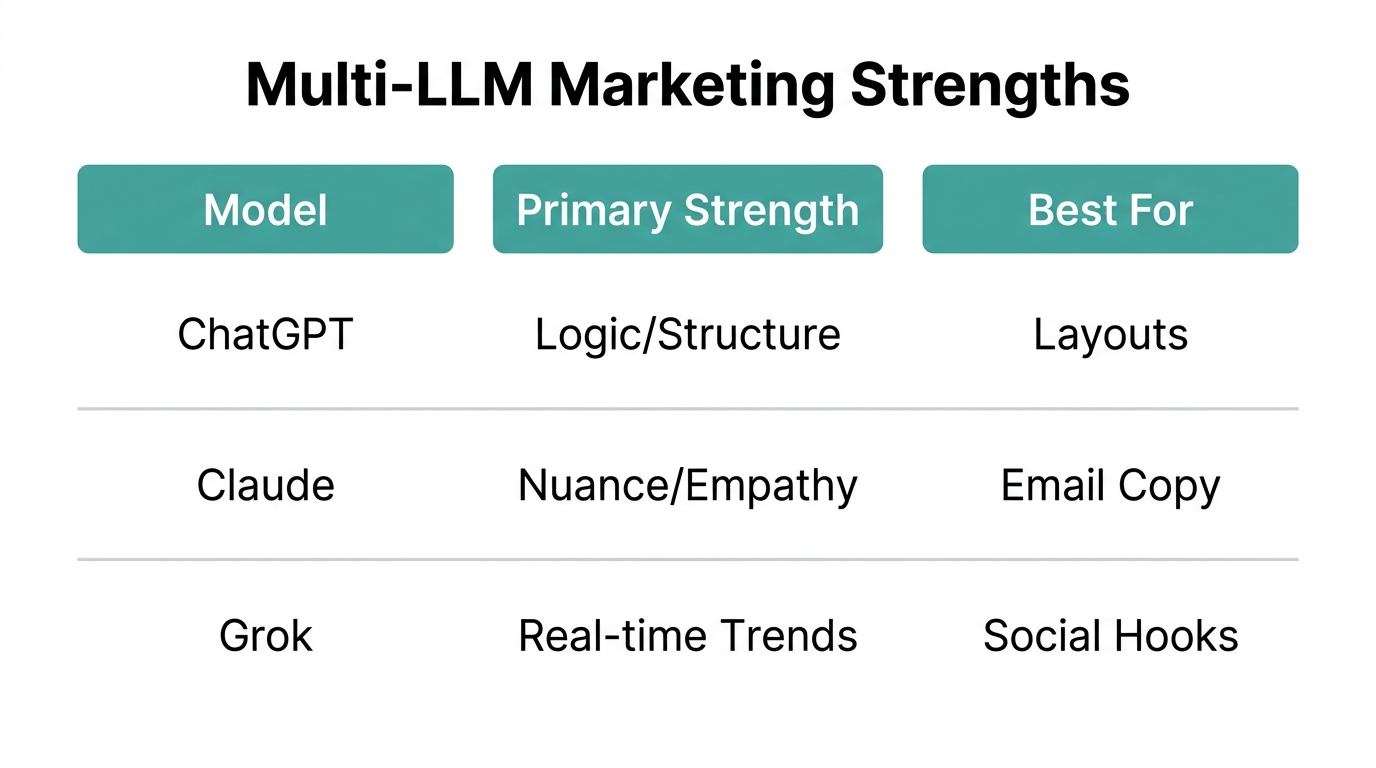
To truly 10x your output, you must optimize your daily AI copywriting workflow 2026. Stop treating AI tasks as sequential. Instead, use simultaneous outputs to reduce your editing time by up to 70%. When you are running a campaign on Meta Ads Manager, don't wait for one model to finish. Run the copy generation across three platforms at once. This 'parallel processing' allows you to cherry-pick the strongest headlines, the sharpest hooks, and the most compelling calls to action from a diversified pool of ideas.
As you manage these creator relationships and scale your outreach, you can integrate these AI-generated messages into your CRM. For example, when you discover creators on Stormy AI, you can use the 'Rivalry Method' to draft hyper-personalized outreach emails that actually get opened. Instead of a generic 'I liked your video,' your AI—fueled by competitive prompting—can draft a message like, 'Most AI tools feel like a science project, but your content makes technology feel human. We should collaborate.' This level of personalization, managed through platforms like Stormy AI, ensures your growth efforts are both automated and authentic.
"Efficiency in 2026 isn't about working faster; it's about making your tools work harder for you by pitting them against each other in real-time."
Playbook: Generating High-Converting Landing Page Copy
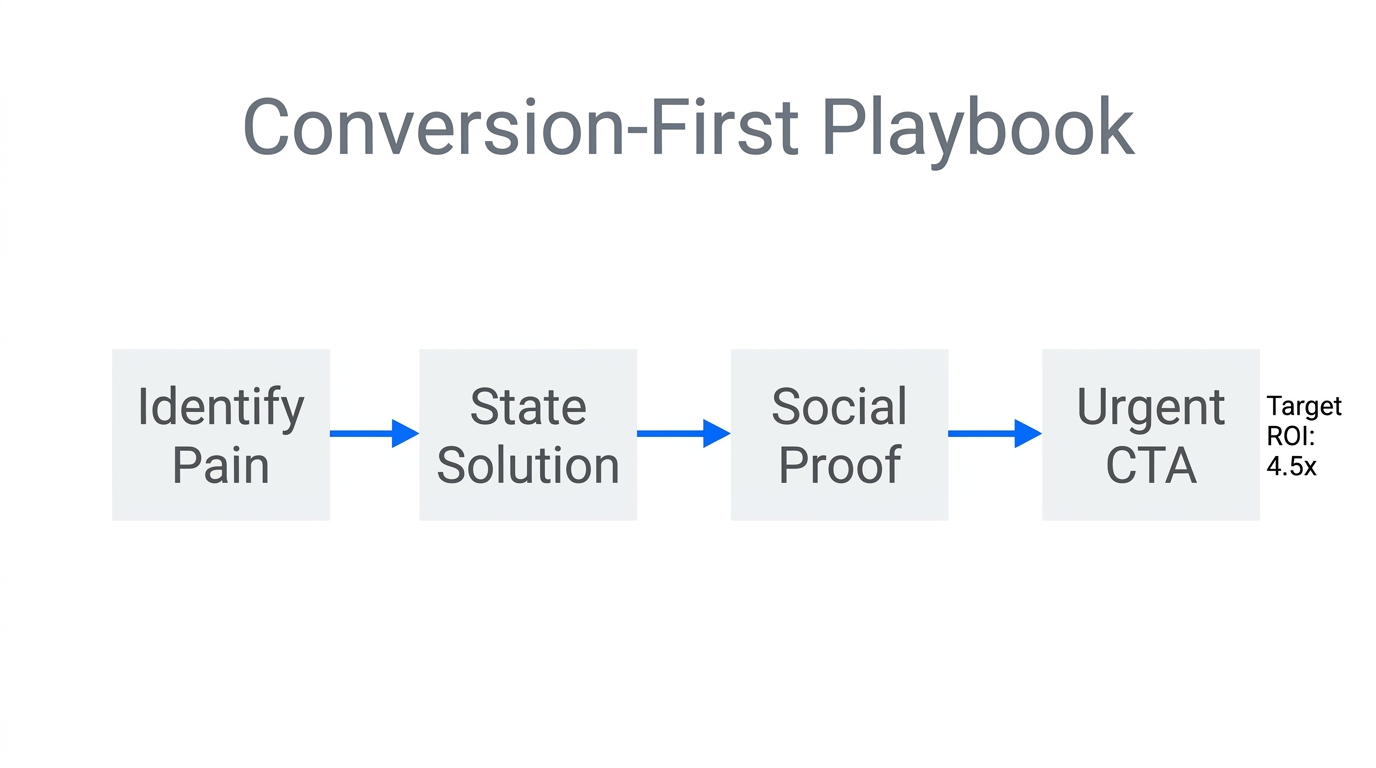
Writing a landing page that converts requires more than just good grammar; it requires psychological triggers and a clear narrative arc. Use this playbook to generate copy that doesn't sound like a bot wrote it: Step 1: The 'Anti-Hero' Hook. Ask the LLM to identify the number one reason users abandon products in your niche. (e.g., '85% of people abandon tools because the interface makes them want to scream'). Step 2: The Proof of Authority. Insert your context window data—mention your work with Grammarly or other industry leaders to build instant trust.
Step 3: The Transformation. Use the Rivalry Method to refine the 'bridge' between the problem and your solution. Tell the AI: 'The first version was too mechanical. Make it feel magical. Grok used the word "captivate"—can you beat that without being cheesy?' Step 4: The Frictionless CTA. Ask for a call-to-action that reduces perceived risk, such as a 'free 15-minute tear-down' rather than a 'sales call.' By the time you finish this process, you’ll have a landing page that actually increases activation and retention because it speaks to human emotions, not just search algorithms.
Conclusion: Mastering the Rivalry
In 2026, the growth marketing strategy for winning startups isn't built on more tools, but on better execution. By abandoning the 'One LLM Trap' and embracing the Rivalry Method, you turn AI from a simple assistant into a high-level creative team. Pitting models like ChatGPT, Claude, and Grok against each other forces them to reach for a higher creative ceiling, resulting in copy that is fresher, punchier, and far more effective at driving conversions on platforms like Apple Search Ads.
Remember: the models are only as good as the context you provide and the standards you set. Don't be afraid to be a 'mean' editor—insult the output, demand more 'vibe,' and never settle for the first draft. When you combine this advanced AI workflow with the right sourcing and management tools, such as the creator discovery and outreach features on Stormy AI, you create a marketing engine that is truly unstoppable. Happy building, and have a creative day.