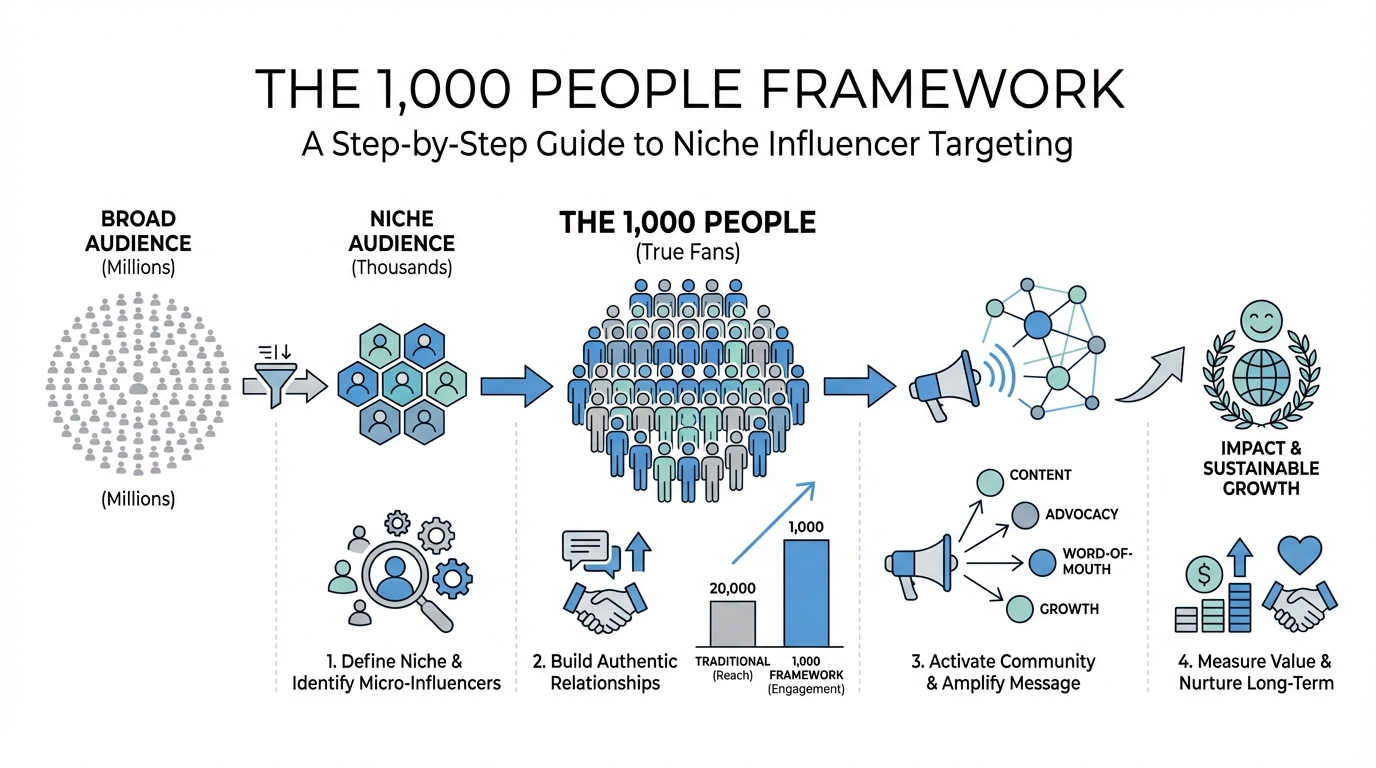
In an era of mass-market noise, the most successful brands aren't the ones shouting the loudest to everyone; they are the ones whispering the right solution to the right 1,000 people. Many founders and marketers fall into the trap of wanting to build "the next big thing" for millions before they have even solved a specific problem for a handful of humans. As we move into 2025, the secret to scale is actually found in the micro. Whether you are launching a SaaS product or a consumer brand, the 1,000 People Framework provides a roadmap to move from initial concept to a high-converting micro-community by focusing on clarity over reach.
Defining the Thousand People Framework: Why Clarity Beats Reach in 2025
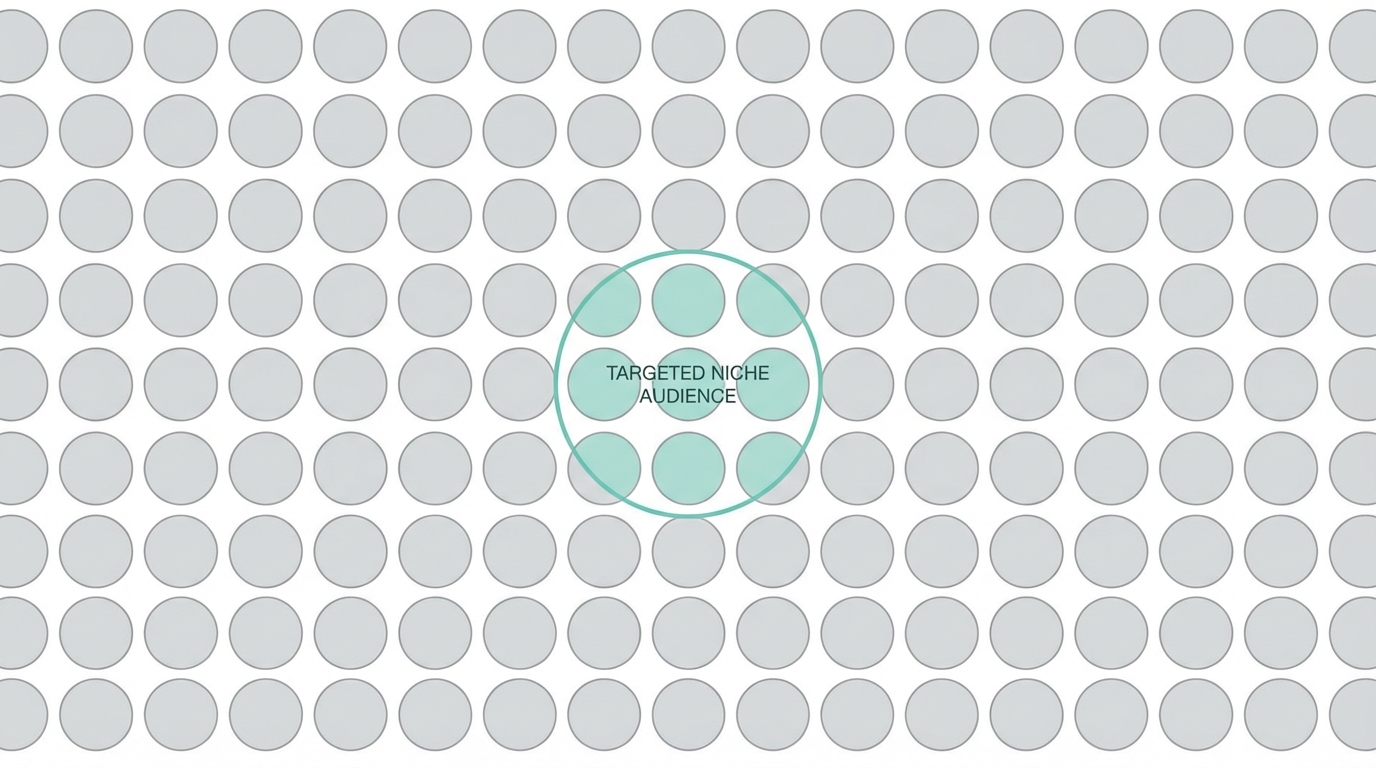
The core of the 1,000 People Framework is simple: find a small, homogeneous market and create a clear, undeniable solution for it. Most businesses fail not because their product is bad, but because their Ideal Customer Profile for marketing (ICP) is too broad. When you try to speak to everyone, you end up resonating with no one. Clarity is the ultimate driver of success—it informs your product development, your messaging, and your niche audience targeting.
Think about emerging trends like Hyrox. According to search data from Idea Browser, Hyrox—a global indoor fitness competition—has seen a staggering 5,525% growth in the last five years with remarkably low competition. If you were building a fitness app today, you shouldn't build a "general workout tracker." You should build the ultimate tracking tool for the 1,000 most obsessed Hyrox athletes. By dialing into those 1,000 identical people, you can command higher prices and build a more loyal community than a generic competitor ever could.
Success in this framework requires answering three critical questions: Who are the 1,000 people most likely to buy? What will they pay $50 to $1,000 for every single year? And how do you reach them? In a world where Google Ads costs are rising [source: WordStream 2024 Benchmarks], identifying these micro-communities allows you to spend your budget more efficiently on high-intent users.
Using LLMs to Build Detailed Buyer Personas Based on Pain Points
Building an ICP development guide used to take weeks of manual interviews and surveys. Today, we can leverage Large Language Models (LLMs) to accelerate this process. Tools like Claude have recently introduced agentic task modes that allow you to research, analyze, and write at a depth previously unavailable. You can use these tools to simulate your target audience and uncover deep-seated pain points.
To build a persona that actually converts, don't just ask for demographics. Use a "Jobs-to-be-Done" (JTBD) prompt structure [source: Harvard Business Review]. For example, if you are building an AI-powered concierge for hotels, ask the LLM: "What are the top 10 most repetitive, annoying tasks a boutique hotel manager does between 8:00 AM and 10:00 AM?" This moves you away from generic profiles and toward niche audience targeting based on real friction. You want to know what they love about their job, what they hate, and what they would pay to make disappear.
Once you have this data, you can use creative AI tools like Krea to visualize these personas or create mock-up marketing assets that speak directly to their aesthetic. This visual clarity helps your team stay aligned on who exactly you are building for. By the time you start your micro-influencer strategy, you should know your customer’s daily routine better than they do.
Calculating the Value Ladder: From Lead Magnets to High-Ticket Offers
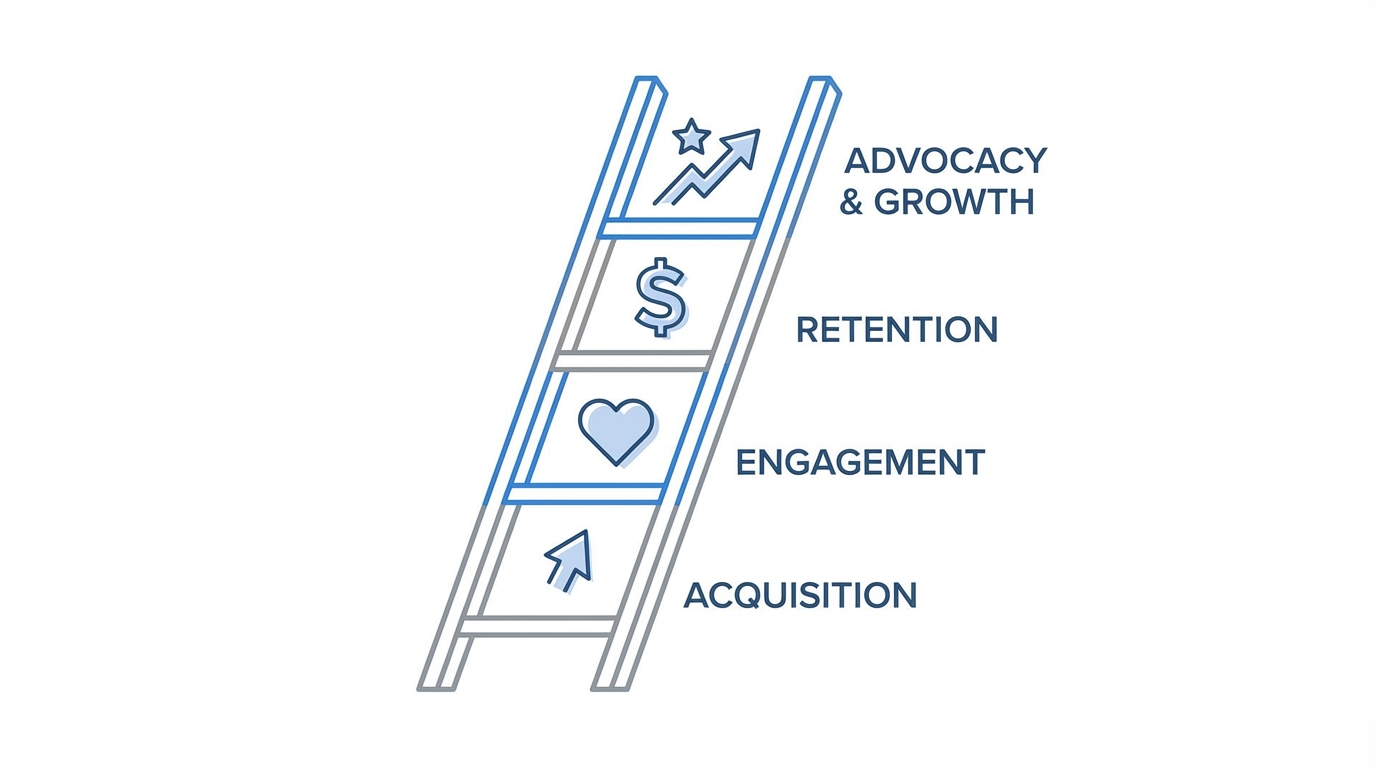
Once you have identified your 1,000 people, you need a way to move them through a customer journey. This is known as the Value Ladder. The goal is to build trust incrementally and maximize the lifetime value (LTV) of every customer. If you’re targeting a niche, you can't afford a leaky bucket; every lead counts.
Let's use the hospitality AI idea as a template for your own ladder:
- Lead Magnet: A free, interactive digital welcome guide template that hotels can use immediately. This solves a small problem for free and builds authority.
- Front-End Offer: A basic $29/month subscription for a digital concierge that handles Wi-Fi and breakfast FAQs via QR codes.
- Pro Offer: A $79/month plan including video walkthroughs and local recommendations for guests.
- Back-End/Enterprise Offer: Custom integrations for large hotel chains or affiliate partnerships with local businesses for a share of guest spend.
This structure allows you to segment your audience and creates predictable revenue. To present this value ladder to stakeholders or potential partners, you can use the AI slide designer features in Google NotebookLM, which can turn your research into professional infographics and decks in seconds. A well-structured value ladder ensures that your influencer marketing framework isn't just generating "likes," but moving users toward high-ticket conversions.
Micro-Influencer Strategy: How to Reach Your First 1,000 Fans
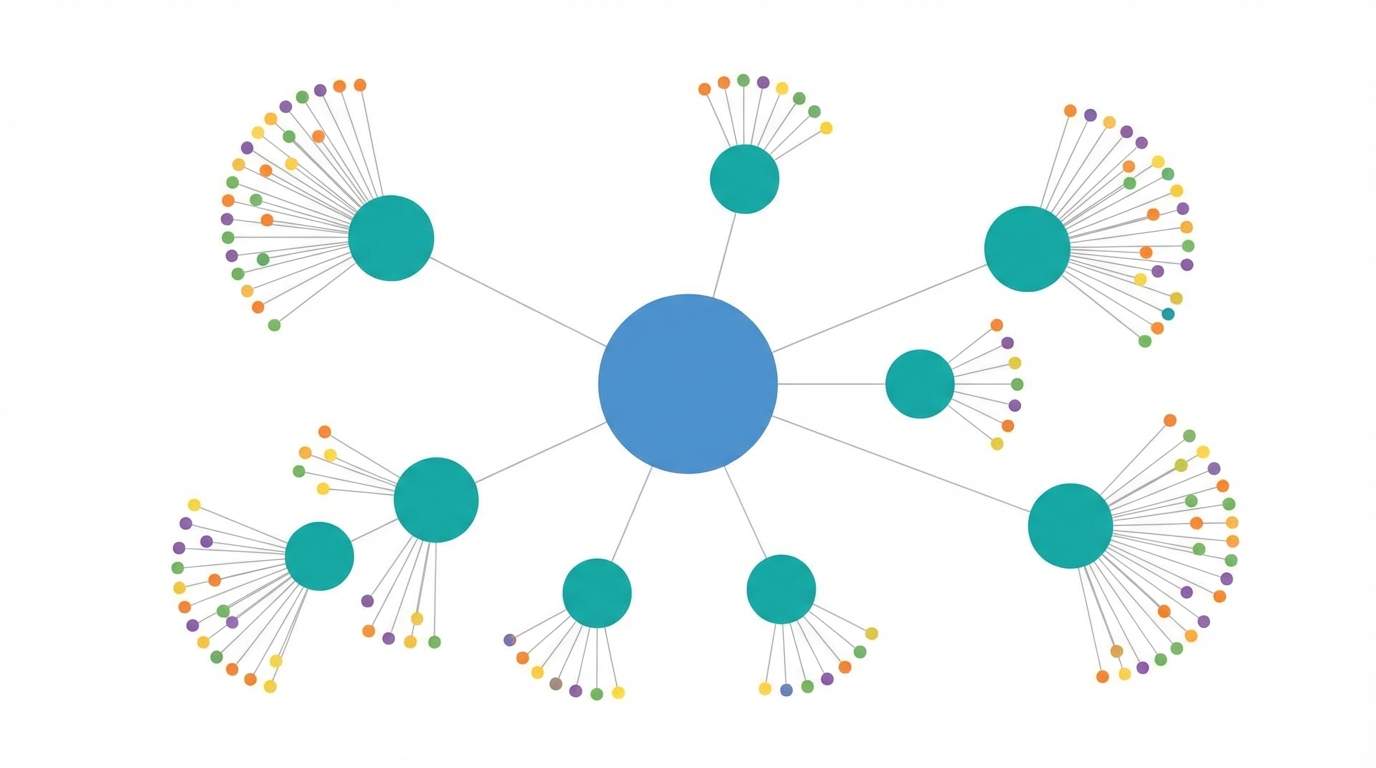
Reaching your first 1,000 fans is often the hardest part of growth. In 2025, the most effective way to bridge the trust gap is through micro-influencer partnerships. Micro-influencers (those with 5k to 50k followers) often have much higher engagement rates and more loyal communities than celebrity influencers. For a niche product, one mention from a respected voice in a small community is worth more than a million impressions on a generic viral video.

When executing a micro-influencer strategy, your outreach must be hyper-personalized. Influencers are inundated with generic pitches. If you can show them that your product specifically solves a problem their community has been complaining about (which you found during your LLM persona research), you are much more likely to secure a partnership. Tracking these collaborations is essential to see which "pockets" of the internet are actually converting. Platforms like Meta Ads Manager can complement this by retargeting the traffic driven by influencers, but the initial trust must come from the creator.
For brands looking to automate this discovery, platforms like Stormy AI streamline creator sourcing and outreach. By using an AI search engine, you can find the exact creators who already speak to your 1,000 people—whether they are fitness buffs in LA or boutique hotel owners in Florida—and manage the entire relationship from discovery to payment in one place.
Playbook: Running a Search on Stormy AI to Find Your Niche
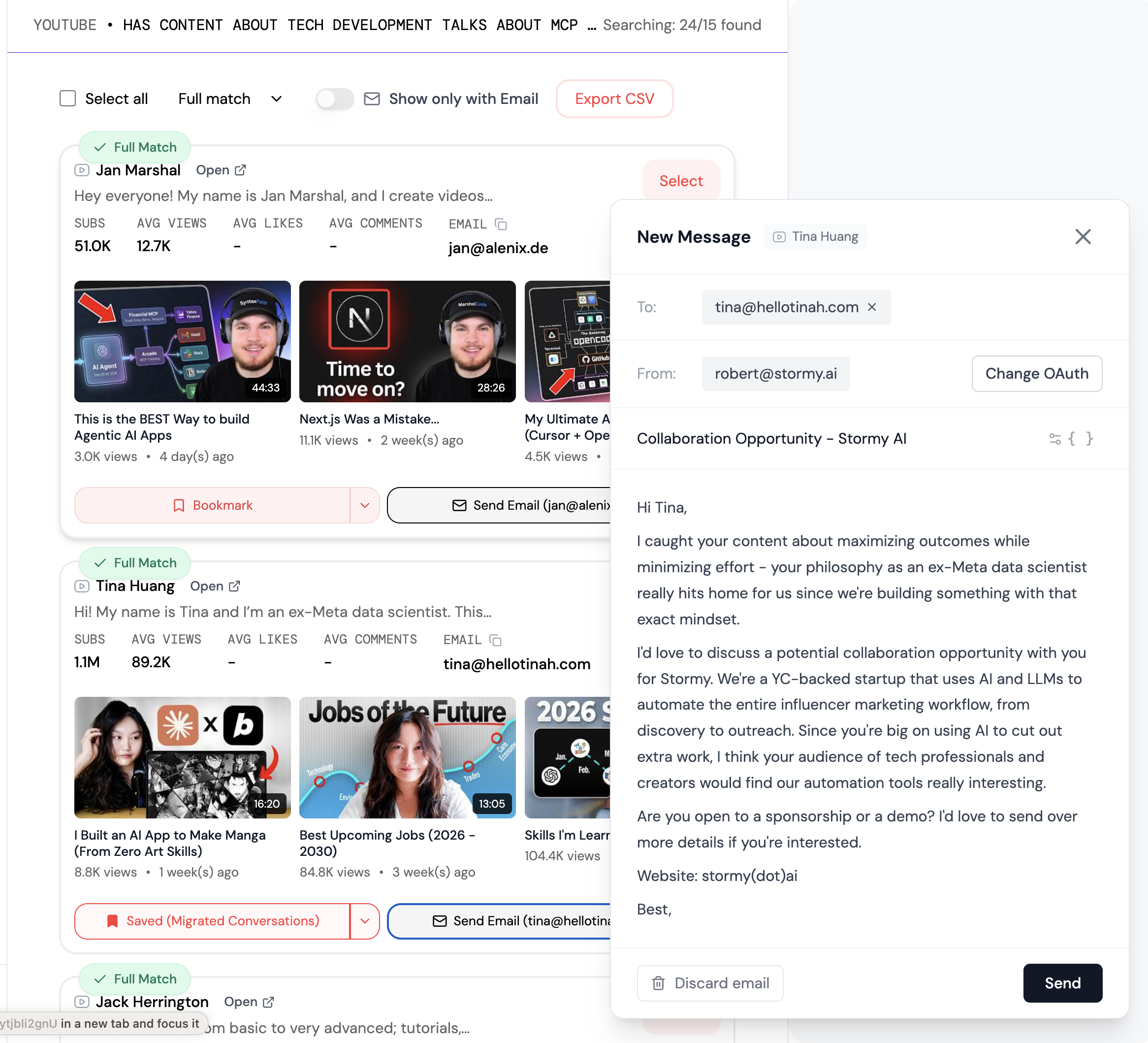
Ready to put the 1,000 People Framework into action? Here is a step-by-step playbook for finding and reaching your niche audience using modern AI tools.
Step 1: Define Your Niche Prompt
Based on your ICP development guide, create a natural language prompt. Instead of searching for "fitness influencers," try something specific: "Hyrox athletes and functional fitness creators in the UK with 5k-25k followers and high engagement."
Step 2: Vet for Quality
Once you have a list, use AI-powered vetting to detect fake followers or engagement fraud. You want creators whose audience is actually listening, not just bot accounts. Look for creators who have high "quality scores" and demographics that match your target 1,000 people exactly.
Step 3: Automate Personalized Outreach
Use AI to generate hyper-personalized emails for each creator. Mention a specific post they made or a problem they recently discussed. Platforms like Stormy AI allow you to set up autonomous agents that handle this outreach and follow-up on a schedule, ensuring you are consistently building new creator relationships while you focus on the product.
Step 4: Track and Iterate
Monitor the performance of every post. Are the followers of Influencer A actually clicking through to your lead magnet? Use data from tools like Google Analytics to refine your niche audience targeting. If one specific micro-community is performing 10x better than others, double down there. This is how you turn 1,000 fans into 10,000 and beyond.
Conclusion: Building for the Few to Reach the Many
The 1,000 People Framework is a reminder that in a world of infinite scale, focus is your greatest competitive advantage. By spending the time to develop a rigorous Ideal Customer Profile for marketing, building a value ladder that makes sense for their specific pain points, and using a micro-influencer strategy to reach them, you create a foundation that is incredibly hard for competitors to disrupt.
Don't be afraid to start small. Whether you are using Claude to research personas or Stormy AI to discover your first 50 creator partners, the goal remains the same: find your 1,000 people, serve them better than anyone else, and let the clarity of your mission drive your growth. The riches are in the niches—go find yours.